


They weren’t hardened criminals – they were children.
Some were just 12 years old when they started missing school to receive mysterious parcels. Others were told to sneak out at night for drop-offs. Some were promised a bit of cannabis, a vape, or some cash or even designer clothes.
But soon, many found themselves in far too deep.
When they tried to step back, the threats came fast. Some turned up at A&E with unexplained injuries and couldn’t give a consistent story about where they had come from.
This is the story of how nearly 50 local children were reeled into a major network that smuggled nearly £2m-worth of drugs to Jersey…
Tier 1: The ringleader

At the top of the network was Mohammad Babrul Hussain, a Birmingham-based dealer who organised the bulk shipments of drugs into Jersey and directed operations from the UK.
Hussain controlled the sourcing, supply and financial arrangements. He used encrypted messaging platforms and bank transfers to coordinate drug imports and payments between his UK associates and Jersey-based contacts.
Hussain has already been sentenced to seven-and-a-half years’ imprisonment after pleading guilty to two counts of fraudulent evasion and a number of money-laundering offences.
Tier 2: The young fixers
Beneath Hussain were a group of young adults in Jersey who acted as local fixers and coordinators.


All five of them were sentenced in the Royal Court yesterday:
- Elijah Michael Albert McManus (20), who received three years’ imprisonment for conspiring to import cannabis and MDMA, conspiring to supply cannabis, dealing MDMA and ketamine, and failing to disclose his phone PIN to police
- Joseph James Barratt (20), who was jailed for two-and-a-half years for conspiring to import and supply cannabis, dealing MDMA, possessing cannabis with intent to supply, and possession of criminal property (cash and a Rolex watch)
- Rory George Ribeiro (19), who received two years in prison for conspiracy to import and supply cannabis, and supplying MDMA and cannabis
- Monica Aguiar Nobrega (20), who was sent to HMP La Moye for two years for conspiring to import MDMA and cannabis, and conspiring to supply MDMA and cannabis
- Malibu Brennan (20), who was given a 100-hour community service order (equivalent to four months’ imprisonment) for possessing criminal property (cash and a Rolex watch)
They were responsible for arranging the importation of drugs, receiving parcels, distributing packages to dealers – and recruiting or manipulating children they knew, and the friends and siblings of those children, to assist. They provided the addresses of those children to Hussain.


To manage the network and keep the children involved in line, they used peer pressure, coded language and encrypted chats on apps like Telegram.
Tier 3: The child network
At the bottom of the hierarchy were children — many still in school, some as young as 12.
Packages with drugs worth tens of thousands of pounds were sent to their homes, hidden in objects ranging from teddy bears to a karaoke speaker. One contained over £40,000 worth of cannabis. The child who accepted it was given only “a very, very small amount of that”.
Some families reported noticing that some of the children had vapes and new designer clothes from brands like Stone Island, but could not make sense of how they had come into their possession.
Some of the children were pressured into staying home from school to receive the parcels, while others were encouraged to sneak out of their homes at night to receive the parcels and pass them on to local dealers.
Very rarely did the children actually know exactly was inside the parcels – the only thing they learned quickly was that an unsuccessful delivery or an attempt to back out came with consequences.

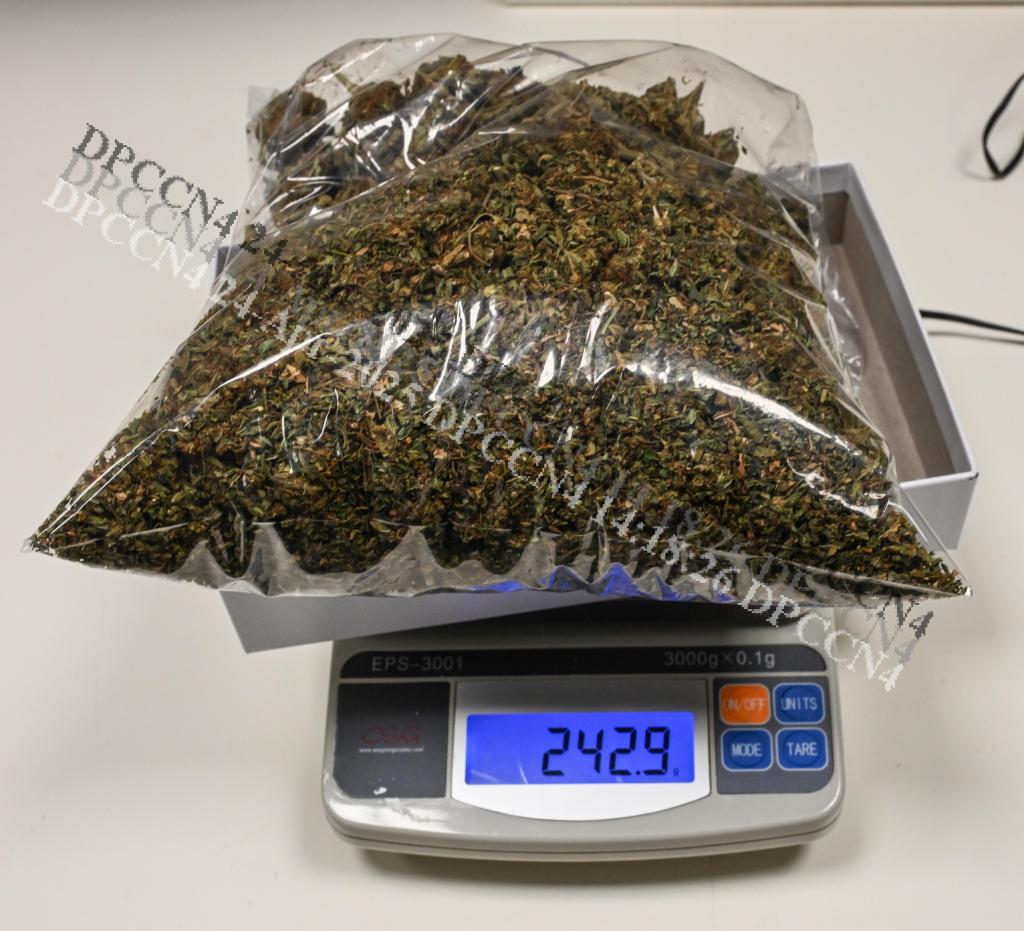


“If a parcel was intercepted by Jersey Customs and Immigration and was never actually delivered to the intended recipient, then that debt was then passed on – and that’s where some of the threats and the violence and everything stepped up,” explained Acting Inspector Kate Young.
These are some of their stories:
Emma*
Emma* received at least five parcels of drugs at her home. One contained 981g of cannabis and 289 MDMA tablets.
She was initially groomed by Monica Nobrega, who promised her cannabis — including “10 grams of cannabis” and “shake” — in exchange for accepting deliveries.
But when Emma hesitated, the tone changed. Nobrega sent a threatening message:
“If you f***ing try anything Emma I will litro burn your mf house down break all your windows… rob your mf dog and Elijah will go after your dad.”
A drugs expert concluded that Emma appeared scared and was continuing to engage out of fear, not willingly.
Kieran*
Kieran received at least one parcel containing 195g of cannabis at his home. He was asked by McManus to sell drugs to clear someone else’s debt:
“Just shot the 50 bags… that’s how you clear it.”
He was also offered £50 by Ribeiro to physically assault another young person who had allegedly “snitched”.
In interview, Kieran admitted to handling MDMA pills that “belonged to a mate”, understood to be McManus.
Kevin*
Kevin was involved in delivering drugs and collecting cash on behalf of Elijah McManus. His phone showed messages from customers complaining about the effects of the “Netflix” amphetamine being sold as MDMA.
When he relayed one complaint, McManus replied:
“Just ignore it.”
Kevin was arrested in possession of pre-rolled cannabis joints, amphetamine and ketamine.
David*
David’s home was used multiple times for drug deliveries. One parcel, addressed to him, contained 200g of cannabis hidden inside a teddy bear.
He sent proof-of-delivery photos to the conspirators and followed instructions to take time off school to receive parcels. His home was referred to in messages as a “safe drop”.
Ben*
One address used by the network was described by prosecutors as a “hub to store and deal drugs”. It was rented under a fake name, but Ben lived there and was closely associated with Joseph Barratt.
Fingerprints from both Ben and Barratt were found on drug packaging seized from the flat. The landlord only had Barratt’s contact details, not Ben’s.
While some of these children were relied upon more heavily by the tier two fixers, in reality the network of children was much, much bigger – totalling nearly 50.
It used the strength of Jersey’s community to grow – via friends, acquaintances and siblings.
“One of the ways Jersey is so good is that there is a real community spirit here. Everybody knows everybody,” Acting Inspector Kate Young observed.
“But that was also a negative in that there was always links to more and more young people. So they had a sort of an indefinite accessibility of that.”
But community was also the way in which the network began to be pulled apart.
How was the network rumbled?
As the conspiracy rumbled on, Insp Young, who was at the time working with the Community Policing Team, began to notice a pattern of behaviour – “a cohort of young people… were coming to notice of the police and were showing signs of exploitation and signs of concern”.
This led them to form Operation Stride at the end of 2022, and later Operation Java, “piecing together the pieces of the jigsaw” with Education, Health, the Youth Service and Probation among those involved.
It was this work that laid the foundations for Operation Java, which plotted the network importation-by-importantion and uncovered how the network’s tentacles stretched all the way to the UK.
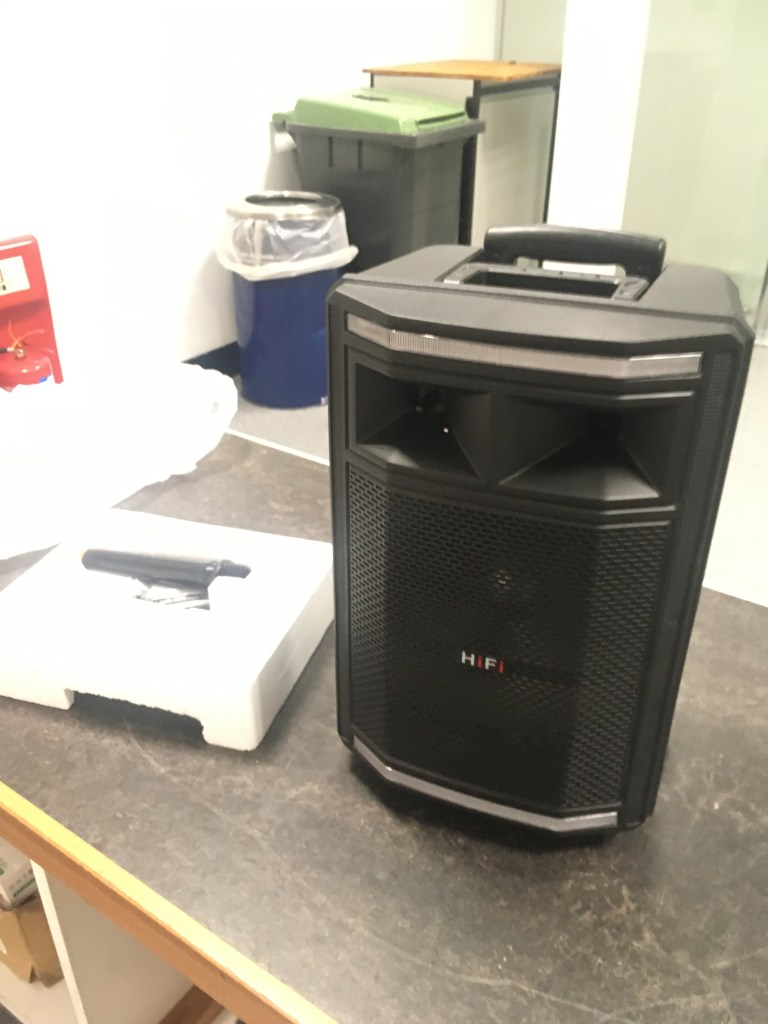


Customs and immigration senior manager Luke Goddard, who is in charge of the investigations unit, explained that his team were able to link 17 similar importations together via a karaoke speaker found filled with 1.7kg of drugs two years ago.
All of these could be linked to a child who was being exploited at just 15 years old.
Overall, the operation led to the seizure of seized £128,298 and £183,317 of drugs, but investigators think the network has brought in around £1.8 million of drugs.
It also led to 21 warrants executed in Jersey, over £40,000 of cash recovered, and over £30,000 in clothing and jewellery, including two Rolex watches. They also found evidence of money-laundering, with local businesses and banks used to hide the money.
A further three men in the UK were arrested by the West Midlands and Metropolitan Police, and two males in Lancashire were arrested for operating social media channels.
“This was a really, really good example of so many different agencies getting involved,” Mr Goddard said, describing the case as a “landmark”.
Sentencing
When it became clear just how many children were operating at ‘Tier 3’, and the manipulation they endured, it was decided that punishment wouldn’t necessarily be the right approach. What many needed was support.
43 of the children and teenagers involved were recommended to safeguarding – using specialised agencies to help them return to a normal life.
Another seven were prosecuted in the Youth Court.
For their part in the plot, four out of the five ‘fixers’ were sentenced to jail by the Royal Court yesterday.
Crown Advocate Lauren Taylor described how each of the defendants had been motivated by money and lived “beyond their means”.
McManus was the most serious offender, acting as “a conduit between Hussain, providing addresses up the chain from Tier 3s”. He also arranged for parcels to be collected, broken down and the contents distributed.
Nobrega never spoke to Hussain, the court heard, but that she found minors for him and that she had “a coercive role” over two of the minors, teaching them how to break down the drugs and package them. Crown Advocate Taylor read out the intimidating messages she had sent some of the children.
Ribeiro was involved with four parcels of cannabis that were sent to Jersey and offered a child £50 to beat someone up.
Barratt was linked to three parcels and used “multiple” of the children to deliver drugs on his behalf.
Advocate Nicholas Mière, defending McManus, said some of the messages “reveal just how childlike some of these interactions are”, with lines that could be “lifted directly” from TV series.
Their advocates argued that the defendants – who were themselves young, aged between 17 and 19 at the time of offending – had also been exploited within the wider criminal network.
“Something went very wrong here,” Advocate Mière said. “What happens that makes a child from a caring and nurturing environment filled with positive influences go off the rails like Mr McManus here?”
He explained that McManus had been bullied as a child and that his parents said “he exchanged one set of bullies for another”.
“He himself was exploited,” he said and added: “He accepts that he in turn exploited others.
“He realises that he became part of this perpetuating cycle… and he is deeply ashamed of that.”
McManus was glad to see that other children were able to escape this cycle “before becoming entrenched in it”, the court heard.
Advocate Olaf Blakeley, defending Ribeiro, said that because he was 17 at the time of offending, his client should be sentenced at most to one year in youth detention, and asked for community service.
Advocate Adam Harrison, representing Malibu Brennan, stressed that she wasn’t a part of the drugs ring. She lived at home and only saw her boyfriend on Saturdays, so his criminal activity was kept away from her, he said.
Brennan only became involved when he asked her to store cash and a Rolex watch under her bed. She accepted “impulsively”, he explained.
She had suspected in recent months that her boyfriend was involved in dealing drugs, but had no suspicion of the scale of the offending, he said.
McManus was sentenced to three years in youth custody. Barratt was sentenced to two and a half years. Nobrega and Ribeiro were sentenced to two years. Brennan was given 100 hours of community service.
The Deputy Bailiff, Robert MacRae, told them that involving teenagers had been “very serious”.
Spotting the signs
The sentencing isn’t the end of the story, however.
Police have said parents should look out for a set of warning signs – which some of the children involved were displaying.
They include children missing school a lot, reporting feeling ill, all the time and being left home alone. They also cited “sudden decline in behaviour”, having a new phone, and leaving the house late at night for a short period of time.
Young people, parents and carers who think they are, or their child is, being exploited or getting involved with drugs and criminal behaviour are being reminded that support is available from the Youth Enquiry Service (YES).
The Children and Families Hub, which can be contacted on 01534 519000 or via email from Monday to Thursday 8.30am to 5pm and Fridays 8.30am to 4.30pm, is also available to help.
*Names changed to protect anonymity.
