The Treasury says it needs to collate profit data to demonstrate that 0% remains the general rate of corporate tax – they are already collecting that data from locally owned companies paying 0% tax, but want to change the law to collect the figures “…from a wider range of 0% companies.”
Under zero/ten, companies outside of the financial services sector don’t pay corporate tax, except for the utilities who are charged at a rate of 20%. That has caused controversy with those who argue the Island is missing out on much-needed revenue, and the fact that it means non-locally owned companies, outside of the financial services sector, aren’t contributing to the local income tax take, although their employees will be.
It is a highly sensitive subject with competitor jurisdictions, and regulators, watching very closely for any changes to the Island’s corporate tax arrangements – which is why the Treasury Minister was at pains to state that while no changes were to be made to zero/ten, the Treasury was simply looking at how the current system could provide “…opportunities for a greater yield.”
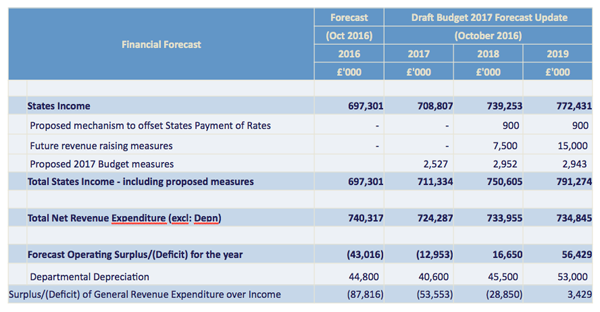
Budget 2017 showed that although the Island held £6billion in assets, it was heading for a deficit in general revenue expenditure over income of £88million in 2016, once depreciation had been factored in, dropping to a very small surplus of £3.5million in 2019 on income of £772million.