


The Channel Islands wealth management sector may look “strong at first glance”, but the reality is “more nuanced”, a new report has found.
This was the standout message from PwC’s latest Channel Islands Wealth Management report, which shared insight into how the industry is fairing against challenges, and what future opportunities may look like.
The findings are based on survey results collected from executives from 31 Channel Islands wealth managers, with a combined total of 40,000 clients managing approximately £100bn of client assets.
Express took a look at the key findings…
Market make-up
The majority of clients and assets under management come from the Channel Islands – the report found that 28,300 clients account for £32bn of AuM.
Trusts remain the “biggest revenue generator”, making up more than half of Channel Islands wealth management clients and 70% of AuM, with an average mandate of £3.2m.
Private clients account for around a quarter of AuM and 20% of clients, with an average mandate of £1.3m; custody and execution services account for almost half of AuM, with an average mandate of more than £5m; and discretionary investment management makes up around a third of the AuM, at an average mandate of £2.4m.
Looks can be deceiving
The main finding of the report was that once all factors were considered, the growth of the industry is not as strong as it may seem.
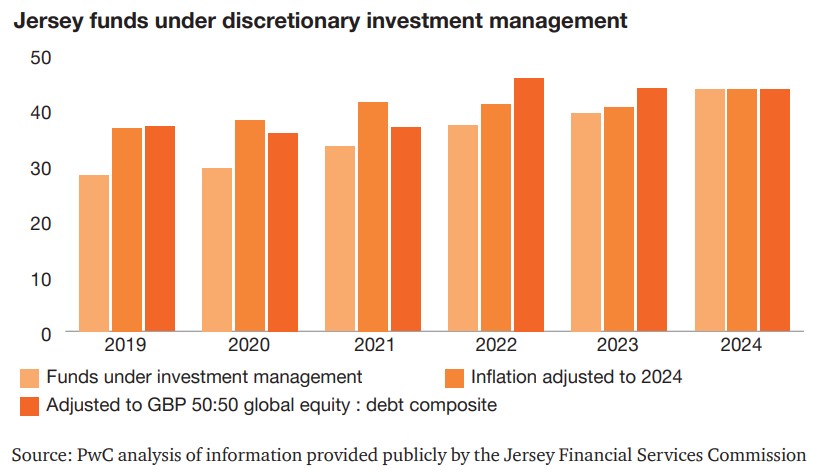
In Jersey, funds under discretionary management have risen by around 10% a year since 2018, but the report found that expansion in client numbers had “tailed off” over the past two years.
In absolute terms, fund levels may be increasing, but without the uplift from inflation or rising asset price valuations (using a compositive 50:50 global equity: global debt index), the industry has demonstrated “modest growth” in recent years.
The report said there were growth opportunities in targeting local HENRY (high earning not rich yet) investors with portfolios that “could become significant in the decades to come”.
Tie-ups between discretionary management and financial planning firms could also offer opportunities, it highlighted, as acquirers and joint venture partners “seek to broaden access to clients and strengthen the financial solutions they offer”.
A changing playing field
The report found that Channel Islands wealth managers believe digital assets are likely to see the greatest growth within the alternatives market, so offering access to alternative investments could help “strengthen client returns” and help improve the international competitiveness of local firms.
Private markets assets used to be accessible to only the highest net worth investors, but tokenisation and evergreen funds are “opening up” the market.
Many clients may switch to wealth managers who “move early” to incorporate alternative assets in their portfolios, the report adds, so it serves as an opportunity to “increase share of wallet”, especially among clients who might otherwise go directly for investments such as cryptocurrency or private markets assets.
Tech is a non-negotiable
The report highlights that clients now expect wealth managers to offer tech-enhanced capabilities, but it poses the challenge of meeting expectations while “containing what could be significant investment costs”.
“Getting to know what your clients do and don’t value would enable wealth managers to target investment where it really counts,” the report recommended.
More optimism, but caution remains
“Cautious optimism” was how the report described the mood among Channel Islands wealth managers – which was an improvement in how they felt in the 2024 report.
Wealth managers’ confidence in their prospects is strongest for the coming 12 months, which the report indicates may be a result of the “buoyant performance” of asset prices despite the economic and political turbulence seen in 2025.
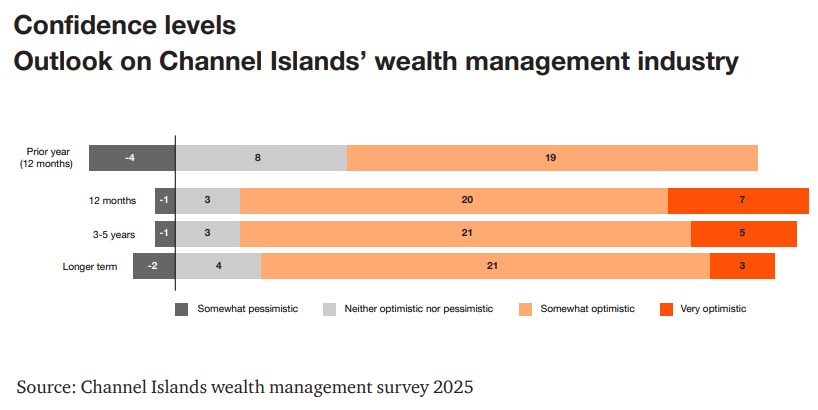
“Encouragingly, the prevailing mood among Channel Islands wealth managers appears to be one of greater confidence than last year, with confidence in prospects being strongest for the coming 12 months,” said PwC CI Director and Jersey Banking Leader, Ian Ross.

However, the report showed that optimism dips as wealth managers look to 2030 and beyond, which Mr Ross said may be attributed to “heightened macroeconomic uncertainty and disruption”.
“But there could be as many opportunities as challenges, as tech-powered innovation and business model reinvention gather pace,” he added.
“Steering through uncertainty and capitalising on the openings ahead are likely to require a rethink of longstanding strategic assumptions and a step-up in the pace of operational transformation.
“There are pressing questions around whether wealth managers in the islands are moving far and fast enough to keep up with shifting investor expectations – in particular with regards to their demand for greater diversification and potentially higher yielding alternative investments.”
