

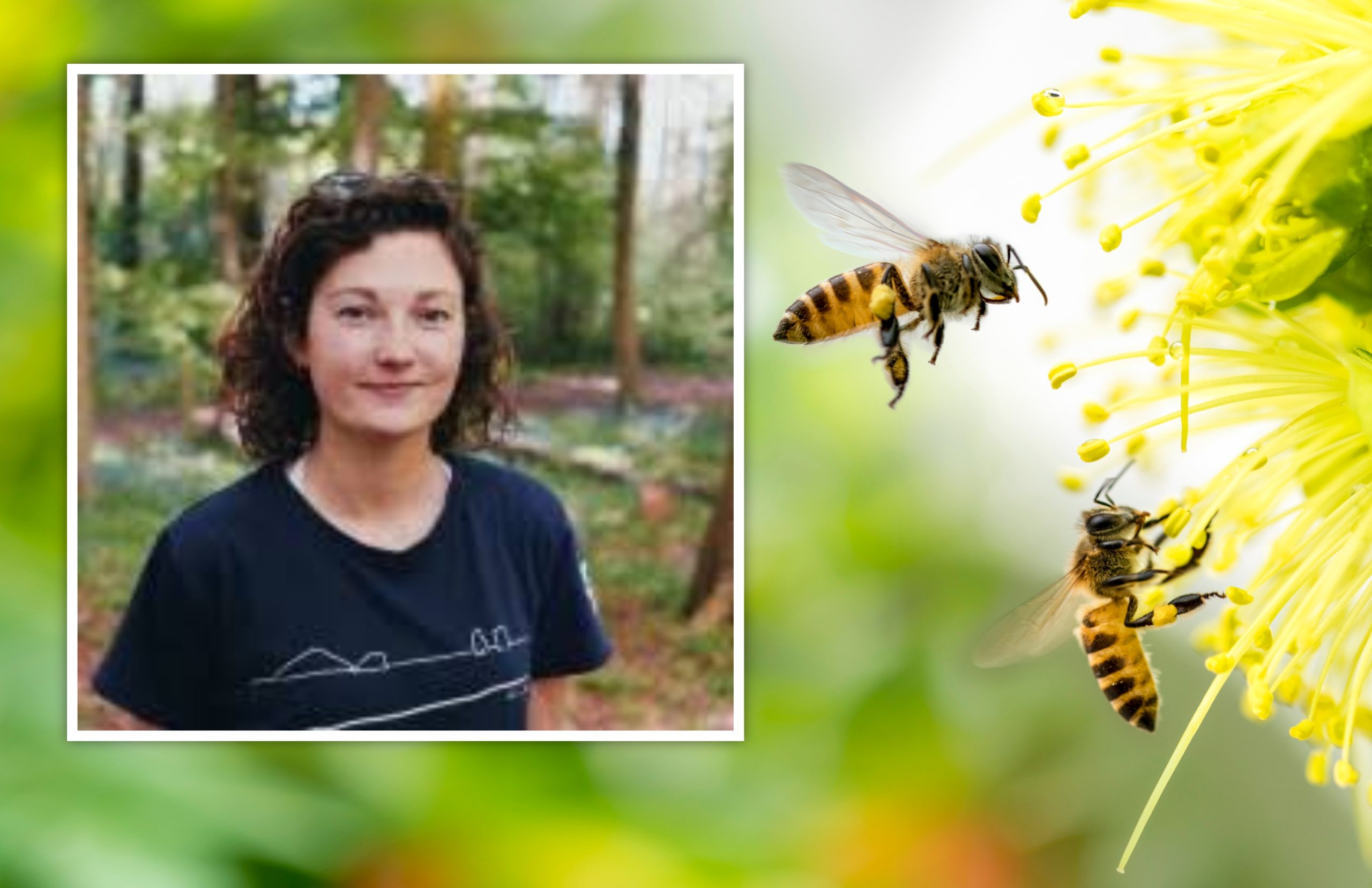
The Pollinator Project in Guernsey is collaborating with the University of Bristol to undertake a pan-island comparison of pollinators.
The Guernsey charity was founded in 2017 and aims to protect the island’s pollinators.
The Project said: “The research programme is the first of its kind, with a unique opportunity to study the real-time implications of pesticide reduction, in a real-world setting at island scale. The programme will showcase the Channel Islands for the first time as a world leader in this research area.”
The work will be led by Dr Miranda Bane, who grew up in Guernsey. She said it has take four years to secure the funding for this project.

Pictured: A malaise trap will be used to capture pollinating insects.
The funding will enable another four years of research on pollinating insects in Guernsey, Jersey, Alderney, and Sark.
“With the States of Guernsey’s 2022 restriction of the sale of glyphosate products and the Pollinator Project’s Pesticide Free Guernsey campaign, the project will provide evidence of the impact of reducing pesticides has on pollinator populations,” continued the Project.
“The funding will allow the full fieldwork programme to be undertaken; pollinator DNA analysis and testing for the presence of pesticides in pollinators in a world-class Canadian laboratory.
“The programme will leave a legacy of a CI pollinator DNA library and a reference collection of hundreds of species to help to inform best practice conservation to help recover our local pollinator populations.”
The funding has been provided by the Natural Environment Research Council (NERC) in the UK.
Pictured top: Dr Bane.
