

Nearly 10 years on from Guernsey’s landmark debate on assisted dying, one of the lead campaigners for a change in the local law has said that it is what the majority of people want to see happen.
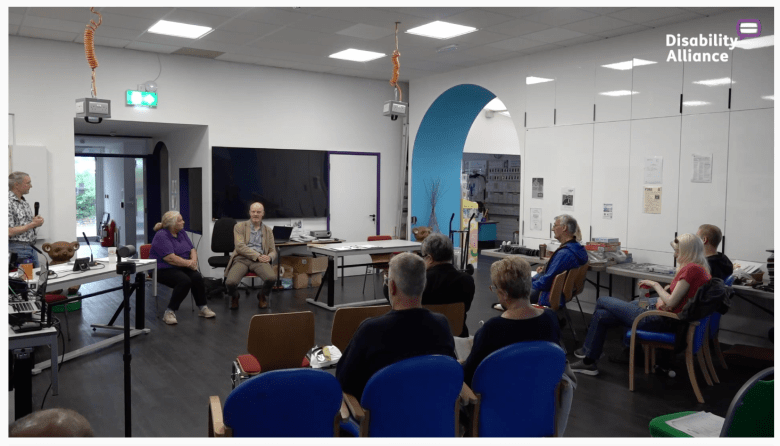
The Guernsey Disability Alliance hosted a debate on the topic after its AGM last week.
Dr Rob Harnish moderated with Deputy Gavin St Pier speaking in favour of assisted dying and Carol Le Page offering the opposing view.
The debate can be watched back online.
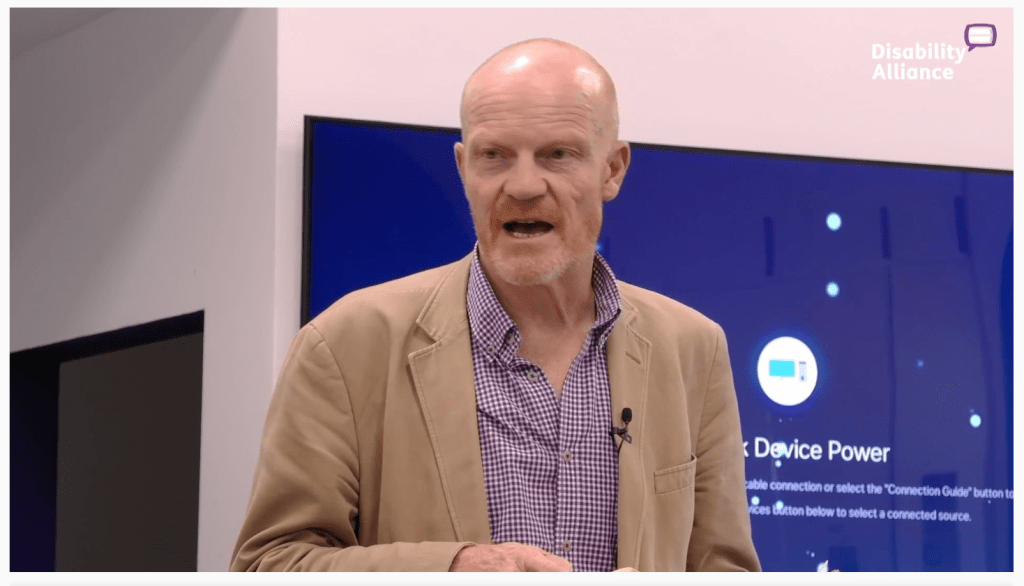
Deputy St Pier’s views on assisted dying are well known.
As well as orchestrating the 2018 States debate on legalising assisted dying in Guernsey – which lost by 24 votes to 14, Deputy St Pier is a Board member of UK campaign group ‘Dignity in Dying’.
If the 2018 requête had led to assisted dying being introduced in Guernsey, the island would have been the first place in the British Isles to do take that step.
Having been thrown out by the States of the time, any efforts to change the law in Guernsey have now been overtaken by campaigners in Jersey, the Isle of Man, and the UK, where new laws are at different stages of being written or approved.
Referencing the 2018 debate in his speech last week, Deputy St Pier clarified exactly what he has always been campaigning for.
“The case I’m advocating for is for (assisted dying to be legalised for) terminally ill adults with six months to live, or in some cases, and in some jurisdictions – and I’m supportive of this – 12 months, for some neurodegenerative conditions clearly specified.
“I think the important point to make is, of course, these people, these individuals are dying, and they’re not dying in the sense that we’re all dying, but they are dying in a very real sense that they are moving towards the end of their lives as a result of conditions that they suffer from, and it is, I think, in essence primarily about individual choice.”
Acknowledging there remains some opposition to the concept of assisted dying, Deputy St Pier said many people would support it being legalised in Guernsey. He later told Express that he believes this is a majority view.
“I know there will be many for whom they would never wish to contemplate it as a personal choice, that could be for a whole raft of ethical faith reasons, or for none of those, and that is, of course, absolutely fine, but I think the experience elsewhere is very important,” he said.
“What has been discovered elsewhere is that many terminally ill people get comfort from the knowledge that they may have that choice, even though they may never choose to use it themselves. This is borne out by the fact that in jurisdictions where it is possible to access an assisted death, quite often those who choose to seek help actually never go through with the procedure. Having perhaps obtained a prescription they don’t actually, if you like, cash that prescription in, but it gives them the comfort to know that they can.”
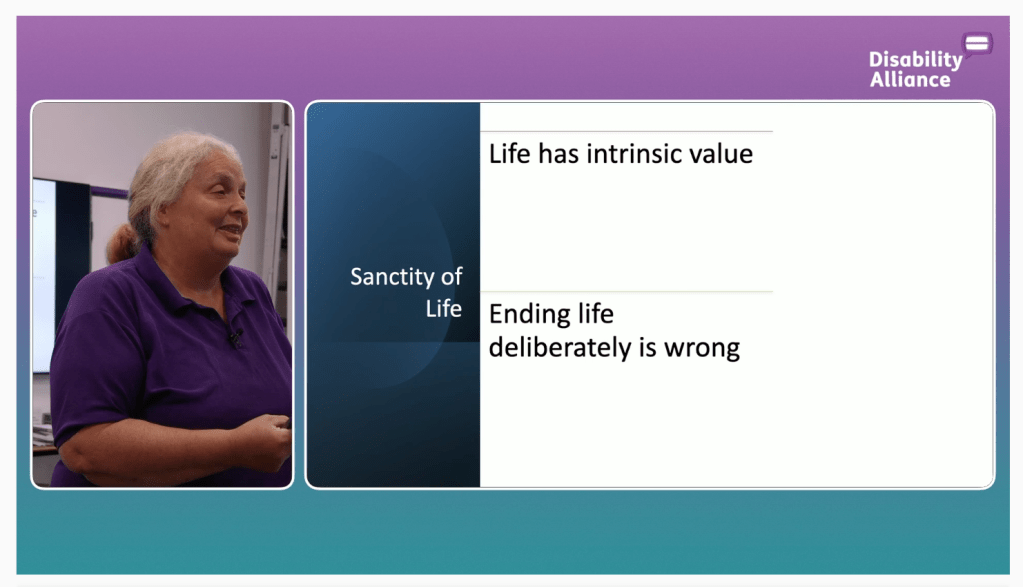
Ms Le Page countered his views during the debate, but also agreed on his stance that assisted dying is an “ethical matter” with “personal morals”, with both featuring strongly in her speech.
“… it is an ethical debate,” she stated. “It’s quite complicated but that shouldn’t put us off debating it of course.”
“I’m not religious at all, I’m not a religious person, but intrinsically I believe that everybody has everybody’s life has value, and that ending somebody’s life purposely is wrong,” she added.
Ms Le Page also gave examples from her career and voluntary work where she has seen examples of coercion and she expressed some widely held views that coercion could be used to encourage vulnerable people to use assisted dying legislation if it were legalised.
“There is also moral responsibility,” she explained.

“Is it morally right to ask other people to help you to die? This conflicts with professional duties, that relationship of that contract of trust, and the big risk of coercion.
“I worked at Safer and coercive control is huge in different relationships. There is always a balance between self-determination, autonomy, and how you have a relationship, whether that’s with your partner, parents, children, colleagues, anytime that there is that contact with other people, there is that ability to change your mind, to be coerced sometimes, and you see online how it is massive in younger people.
“So coercion is a very real concern of mine, having gone through a background where coercion was my day-to-day bread and butter job, and it can be very… it’s not overt, it’s very secretive, it’s very manipulative in very different ways, or it can’t just be the fact you think you are going to be a burden on somebody else and therefore want to hasten your death. Particularly if that means a house or an asset is going to be left to people that would otherwise not be, so you might say at this point where I could go into care, I can’t manage at home anymore, I’d prefer not to do that. I’d prefer to either take my own life or have assisted dying, so it could be a slippery slope.”
Deputy St Pier told Express after the debate that he was grateful to the GDA for facilitating such an important discussion.
“Like other sections of our community, those with disabilities will have their own views,” he acknowledged.
“It is a matter on which strong views can be held. Whilst many will see it in black and white terms, the practical implementation of any assisted dying regime requires engagement with some difficult questions, particularly in relation to where the lines are drawn to ensure effective safeguards. Much of the debate was around this. Ultimately, it is an ethical matter which engages personal morals.”
“Since this was last debated in 2018, many other jurisdictions have adopted assisted dying for the terminally ill, including of course Jersey and the Isle of Man. I am confident that in time Guernsey will adopt a regime which is appropriate for our own community, not least because that is what the clear majority of the community wants.”
