


The States has been running the Ambulance Service since taking emergency interim measures in December 2019 when the Board of Alderney Ambulance Service Ltd declared its intention to close following an independent review that raised questions about safety standards, including alleged faults with a number of pieces of equipment.
That service’s volunteer crew walked out on strike in December after the woman who ran it, Mel Walden, was sacked following the findings of the report.
The island’s Policy & Finance Committee has investigated different ways of structuring the Ambulance Service in the future, with the preferred option an “integrated emergency service with an aligned contact centre and shared policies and procedures.”
In this model, St John Ambulance, the Island Medical Centre and Mignot Memorial Hospital would provide support, with management and leadership coming from the States of Alderney.

Pictured: Mel Walden ran Alderney’s Ambulance Service before her controversial dismissal in December.
P&F said the main advantages of this model are:
- A common emergency services communication system and process that has been in place since the beginning of the year
- A larger combined crew offering greater flexibility and resilience
- Joint services management from the same location
- Combined training initiatives and equipment
- Lower staffing costs and professional civil service administration
- Potentially cheaper for residents compared with the subscription model and an opportunity to waive fees for voluntary organisations and events
Two other options considered were to establish a new ambulance company using a similar model to AAS Ltd, and making the interim arrangements permanent through a States of Alderney Ambulance Service operated with the support of St John Ambulance, the IMC and MMH.
A spokesman for P&F said: “The estimated annual cost of the combined service is £136,550 – the States of Alderney currently pays an annual grant of £40,000 for the Ambulance Service while the Fire Service budget is £62,400. £33,830 is raised from subscriptions.
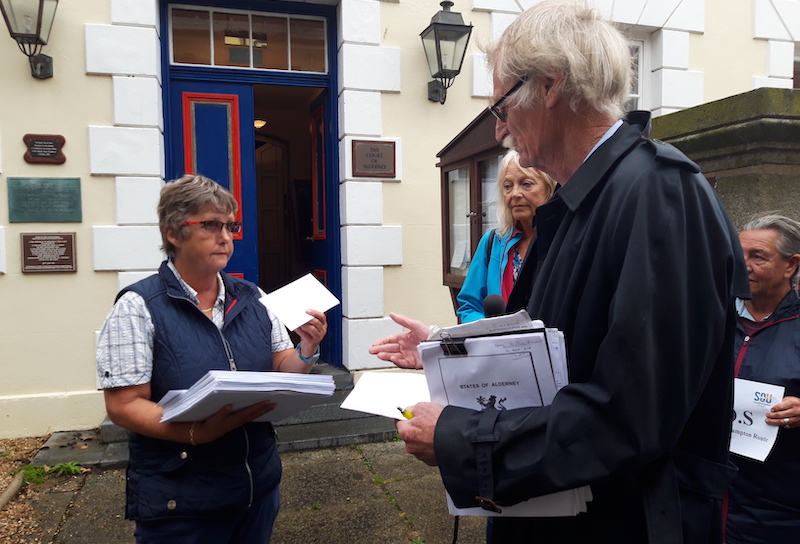
Pictured: James Dent, right, heads up the Policy & Finance Committee.
“The combined option would provide annual savings of over £28,000 per year on a comparable basis with the company model and over £3,000 per year when compared to a stand-alone Ambulance service.
“If adopted by the States of Alderney, the recommended option could mean that patient transport which requires no first aid would revert to individuals or the care home using taxis or other volunteer organisations if an ambulance was not needed.”
A final decision will be made at the States of Alderney meeting in June and, if successful, the intention is to draw up full plans in time for the 2021 Budget.
Pictured top: One of Alderney’s ambulances.
