

Deputies are currently debating changing the law around ‘noisy vehicles’ with efforts to use defined limits based on measurable metrics to set new rules instead of a blanket ban as previously suggested.
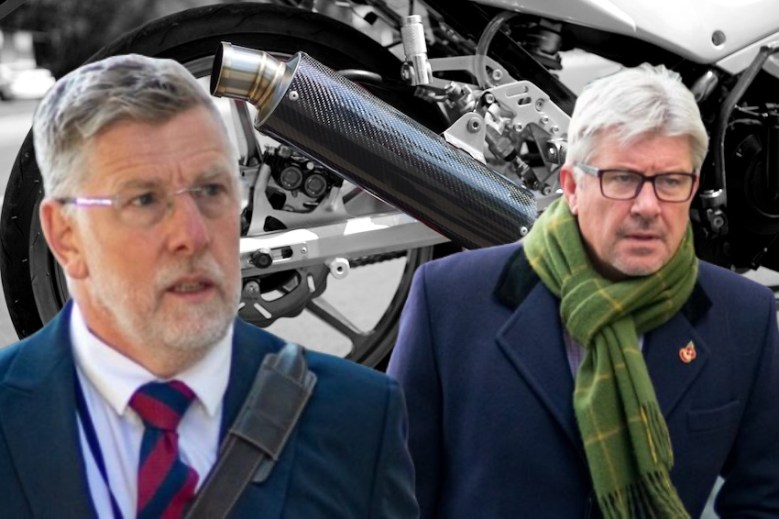
Deputies Gabriel and Helyar are leading efforts – saying they want to adjust that proposed law.
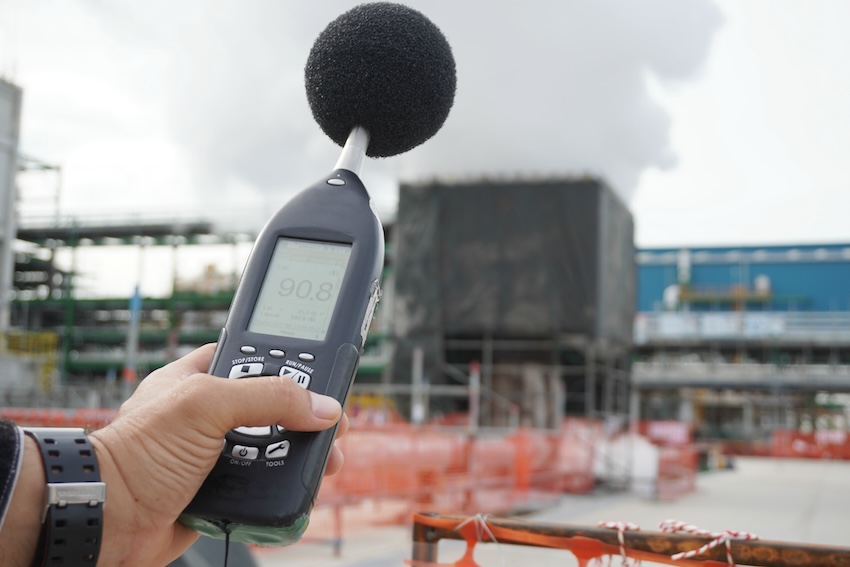
If they’re successful, the States would set a specified decibel limit, with an applicable, relative test.
When the original proposals – for a blanket ban on certain exhausts – was first announced, Express approached local garages to gauge the potential impact. We found that the proposals were described as “laughable” and a “complete waste of time”.
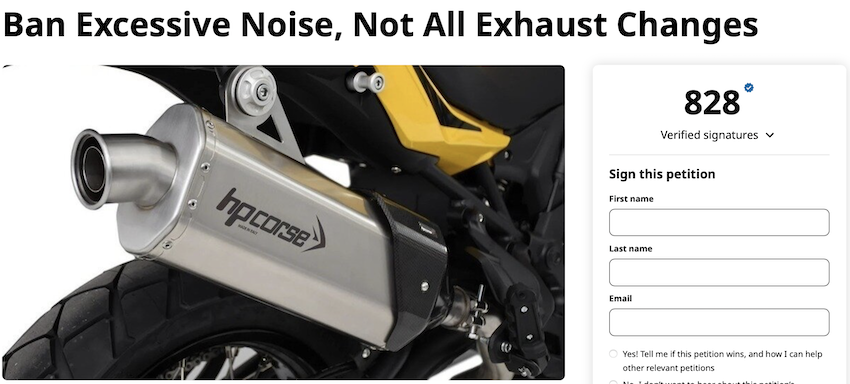
A petition was launched, which has now gained more than 800 signatures, to try and shift the trajectory of the original proposals, suggesting a similar set of rules to the ones being suggested by Deputies Gabriel and Helyar.
What does the amendment seek?
Deputies Gabriel and Helyar want it to be made illegal to drive a vehicle on a public road if its exhaust system exceeds a specified decibel limit, as measured by a stationary test.
The aim is to create a system that is easy to understand and enforce. Just like speed limits and parking restrictions, with a set decibel limit telling vehicle owners exactly what is acceptable.
Many motorsport events already use decibel limits, showing that this approach could work, but most importantly, it includes a clear decibel limit, which gives Bailiwick Law Enforcement a definite standard to measure against, making it easier to address noise complaints and reduce possible legal ambiguity.
The idea is to set a specific noise limit (measured when the vehicle is stationary) and give the Committee for the Environment & Infrastructure the power to decide on that limit, how it’s measured, which vehicles it applies to, and how the police can enforce it.
A second amendment has also been lodged against the main proposals, suggesting the States pursue both the original proposals and the decibel limit.
Proposed by Deputies Lindsay de Sausmarez and Rob Prow, amendment two wants the States to pursue both strategies; making it easier to prosecute modified exhausts, and agreeing to the principle of decibel limits with the Environment Committee tasked with working out the details, informed by the data trial.
They believe that immediately making it easier to deal with modified exhausts (original Proposition 1) is a good first step. They also agree that researching decibel limits (original Proposition 2) is important to find the best long-term solution.
Additionally, by adding the core of amendment one, they want to agree in principle to the idea of decibel limits and empower the Environment and Infrastructure Committee to develop the specifics, potentially allowing for quicker implementation of this approach once the initial research has provided more information.
They want to avoid “narrowing the potential practical measures” by choosing one approach over the other at this stage.
More to follow…
