


Despite some support for scrapping them, new animal welfare laws will be introduced in Guernsey.
As the States voted on the final stage of introducing new legislation including licences for dog walkers and groomers, kennels and catteries, and animal breeding businesses, Deputy Andy Sloan led efforts to abandon them – calling it an “extension of regulatory machinery” into areas that don’t need it.
“I disagree with what is being done, but more importantly, I strongly object to the ways in which it has been done,” he explained.
“What we’re seeing here is not a policy choice, it’s a pattern of behaviour, a pattern that should concern every member of this assembly. This was not simply a question of animal welfare policy. It’s a question of proportionality, and it’s a question of process, and ultimately, it’s a question of whether this assembly still decides or merely observes.
“We are introducing a licensing regime that reaches into the activities of dog walkers, small operators and small local businesses. These are not large commercial enterprises. These are individuals operating in the community of around 60,000 people, where reputation matters, accountability is immediate, and where poor practice does not remain hidden for long. And yet the response is licensing, inspection, compliance requirements, administrative oversight, and a cost burden. This is disproportionate. This is not targeted regulation, responding to a clearly evidenced problem. It is not a measured intervention. It is administrative expansion, the extension of regulatory machinery into areas where the case has not been convincingly made.”

Deputy Sloan was responding to an opening speech made by Deputy Adrian Gabriel. As President of the Committee for the Environment and Infrastructure he led the effort to improve animal welfare legislation in Guernsey.
Deputy Sloan said that the rules Deputy Gabriel was espousing are already seen elsewhere but that doesn’t mean they are needed here.
“What sits behind that is a mindset, that if something can be regulated, it should be regulated, and that control is preferable to judgment and that intervention is preferable to restraint, and we should be honest about what we are seeing here,” said Deputy Sloan.
“This is how regulatory creep happens, not through a single dramatic decision, but through a series of incremental steps, each presented as reasonably in isolation. And the danger is not in any single step, it is the cumulative effect, the quiet normalisation of control, one reasonable decision at a time. This is how you end up with a long arm of the bureaucrat reaching further and further into ordinary life. But even if one were to accept the policy, and I do not, the far more serious issue here is process, because this is not an overreach of policy, it is an overreach of authority, and we do not have to speculate about that.”
Speaking first, Deputy Gabriel had pre-empted claims that the new legislation was an example of a “nanny state government”.
He rejected that and implored his political colleagues to support the law change. Regardless of what happens elsewhere, he said it was right for Guernsey to adopt tougher animal welfare rules.
“It’s been said that this work ensuring animals are cared for the way that owners expect is not the Guernsey of old? Well, I, and likely a fair few members of this assembly, do remember the Guernsey of old,” he said.
“(That was) a Guernsey where you could chuck hazardous waste into an old quarry and pretend it was out of sight and out of mind, where some people, perhaps a little older than me, thought it was a bit of a sport to race PC Trotter on his motorbike to see whether you get booked for speeding or not. And some folks seemed to think that having 10 pints before driving your friends home was just one of those things.
“I’m not saying that to have a go at anyone, I’m saying it because it makes a simple point. Some things have to change for the better, and sometimes a few sensible rules are needed. That is not a nanny state that is being a responsible government.”
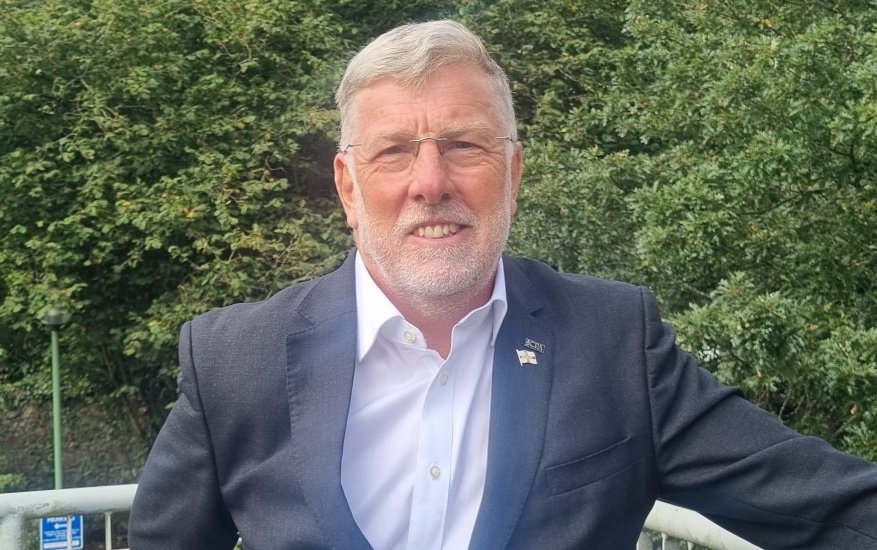
As well as accusations of overreaching bureaucracy, E&I also faced down claims that not enough consultation had been carried out on the changes being approved, and that the charges being linked with the new licensing systems were too high.
Deputy Gabriel won the support of 19 of his colleagues while 14 backed the motion to annul.
This means that the new licensing systems will be brought in, regulating animal welfare businesses including dog walkers, breeders, and pet carers among others.
Deputy Gabriel insisted it was the right decision for the States to make, having already approved the new legislation in principle.
“I’ll say this as plainly as I can to members, this annulment motion would not make Guernsey freer. It would not make government smaller in any meaningful way. It would not help responsible businesses.
“What it would do is remove protections, create uncertainty and send a message that when a decision has been made and implementation has begun, we are willing to unpick it almost immediately, regardless of the disruption that causes to the public and to those who have acted in good faith.
“I do not think that this is the Statesman like thing to do, and I do not think it is what islanders expect. So members, I urge you to reject this motion, to keep the protections in place, to allow the phased system to bed in, and to hold the committee to its commitment to listen, to monitor and to refine where evidence shows refinement is needed without throwing the whole thing into chaos.”
