

‘Safe vehicles, save lives’ is the local focus of this year’s Road Safety Week, with several organisations pledging to help islanders make sure their modes of transport are road-worthy.
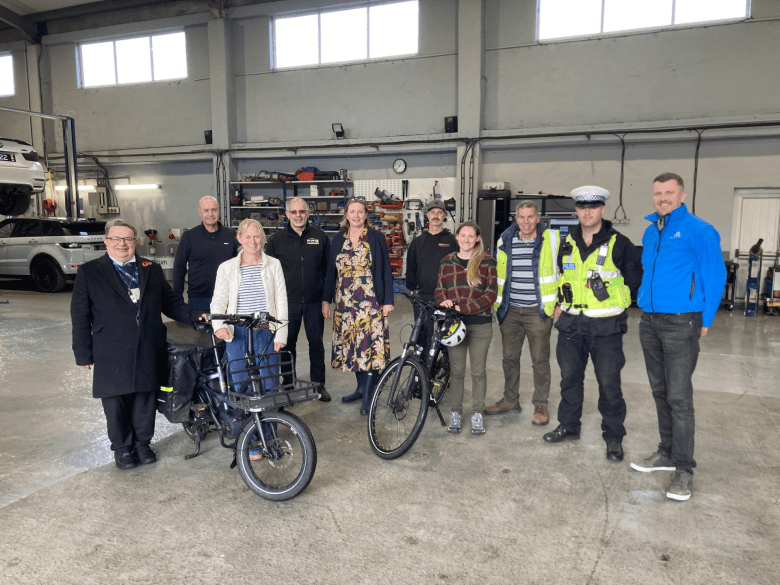
Representatives from road user groups gathered at Euromarque car repairs last week to raise awareness of the importance of making sure cars, vans, bikes, and bicycles are in good working order to minimise risks on the roads.
Jennifer Merrett, Chair of Guernsey Road Users Network, said it is aligning with the UK charity Brake this year “whose vision is a world where no one is killed or hurt on a road and we can all move in a safe and healthy way, whoever we are and however we travel.
“Making sure your brakes and lights work as well as your tyres having enough tread, makes the vehicle safer and can help save lives and injuries as well as near misses.”
Bailiwick Law Enforcement announced last week it would carry out enhanced spot checks on vehicles over the coming days.
The focus is on protecting all road users, but it’s acknowledged pedestrians are the most vulnerable.
“Pedestrians have no protective shell,” said Danielle Bennett of the charity Living Streets. “We rely on every driver taking responsibility for the condition of their vehicle. A brake pad replaced, or a headlight fixed can be the difference between a close call and a catastrophe.”
Deputy Adrian Gabriel, President of Environment & Infrastructure, said road safety was a top issue for his committee and said work is already progressing to improve road crossings and make cycling more attractive.
“We are also progressing the work to introduce periodic technical inspections to meet our international obligations and ensure that vehicles in Guernsey are safe to be in circulation on our roads. These inspections will be proportionate and introduced in a phased manner. The first phase of testing and inspection has been in place for a significant time, as all public service vehicles are subject to an annual inspection,” he added.

The road worthiness of bicycles is a focus locally this year too.
The Guernsey Bicycle Group said car users need to use the modern safety technology that is available to them to prevent accidents, but also said infrastructure is an important piece of the puzzle.
“Safe vehicles won’t prevent collisions if drivers disable safety features like Intelligent Speed Assistance, or if road design forces cyclists into dangerous situations. Technology works best when paired with infrastructure that prioritizes safety over speed. This Road Safety Week, let’s commit to making Guernsey’s roads safer for everyone,” it said.
The active travel unit at the Health Improvement Commission will be offering advice on how to stay safe while cycling, with reminders over basic maintenance, helmet fittings and using reflective jackets and lights appropriately.
“As the evenings grow darker and the temperatures drop, it’s easy to let physical activity slide. But walking or cycling to work or school remains one of the simplest and most effective ways to stay active throughout the winter months. While active travel might feel less appealing in colder weather, it’s still the healthier, more fulfilling choice for your daily journey,” said Amy Woollaston, Active Travel Officer.
“Road Safety Week is a timely reminder to think about how we can protect ourselves and others while commuting. If you’re cycling your bike is your vehicle, so it’s important to take an extra couple of minutes each morning to check it’s roadworthy. Fitting lights, wearing bright or reflective clothing, and doing a quick safety check can make all the difference in keeping you safe on the roads.”
