


Many people were hit hard after the first lockdown, digging into savings, taking mortgage holidays and asking the States of Guernsey for help to get through. For them, a second lockdown has been a tough pill to swallow.
Thousands of people have been told to self-isolate for 14 days during the second wave of the lockdown alone. This has also been the case for people calling the clinical helpline after noticing Covid-like symptoms.
There is currently no legal right to pay somebody who is not sick but has been told by Public Health to self-isolate, or has been moved into quarantine. Employers are simply advised to follow their usual sick pay policy or agree for the time to be taken as holiday.
The concern is the pressure this puts on employees who cannot afford to lose their income.

Pictured: Many people are now working from home, but for some, this is simply not possible.
A number of instances have been highlighted by members of the public, where the situation has become muddled, confusing and uncertain.
“Some of my colleagues have pre-existing medical conditions,” said one essential worker we spoke to. “They’ve had their Doctors write letters saying they don’t think it’s a good idea, and we wouldn’t recommend, for them to go into work because they’re high risk.”
“These colleagues have been told to make themselves available for work, otherwise [their employer] can’t guarantee their jobs.”
When asked about sick pay and self-isolation, they said: “We only get five days sick pay, we won’t be paid for self-isolation.”
Many employers have been severely impacted by restrictions on business and have asked for support from the States of Guernsey, who are in many cases providing a state-subsidised minimum wage to employees.
“You have no idea how embarrassing and degrading it is to ask for help”
A hardship fund has also been launched by the States of Guernsey to help get people through the pandemic.
“You have no idea how embarrassing and degrading it is to ask for help,” said one worker who lost a second job due to lockdown.
“I lost one [job] completely due to the first lockdown, as it wasn’t deemed essential. It’s clear that everything errs on the side of the employer – there are many grey areas [in the law] so it can sometimes be interpreted as the employer wishes.”
A parent we spoke to said their child was asked to come into work despite displaying symptoms consistent with Covid-19.
“[Work] was reminded of the test they were meant to be having, but they were told to come in despite having symptoms. My concern and that of the clinical helpline was how many others were being asked to work prior to tests.”
The pressures on people’s finances are huge, and, for some people, it has been coupled with the Civil Contingency Authorities’ clear message to Stay at Home, and some less than lenient employers.
When these concerns were raised by the Express during the latest media briefing, the Head of the CCA, Deputy Peter Ferbrache, said: “The paramount consideration is safety. You must not go to work if you’re feeling ill or if you’ve got any symptoms at all.”
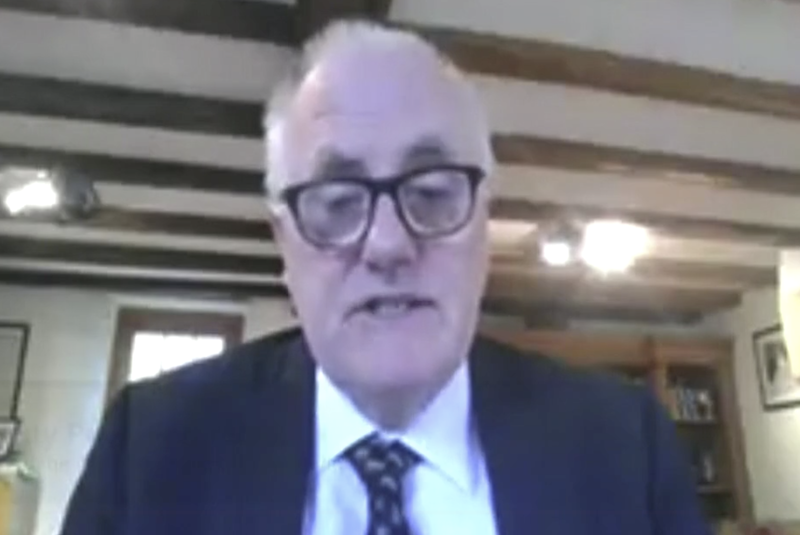
Pictured: Deputy Ferbrache said the health and safety of you, your workplace, and the general public, is the most important consideration.
He said there is support available to people in tricky situations.
“If people have concerns, they should contact those at Employment Relations. They can be treated anonymously it that helps the employee. Most employers are acting reasonably, there are bound to be one or two that will not be.”
“There is employment protection law in Guernsey, it’s been in place for over 20 years.”
If you are finding lockdown difficult, especially in relation to work or an employer, you can contact Employment Relations online. There is also information on financial support online too.
“Don’t feel pressured by your employer to work in circumstances where you clearly should not be,” said Deputy Ferbrache.
