


The States have approved all parts of the new Government Work Plan – confirming the government’s five ‘super priorities’ for this term of office.
Guernsey’s elected officials weighed up the pros and cons, and everything in-between, during this week’s debate.
They’ve now agreed that Policy & Resources must incorporate a 1% real-terms annual reduction in baseline public expenditure into the Funding and Investment Plan for 2027–2029.
A formal programme must also be established to review States’ expenditure and the Chief Executive now has a formal mandate to lead a priority programme aimed at “improving public service performance, culture, and capability”.
P&R is also now legally required to publish six-monthly progress and budget reports on the Major Projects Portfolio starting from this July, and it must provide formal update reports to the States at the mid-term and end-of-term stages, which must now include specific commentary on economic trade-offs and capacity.
Formal work will also now begin on assessing AI governance options and refreshing the Children & Young People’s Plan following direct youth consultation.
Under the GWP, every Principal Committee is also now directed to publish its own specific Work Plan for the term, and the States’ Assembly & Constitution Committee must review the Rules of Procedure to ensure they support the delivery of the GWP.

Pictured: Voting results for Proposition 1. 
Pictured: Voting results for Proposition 2. 
Pictured: Voting results for Proposition 3. 
Pictured: Voting results for Proposition 4. 
Pictured: Voting results for Proposition 5. 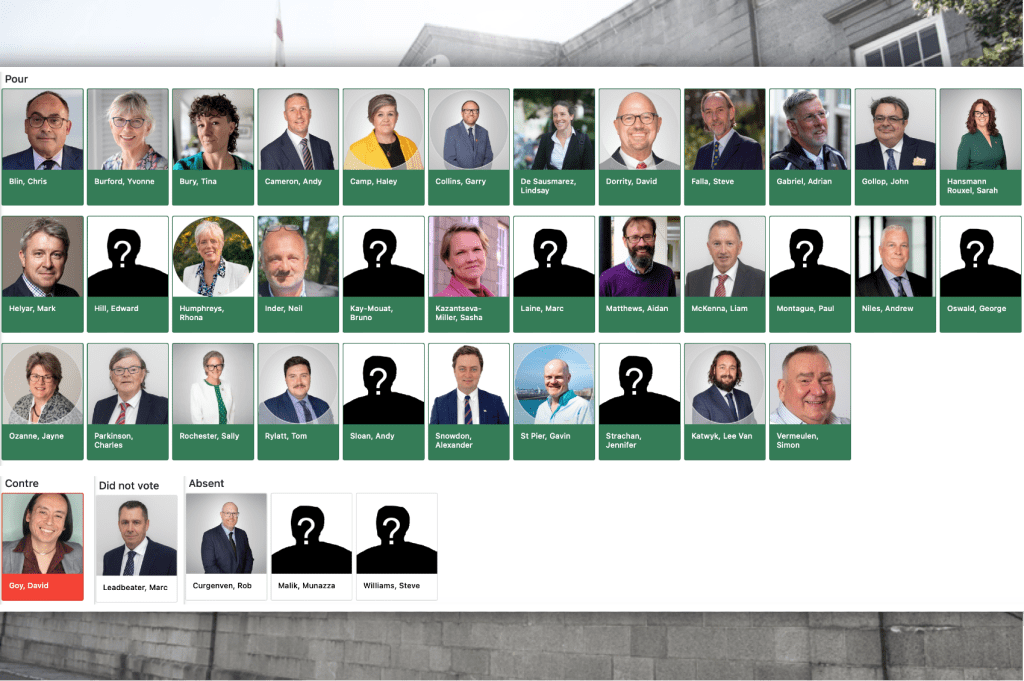
Pictured: Voting results for Proposition 6. 
Pictured: Voting results for Proposition 7. 
Pictured: Voting results for Proposition 8. 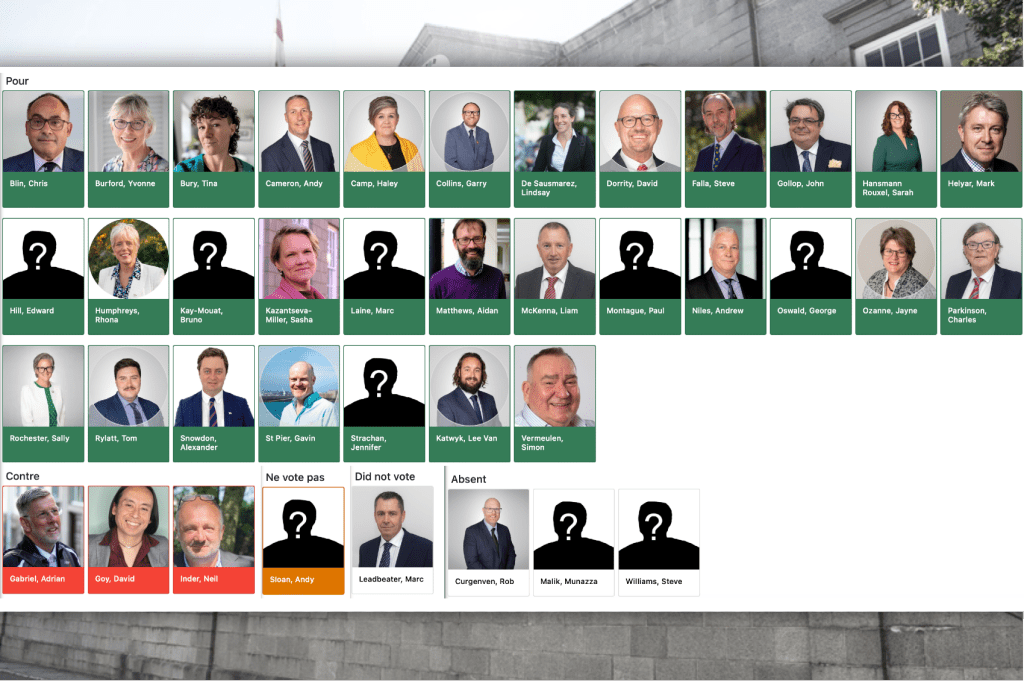
Pictured: Voting results for Proposition 9. 
Pictured: Voting results for Proposition 10. 
Pictured: Voting results for Proposition 11. 
Pictured: Voting results for Proposition 12. 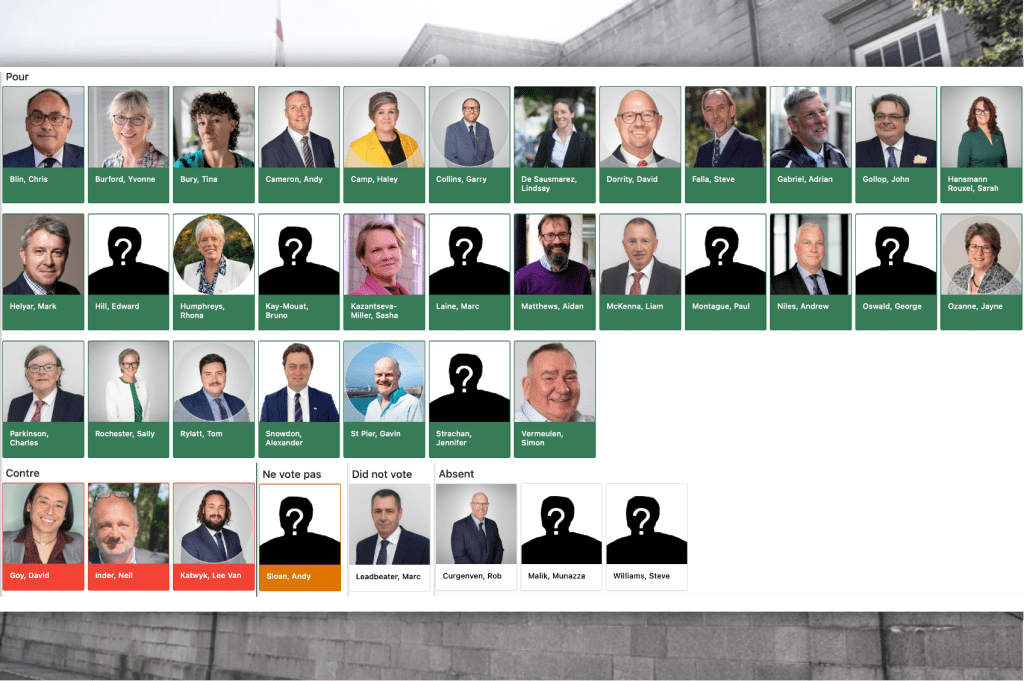
Pictured: Voting results for Proposition 13.
How did the GWP get changed?
Debate on 11 amendments to the GWP made up the bulk of the January States meeting.
Starting Wednesday afternoon, it wouldn’t be until the end of the Friday morning session before anything but the amendments would get a look in.
The original GWP was designed as a strategic roadmap to address Guernsey’s long-term stability and prosperity by focusing on three core areas, ‘Foundations for Our Future’, ‘Island Resilience’, and ‘Sustainable Wellbeing’.
The initial plan identified five ‘Super Priorities’ which were intended to receive the highest strategic attention and resource allocation.
These would be deciding on and implementing changes to taxation and social security to address the structural deficit, commencing the redevelopment of Leales Yard to provide housing and commercial space, and defining a new, “financially viable model” for health and social care provision.
It would also aim to create a framework to improve outcomes for children and support workforce participation for parents, and settle on a long-term solution and detailed designs for harbour infrastructure.
Sculpted through the acceptance of several amendments, the GWP shifted from a more general policy outline, in the direction of a plan with specific fiscal targets and mandated reforms.
It now includes a target for a 1% real-terms annual reduction in baseline public expenditure for 2027–2029, and a programme for zero-based budgeting has been established to review States’ expenditure from first principles rather than historical levels.
The plan now features a workstream for AI governance, and a refreshed emphasis on the Children & Young People’s Plan based on direct youth consultation.
Another key change saw Policy & Resources told it must now provide six-monthly public reports on the performance and budget of the Major Projects Portfolio, such as the hospital modernisation plan.
Amendment 1
Brought by Deputy Haley Camp and seconded by Deputy Lindsay De Sausmarez, the amendment aimed to modify ‘Proposition 5’ of the GWP, to require that progress reports include specific commentary on how the plan has supported economic capacity, the trade-offs involved in delivery, and how economic considerations were balanced against other policy goals.
It was successful, passing with 37 in favour, none against, no one voted ‘Ne Vote Pas’, just one Deputy abstained, and another was absent.

Amendment 2
Again brought by Deputy Haley Camp and seconded by the President of Policy and Security, the amendment formally embeds economic development, competitiveness, and productivity as ‘enabling conditions’ that underpin all super priorities.
It also establishes that supporting long-term economic capacity is a ‘whole-of-government’ responsibility shared across all committees.
It too was approved, passing with 35 in favour, none against, three voted ‘Ne Vote Pas’, no one abstained, and one was absent.
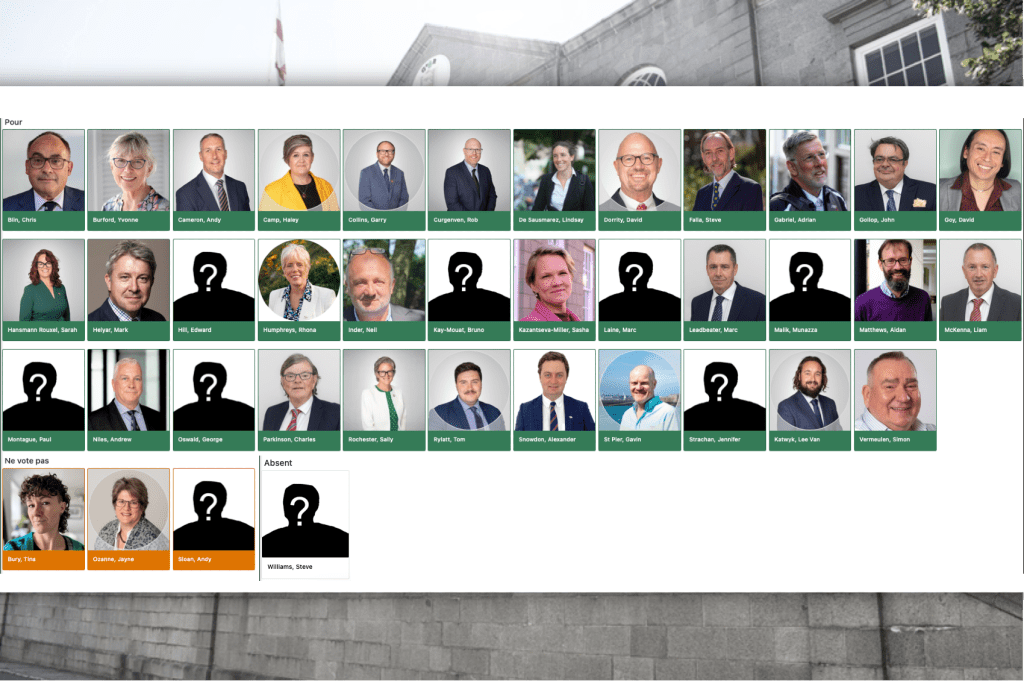
Amendment 3
This amendment was brought in by Deputy Marc Laine, and seconded by Deputy Mark Helyar.
It mandates the Chief Executive to lead a priority programme of organisational reform aimed at improving the performance, culture, and capability of the public service. This includes publishing clear terms of reference and utilising external expertise.
It to was smooth sailing when it came to the vote, passing with 37 in favour, none against, no one voted ‘Ne Vote Pas’, one abstained, and one was absent.

Amendment 4
Deputy David Goy sought to direct the Policy & Resources Committee to launch a publicly accessible digital platform or webpage by 1 July 2026.
Seconded by Deputy Rob Curgenven, it effectively would have attached Key Performance Indicators to the work of the GWP.
They would have tracked GWP progress using concrete targets, milestones, and both qualitative and quantitative metrics, with updates required every six months.
However, it fell to the States Chamber floor, failing to pick up the necessary amount of support with just 12 voting in favour, 23 against, two voted ‘Ne Vote Pas’, one abstained, and one was absent.
There was a silver lining for the Amendment, with P&R’s President and Vice President pushing a late amendment which attempted to make the most of the best bits of Deputy Goy’s Amendment 4.

Amendment 5
This one never made it to the States Chamber, having not been laid.
Brought in by Deputy Sally Rochester & Deputy Jennifer Strachan it aimed to add a new workstream to develop a coordinated Youth Strategy for children aged 5–18.
This would have been included under the ‘Foundations for Our Future’ theme, and developed in partnership with the Youth Commission. It was spiritually replaced by Amendment 9.
Amendment 6
Proposed by Deputy Haley Camp and seconded by Deputy Rob Curgenven, the sixth amendment introduces a zero-based budgeting programme. Material areas of expenditure will be reviewed from first principles rather than historical baselines, with initial findings to be reported by the GWP mid-term report to inform future budgets and policy.
It was approved 35 in favour, no one voted against it, but one chose ‘Ne Vote Pas’, two abstained, and one was absent.

Amendment 7
The second major win for members of the Forward Guernsey Party as part of the GWP, this amendment was proposed by Deputy Rhona Humphreys, and seconded by Tom Rylatt.
It sets a target for a public service efficiency programme to achieve a 1% real-terms annual reduction in baseline public expenditure for 2027, 2028, and 2029. This is intended to demonstrate fiscal responsibility alongside tax reform.
It passed through the chamber with 29 votes in favour, five against, three ‘Ne Vote Pas’, one deputy abstained, and one was absent.

Amendment 8
Brought by Deputy Tom Rylatt to the Chamber, and seconded by Deputy Rhona Humphreys, the two Forward Guernsey Party members worked together to focus on Artificial Intelligence.
It expands the existing GWP workstream on Artificial Intelligence, and directs P&R to assess options for strategic AI coordination and governance, including the potential for a dedicated AI Office (something seen in Jersey and the Isle of Man) with recommendations due by December this year.
It passed 33 in favour, four against, no one voted ‘Ne Vote Pas’, one abstained, and one was absent.

Amendment 9
An amendment described by Head of Education, Sport and Culture, Deputy Paul Montague as “genuinely significant”, the former teacher spoke in favour of the amendment which he had seconded.
Proposed by Deputy Sally Rochester the amendment introduces a new workstream, titled ‘Responding to the Needs of the Island’s Young People’, under the ‘Foundations for Our Future’ theme.
It directs P&R to refresh the statutory Children & Young People’s Plan to be more holistic and less focused solely on safeguarding.
It instructs the top committee to conduct direct consultations with children and young adults aged 5–25 to ensure their voices shape government policy, as well as to coordinate with third-sector organisations and partner with the Youth Commission.
It also required the budget be under £100,000 for the consultation and development phase.

Amendments 10 & 11
Amendment 10 was lodged late and immediately replaced by Amendment 11 – both seeking to ensure the States’ Chief Executive will report back to the government on major public service work streams as part of an annual report.
The amendments sought to bring greater public visibility to the States’ most significant long-term investments, which are currently managed outside the Government Work Plan.
It was proposed by P&R President Deputy Lindsay de Sausmarez and Vice President, Deputy Gavin St Pier, and seemed to be a toned down version of Deputy Goy’s rejected Amendment 4.
It directs the Policy & Resources Committee to publish a publicly accessible report on the Major Projects Portfolio by 1 July 2026.
Progress updates must be provided at least every six months thereafter, and they must include specific data and metrics showing how each project is performing against its original plan and budget.
This covers high-cost initiatives such as the Hospital Modernisation, the Affordable Housing Development Programme, and digital projects like the Electronic Patient Record.

