


Guernsey’s 2024 Education Strategy Annual Report was recently published – confirming the successes and challenges faced last year and setting the priorities for this and coming years.
The Committee for Education, Sport & Culture uses the strategy to guide the development of the island’s “complex system of education”.
They say it reflects “our core values and collective aspirations” and that it is “both ambitious and underpinned by continuous improvement” in educational settings and opportunities for students in Guernsey and Alderney.
“The Education Strategy serves as a common point of reference for what the Bailiwick’s education system needs to deliver,” says ESC.
The development and implementation of the Education Strategy is supported by the workforce through a staff Network Group, that works together to embed the Strategy in each setting, with staff fully engaged and active in supporting its aims.
Among its successes during 2024 were positive Ofsted ratings, and “a significant rise in literacy levels” – while challenges included a decline in school attendance and a need to raise mathematics attainment level.

Priorities set for the coming years include ensuring “excellent outcomes” and “outstanding leadership” across our schools.
Successes
The 2024 annual report is claiming “a significant rise in literacy levels across all settings, building on the success of 2023”.
Current data suggests literacy rates at all Key Stages have increased, with English GCSE results in Guernsey and Alderney (75.5% above Grade 4) comparing favourably (on average) to those attained in England (71.2%).
Beyond school, efforts are also being made to improve literacy levels with The Guernsey Institute (TGI) expanding the adult community learning, digital, and ICT programmes available with a particular focus on adult literacy and numeracy.
ESC says it’s also celebrating the success of the first group of teachers who have graduated from the new on-island Initial Teacher Training programme. They have already begun their teaching careers in local schools
Those schools are all now equipped with “up-to-date interactive teaching screens” in each classroom, according to the 2024 Education Strategy Annual Report with “a significant amount of training” supporting the new teachers as they integrate into daily teaching.
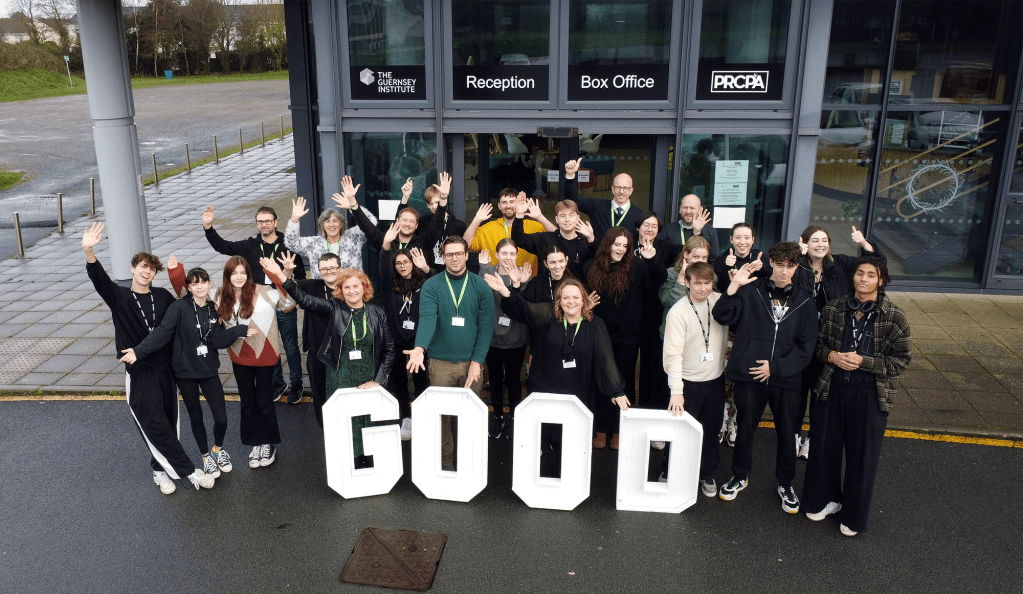
ESC also highlighted the Ofsted inspections carried out last year – which saw each educational setting reviewed rated as ‘Good’ – which is the second highest ranking available.
ESC said this “compares favourably with England, where only 80% of schools were rated good for behaviour”.
The students themselves helped schools achieve accolades too, with eight schools attaining the Gold UN Rights Respecting Schools award.
Four more now hold Silver awards, whilst the other seven hold Bronze awards.
Challenges
Despite successes across education settings and highlights featuring students and staff, ESC has acknowledged a number of challenges that persist as it follows the Education Strategy.
Some of these challenges are ongoing, including aims to improve school attendance figures which have not yet recovered to pre-COVID levels.
In 2024, school attendance was 94.7% at Primary and 86.8% at Secondary schools. The Special Schools reported 86.2% attendance.
ESC acknowledges this is below what it was in 2019 and earlier when it was 95% or above.
Improving attendance levels comprises various methods including working on reducing behaviour incidents within schools, to reduce the number of ‘fixed-term exclusions’ authorised.
“Reducing staff sickness absence, and enhancing staff retention” is also highlighted as ways of improving attendance statistics and ESC said that is on their radar.

“Poor school attendance is a significant problem internationally, which has worsened post-COVID 19,” said ESC.
“The Education Endowment Foundation reports that poor attendance at school is linked to poor academic attainment across all stages as well as increasing anti-social behaviour, both in school and in the wider community. Evidence suggests that small improvements in attendance can lead to improved outcomes, both academically and socially.”
Maths attainment is another key challenge Education faces in Guernsey and Alderney, with last summer’s Bailiwick wide average at GCSE showing that 62.8% of students were awarded a grade 4 or above – down from 69.7% the year before.
At the time ESC pledged to improve those figures and the committee has now admitted it remains a challenge.
Other challenges include efforts to embed the effective use of digital technology in all education settings, continuing to further strengthen the ‘Quality of Education’ in all settings through the implementation of High-Quality Inclusive Practice, and fully embedding the new Additional Learning Needs Code of Practice in all settings.
ESC says progress is being made in each of those areas.
Priorities
Looking to 2025 and beyond, ESC has set its educational priorities as:
• Equity, safety and inclusivity
• Meeting the needs of the community
• High-quality learning and excellent outcomes
• Outstanding leadership and governance
The committee says each of these priorities has “several commitments within each of them”.
These cover cultures, practices, the curriculum, and safeguarding among other matters within Priority 1 – Equity, safety and inclusivity.
Priority 2 – Meeting the needs of the community – focuses on equipping learners with the knowledge and skills they need, and making the best use of public resources available to aid learning.
Priority 3 – High-quality learning and excellent outcomes – poses ambitions to ‘champion early intervention’, ensure ‘best practice’ in all settings, and to offer ‘lifelong learning’.
And ongoing reviews, development, and reports are covered by Priority 4 – Outstanding leadership and governance.

The Education Strategy 2024 Annual Report was published earlier this month and Deputy Andrea Dudley-Owen, President of the Committee for Education, Sport & Culture, said she was pleased to highlight some of the successes achieved.
“We are pleased to share our latest Education Strategy Annual Report, reflecting on a year of transformation in education,” she said. “Highlights include a focus on Early Years with the Joyous Childhood Family Event and Conference, the launch of the Additional Learning Needs Code of Practice to support all learners, and the work of Interim Governance Boards strengthening accountability across our schools.
“We’ve also marked the start of construction works at Les Ozouets Campus, realising our vision for a single post-16 campus with state-of-the-art facilities. Finally, we celebrated 75 years of apprenticeships—honouring the thousands of islanders who have gained skills through this vital scheme. As we look to the future, we’re committed to continuous improvement and are aspiring for excellence, underpinned by a dedication to unlock the potential of all our students.”
Both Deputy Dudley Owen and Nick Hynes, the Bailiwick’s Director of Education, acknowledged the ongoing need for progress with challenges and priorities highlighted alongside the successes.
“This third Education Strategy annual report reflects the dedication of all our staff, families, and community in improving outcomes for all learners. In 2024, we made significant progress, from rising literacy levels and positive Ofsted inspections, to implementing our digital transformation, and laying the groundwork for the new post-16 campus and secondary school system in 2025.
“Our focus remains on delivering high-quality, inclusive education that is fit for purpose in our ever-changing world. Education is a shared responsibility, and by working together, we are working to secure a bright future for all children, young people and learners more generally in Guernsey and Alderney.”
