


Now we know who is standing in Guernsey’s first fully island wide by-election, Express has been looking at what will happen next.
One of the 11 candidates will be chosen by voters to represent them until he next general election is held in 2029.
There’s a lot of work to do before then!
The current States is working on a list of priorities known as the Government Work Plan.
It is considered to be the blueprint for what the States intends to prioritise and deliver over each political term.
Covering the period 2026 to 2029, the 36-page plan – published in 2025 – sets out where resources, time and political focus should be concentrated in response to what it describes as growing pressures on housing, infrastructure, public finances, health and care, and other long-term island challenges.
The plan is structured around three overarching areas of focus:
- Foundations for Our Future
- Island Resilience
- Sustainable Wellbeing

P&R has also set out plans for changing the way capital projects are prioritised to ensure work streams can move up and down the priority list as needs change.
To do this, they’re also looking for people to volunteer to keep an eye on that work by providing “independent insight and constructive challenge to the board responsible for overseeing major government projects”.
The electoral roll
An update will be given on the work completed against the Government Work Plan in June, by which time the candidate elected at next month’s by-election will have been sworn in and have started work.
Anyone who is over 16, ordinarily resident in Guernsey and has been for at least two years, and is registered to vote on the electoral roll can take part in the by-election.
Anyone who registered on the electoral roll in the lead up to the General Election last year don’t need to take any further action if they want to vote in the by-election on 29th April 2026.
However, anyone who didn’t register but now wants to, or anyone who has become eligible to vote since the General Election, can register on the electoral roll at Electoral Roll Submission. The electoral roll will close on 25th April.
Beau Sejour will be the main polling station for the by-election; however there will be three additional polling stations at St Martin’s Parish Hall, Castel Douzaine Room and Vale Douzaine Room.
Postal votes
If you want to vote by post – and not have to go to a polling station on by-election day – you have to register for that option.
Anyone who was registered for a postal vote for the June 2025 election has to register for one again too – they do not roll over from one election to the next.
You can do this via the electoral roll registration form at Electoral Roll Submission.
The deadline for choosing a postal vote is 10 April.
If you don’t register for a postal vote you can still vote in person on polling day, whether you were on the electoral roll for last year or you’ve signed up again this month.
The candidates
Some of the 11 candidates for this first island wide by-election are already well known on the political scene – while others are dipping their toe in for the first time.
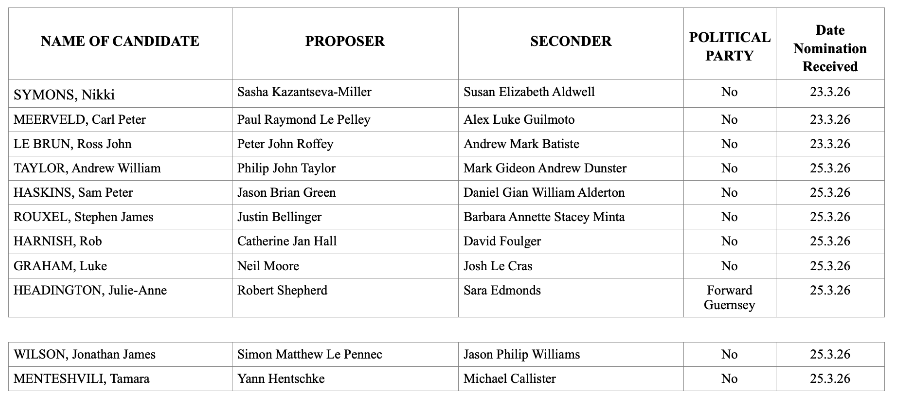
To find out more about each of them click on their names below.
Candidates are listed in the order in which they were nominated.
Nikki Symons
Nikki Symons stood for election in June 2025, amassing 4,676 votes, coming 54th out of the 82 candidates.
Prior to launching herself on the political sector she worked for the States as a civil servant, most prominently as the Head of Marketing and Events for the Committee for Education, Sport, and Culture. This work included being involved in organising Liberation Day events over many years.
In 2025’s election manifesto she said her key priorities were dealing with the lack of affordable housing, the strain on the island’s healthcare system, the cost of living, and the need for our economy to grow and remain competitive.

Carl Meerveld
Former Deputy Carl Meerveld was in the States between 2016 and 2025, before losing his seat at the June 2025 election. He came 42nd last summer with 5,225 votes.
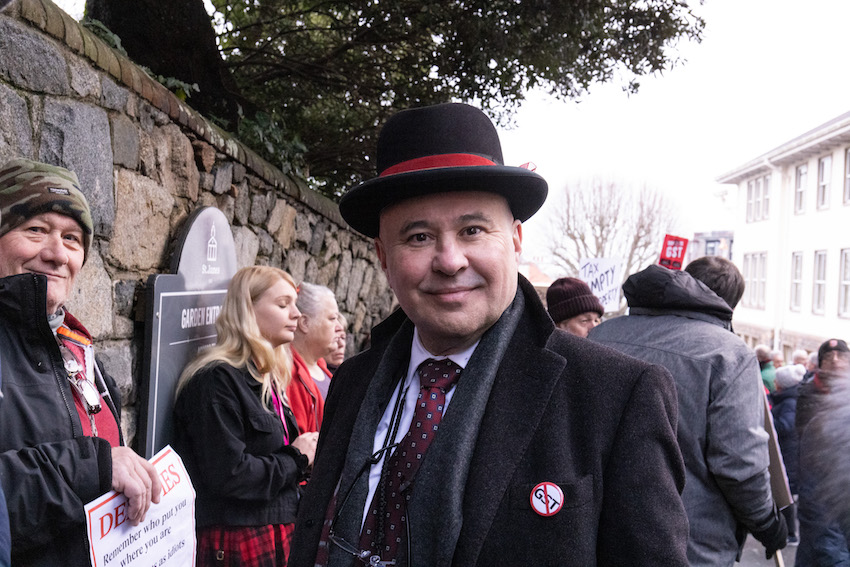
During his nine years in the States he was a controversial character, seen visibly supporting or protesting the issues he cared most about – including leading an anti-GST march and campaigning against the ‘two-school model’, while supporting plans to lease our seabeds out to a commercial wind farm developer.
That remains one of his key policies as he said in his 2025 manifesto that it will help fund Guernsey’s public services, negating the need for GST.
Ross Le Brun
Ross Le Brun stood for election in the Castel in 2016 and in the first and second island wide elections in 2020 and 2025. Having secured 3,893 votes, coming 60th he is undeterred and has continued commenting publicly on community and political matters since last June. He also sat on the Committee for Employment and Social Security as a non-States member during the 2020-25 term.
Well known for his views on road safety matters, he frequently voices support for measures to encourage active travel while highlighting dangerous junctions and driving. He also uses his artistic talents widely and has previously said that some of the money raised by the introduction of GST should be spent on making life easier and better for less well off people.

Andrew Taylor
Andrew Taylor was elected to the States in October 2020 in the first fully island-wide election. Polling 7,700 votes, he came 27th claiming 31.55% of the overall vote.
He chose to stand down in June 2025 but has now decided to re-enter politics.
During his term of office, then-Deputy Taylor was a controversial member and Vice President of the Development and Planning Authority – often clashing with his President. Notable work during his term of office included pushing for answers around the Leale’s Yard development and the Fort Richmond situation.
Outside of politics the entrepreneur has owned and run coffee shops, and tour businesses.

Sam Haskins
Sam Haskins was elected to the States in October 2020 in the first fully island-wide election. He lost his seat in the June 2025 election.
Having come 17th with 8,896 votes in 2020, Mr Haskins polled 5,058 voters to come 46th last year.
Prior to politics he worked in the marine industry holding a degree in marine engineering and describing himself as a “man of the sea”.
While in the States he was Vice-President of Environment and Infrastructure at first, before being elected as Vice-President of Education, Sport, and Culture.

Stephen Rouxel
Stephen Rouxel resigned from his role as President of Guernsey’s Chamber of Commerce to stand in the by-election.
With a background in finance and on the stage, Mr Rouxel has pledged to attend “as many hustings events as his rehearsal schedule” for an upcoming production of Hunchback of Notre Dame “will allow”.
He has self-admitted “radical–economic policy ideas (which) I think are necessary to improve the business environment, increase the purchasing power of money in the pocket of the Guernsey people, job prospects for our kids and general economic stability”.
This is Mr Rouxel’s first foray into politics, but he’s expected to be well-versed in how it works because he was until last year married to SACC President, Deputy Sarah Hansmann-Rouxel.

Rob Harnish
Rob Harnish has previously stood in a district election in 2016 and the first fully island-wide election in 2020.
Having previously worked for Elizabeth College and the Town Church, he is now the manager of the Ron Short Centre.
In his 2025 manifesto he pledged to ensure every voice counts with a commitment “to hear and act for you”.

Luke Graham
Luke Graham was arguably one of the more controversial candidates in the June 2020 election, with his campaign creating a lot of noise on social media with members of the public actively campaigning against him due to some of his views.
Mr Graham’s first foray into politics saw him win 1,072 votes to come 78th in the polls.
He has used the catchphrase “for Guernsey, for Good” in his campaign last year, claiming “I’m not a career politician. I’m a fighter, a listener, and someone who loves this island deeply. Guernsey is more than where I live – it’s who I am. I will give everything I have to protect it. I won’t bow to pressure. I won’t be bought. I will lead with honesty, courage, and strength.”
Mr Graham recently appeared in court charged with not declaring his campaign expenses from last year and assault.

Julie-Anne Headington
Julie-Anne Headington is the only party representative in the by-election, standing as a candidate for Forward Guernsey.
With her husband, Mrs Headington ran Channel Islands Adjusters Limited for 22 years and currently works at Victim Support. She also volunteers for the Cardiac Action Group and the Priaulx Premature Baby Foundation.
Having grown up in a States house and run her own business, Mrs Headington said: “I know first-hand the challenges islanders face – and the opportunities Guernsey can offer. I want to use my experience in business and the voluntary sector to help build an island that can address today’s challenges while investing in its future.”
Forward Guernsey will be hosting Meet the Candidate events from 09:00 – 12:00 at Saturday 11 April at Beau Sejour and 18:00 – 21:00 on Wednesday 15 April at Les Cotils.
Jonathan Wilson
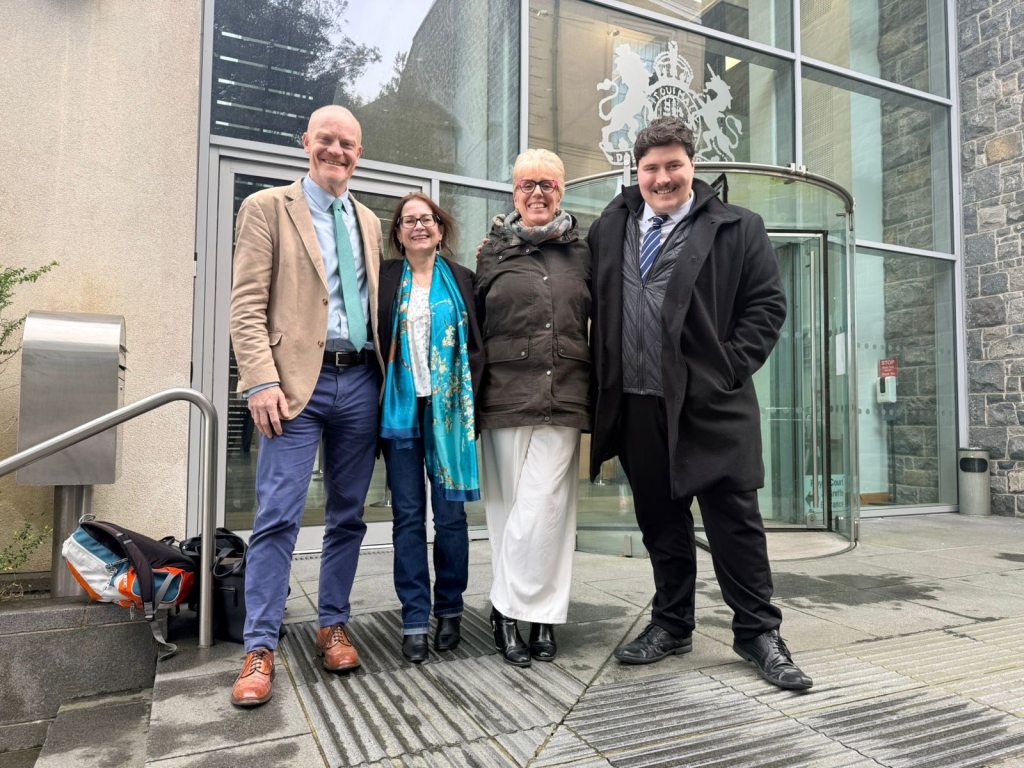
Jonathan Wilson stood in the 2020 election polling 4,282 votes, coming 68th. He did not stand in 2025.
His manifesto website claims “Guernsey has everything. It’s time to use it.”
With the GST+ debate looming this summer, Mr Wilson’s website suggests using clean energy revenue in place of a consumption tax.
Mr Wilson has previously been sanctioned by the GFSC for failing to meet licensing criteria.

Tamara Menteshvili
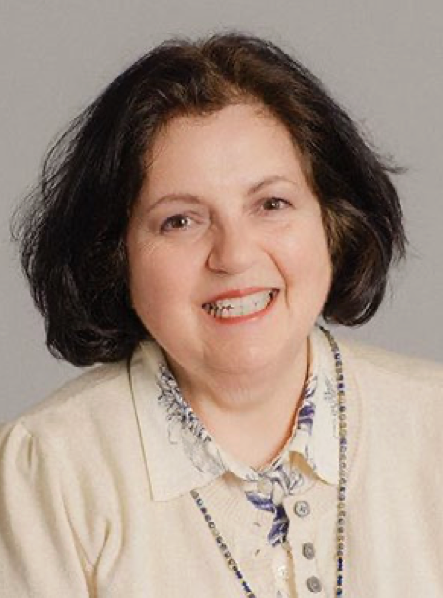
Tamara Menteshvili stood for election in June 2025, receiving 4,328 votes to come 59th.
She worked within the finance sector decades and was instrumental in the founding of The International Stock Exchange which is based in Guernsey. If elected, in 2025, she said she wanted to focus on three particular areas: health/social care, education and treasury functions. She said she wanted to “effect positive changes for all age groups and funding policies to ensure they happen”.
Ms Menteshivili has also volunteered for Les Bourgs Hospice and has been involved with local choral groups.
The candidates will each have the chance to have their manifesto published online at byelection2026.gg.
A printed candidate manifesto booklet is not being produced for the by-election.
Past by-elections
By-elections often have lower turnouts that general elections.
Both of Guernsey’s two fully island-wide elections have had high turnouts with an 80% turnout in 2020 and a 72% turnout in 2025.
The most recent by-election for a seat in the States was held in October 2016 and it brought Deputy Neil Inder into Guernsey’s political world.
That by-election had a turnout of 33.59%. Other recent by-elections in Guernsey for parish officials have recorded turnouts of below 5%.

Deputy Inder had stood for election in the district vote in April 2016, narrowly missing out in the Vale.
However, popular parish politician Deputy Dave Jones died shortly after being re-elected to the States prompting the October 2016 by-election.
The by-election that year saw four candidates contesting the one vacancy.
Deputy Inder secured 685 of the 1,724 votes, finishing ahead of Garry Collins, Simon De La Mare, and Rick Lowe.
Mr Lowe has also since died, while Mr de la Mare was elected to the Vale Douzaine. Deputy Collins also served the Vale Douzaine before being re-elected to the States in 2025.
By-election day 2026
For this year’s by-election, there will be four polling stations across Guernsey on 29 April including one in the Vale.

The polling stations will be at Beau Sejour, St Martin’s Parish Hall, Castel Douzaine Room, and Vale Douzaine Room.
Each polling station will be open from 08:00 until 20:00 on 29 April.
No matter where you live in the island you can vote at any polling station.
Each polling station will be fully accessible to all voters.
An easy-read guide on where to vote can be found here.
Completed postal votes may also be dropped off to any polling station until 20:00 on 29 April. Postal votes must otherwise arrive in time for 29 April to be counted.
Post-election
The by-election is scheduled for 29 April. The ballot sheets will be counted and the results declared on 30 April.
The winning candidate will be sworn in on 11 May.
The next States meeting after that is scheduled to be held on 20 May, meaning within weeks the winning candidate could be speaking and voting on your behalf.
