

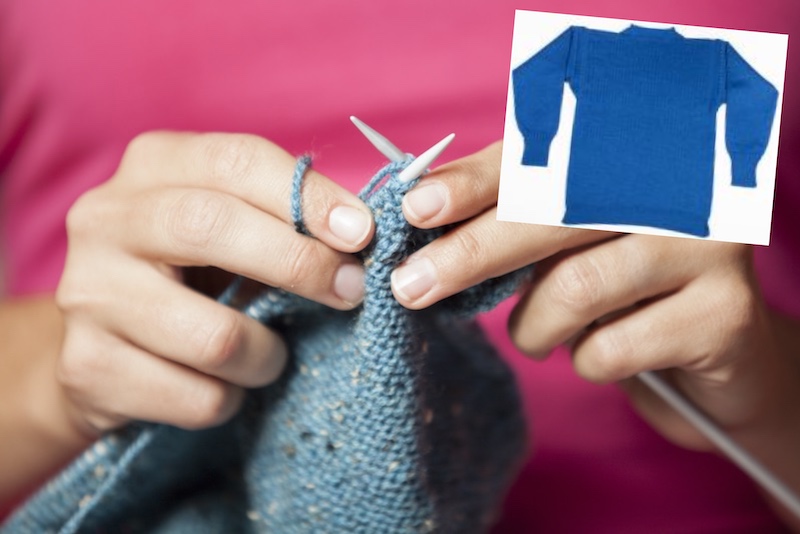
As hundreds of people marked ‘wear a guernsey day’ manufacturers are again wondering why the knitwear isn’t protected as a piece of Guernsey’s culture and history.
While Champagne can only be called Champagne if it is made in the Champagne wine region of France, and Stilton cheese can only be called Stilton if it is made in three designated areas in England, after taking its name from a Cambridgeshire village, there is nothing to stop anyone knitting a jumper and calling it a guernsey.
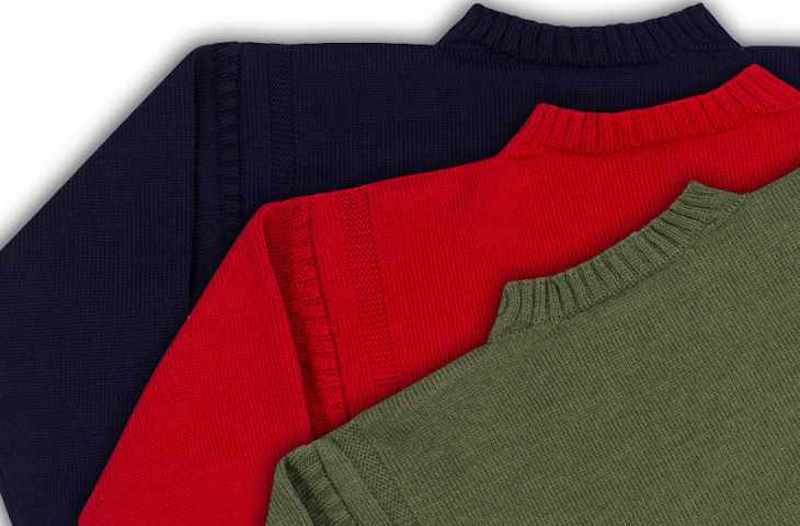
Traditionally, a guernsey was hand knitted in Guernsey for fishermen to wear.
They date back to at least the 17th century and the original jumpers had a ‘diamond’ insert under the arms for ease of movement.
Families would have their own distinctive stitch patterns on the jumper including ribbing at the top of the sleeve, to help identify fishermen in the event of a tragedy.
Sometimes known as ‘ganseys’ elsewhere, a guernsey is durable – with some people passing them down through their families.
Manufacturers now use modern equipment to make guernseys but many continue to be hand finished.
The two predominant manufacturers in Guernsey are Guernsey Woollens and Le Tricoteur.
Both supported ‘wear a guernsey day’ on Thursday, raising money for Les Bourgs Hospice while celebrating the iconic local knitwear.
Paul Eldridge of Guernsey Woollens said it’s a fun way to show support for the local community, with local produce up for sale yesterday too including bean jar from Mint 56, Gâche Mélée made by G&M Produce, Guernsey Seaweed, Rocquettes Cider, and Wheadon’s Gin.
But, Mr Eldridge said the wider message concerns protecting the guernsey itself.
“It’s not a protected style,” he said. “Anybody can make anything and call it a guernsey, and quite often they lack a lot of the features.
“We’ve got a customer who’s actually quite a good customer, but he saw an advert for a Guernsey for £35 and he particularly liked one of the colours, and he bought one. But the big issue is that when people buy them from elsewhere and put them on and then go ‘I don’t get it, it’s just a jumper’ or ‘what’s so special about them when it’s just an ordinary pullover?’ and yes, if you buy it from somewhere else, it probably is an ordinary pullover. But I think within Guernsey, we try and keep to a sort of a standard of what we think a guernsey should be.”
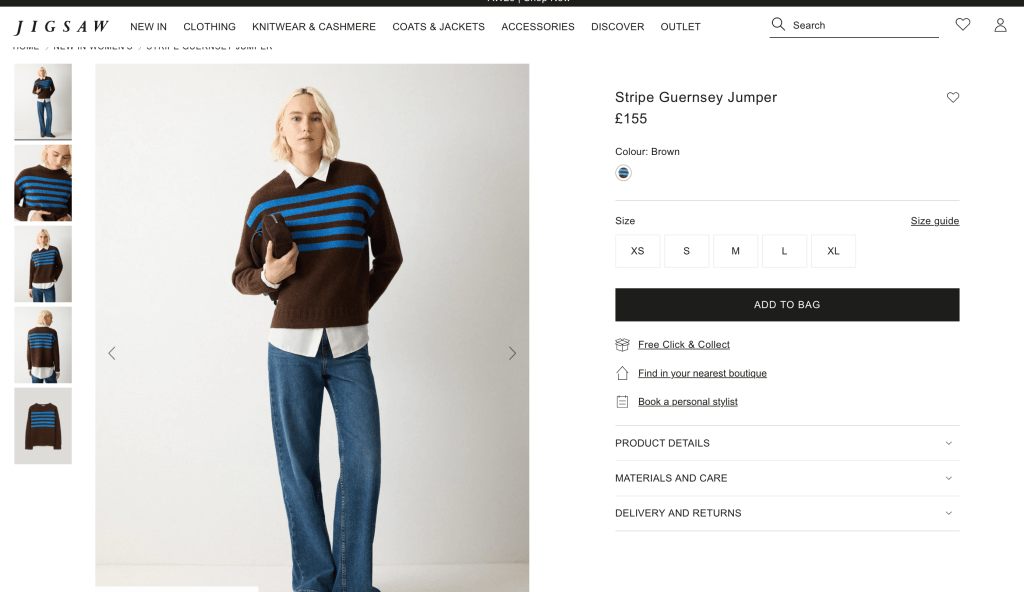
The issue was highlighted earlier this autumn when a fashion label was selling a jumper labelled as a ‘Guernsey jumper’.
At £155 it cost more than a standard traditional guernsey currently does, but it would not have been made in the same way, confirmed Mr Eldridge.
“It should be made of 100% pure new worsted wool, that’s how it’s spun.
“They should be the same front and back, they should have the right hem and the cuff and the gussets in the right place, and I believe that they should be made in Guernsey.”
With guernseys being popular across the world, with thousands exported to Japan and Korea each year, with others sold globally directly through the website, Mr Eldridge said it is important to protect them.
“I’d love to pursue it, I think it would be really important, because obviously you’ve got the likes of Stilton cheese and Melton Mowbray Pork Pies, and you’ve got Champagne. So I think it’d be fantastic to do that sort of thing.”
Mr Eldridge thinks the global market for guernseys could grow even further if the knitwear had the same sort of protection.
“It would encourage us to trade to other parts of the world,” he said. “We get a lot of requests from China and we don’t do anything with it because with Japan we know that there’s such a drive there for it to be authentic and from the right place, and they care about that, and so does the Korean market, to a point, although our Korean customer did say to me they were starting to get copycats. And what they were finding was there was a lot more stuff coming on the market that was the same sort of shape and style, just with a different emblem on the sleeve. It wasn’t a straight out copy it was just a version of it, so obviously, if we had that sort of sort of protection, it would stop an element of that.”
