

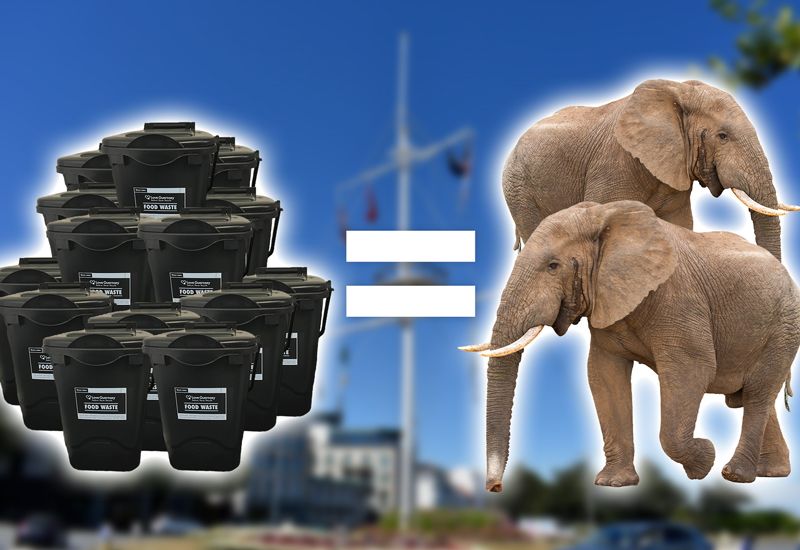
As world leaders gather in Glasgow for the COP26 conference, Guernsey Waste is campaigning to reduce the enormous amount of waste produced when good food ends up in the bin.
Tina Norman-Ross said the main causes of throwing away good food are that it is not eaten in time or too much is cooked.
Guernsey Waste’s ‘Food is Not Rubbish’ campaign aims to highlight just how much food is currently being thrown away, often unnecessarily. It also advises on the food to look out for most and how to waste less.
“Last year we collected nearly 3,500 tonnes of food waste…it’s not all eggshells and vegetable peelings”
It is estimated that if all the bread thrown away in Guernsey every day was stacked up, it would be seven times the height of the Weighbridge roundabout mast.
“The really startling statistic is if you think of food waste as a country, it would be the third biggest contributor to the world’s greenhouse gas emissions, behind the USA and China,” said Mrs Norman-Ross.
“That is the scale of the problem, but it only takes small changes to reduce our own waste, and those translate into big savings.
“Last year, we collected nearly 3,500 tonnes of food waste, just from households, and it is not all eggshells and vegetable peelings. Most of it was perfectly good, had it been eaten in time, or if the right amount had been cooked. And islanders can see for themselves how much is going in their food waste and are starting to appreciate how much it is costing.”
One way of reducing food waste is to plan meals carefully. Mrs Norman-Ross said this was something which became more popular during the Covid lockdowns.
“When we were forced to shop less frequently, because we had to queue, it made us more likely to make a list of what we needed. And if we make a list, we are more likely to think ahead about the meals we are going to have,” she said.
“That simple planning is the secret to wasting less. Buy what you need and eat what you buy.”
