


The data, provided by Aether Limited, showed a decrease of 47.9% over the last decade, which includes a 34.5% decrease between 2019 and 2020.
Transport contributed the largest proportion of greenhouse gases emitted in 2020, followed by commercial and domestic combustion at 29% and 27% respectively.
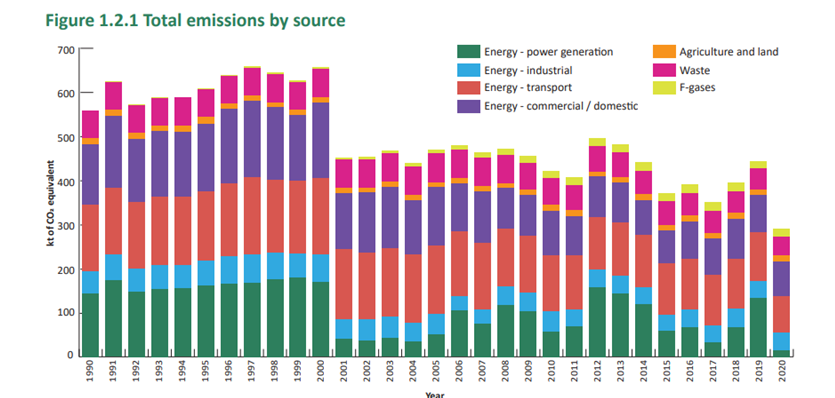
Pictured: Guernsey’s emissions by source from 1990 to 2020.
The air and sea travel restrictions in place throughout most of 2020 due to the pandemic had a significant effect on the number of flights and ferry journeys. There were also decreases in the amounts of petrol and diesel used for road transport and the number of bus journeys taken on island.
Despite the decrease in transport emissions, there was a larger decrease in the emissions from power generation, so this source moved back to being the biggest contributor of emissions in 2020.

Pictured: traffic emissions decreased in 2020 due to the lockdown.
The emissions inventory only includes emissions from Guernsey and not imported consumption from Europe. A significant contributing factor to the decrease is the fact that electricity has been imported via a cable link to France since 2001.
Some electricity is still generated on island and it is this amount which impacts most noticeably on the total level of emissions.

In 2012, a fault in the cable link to France resulted in the need to generate electricity on island, which resulted in an increase in power emissions that year. There were subsequent cable faults in 2018 and 2019 which lead to further increases in power generation emissions.
Combustion fuels for energy including electricity, heating, industrial processes and transport made up 74% of total emissions in the year to 2020. The majority of emissions are in the form of carbon dioxide, although methane and nitrous oxide are also released in the combustion process.
Landfill waste was the next largest contributor to Guernsey’s total emissions and the proportion contributed has remained largely consistent since 1990. These emissions are mostly in the form of methane gas, which is released by decomposing material.
The bulletin states: “there was a large reduction in the amount of waste sent to Guernsey landfill in 2019, and the emissions will decrease gradually as the waste decays”.
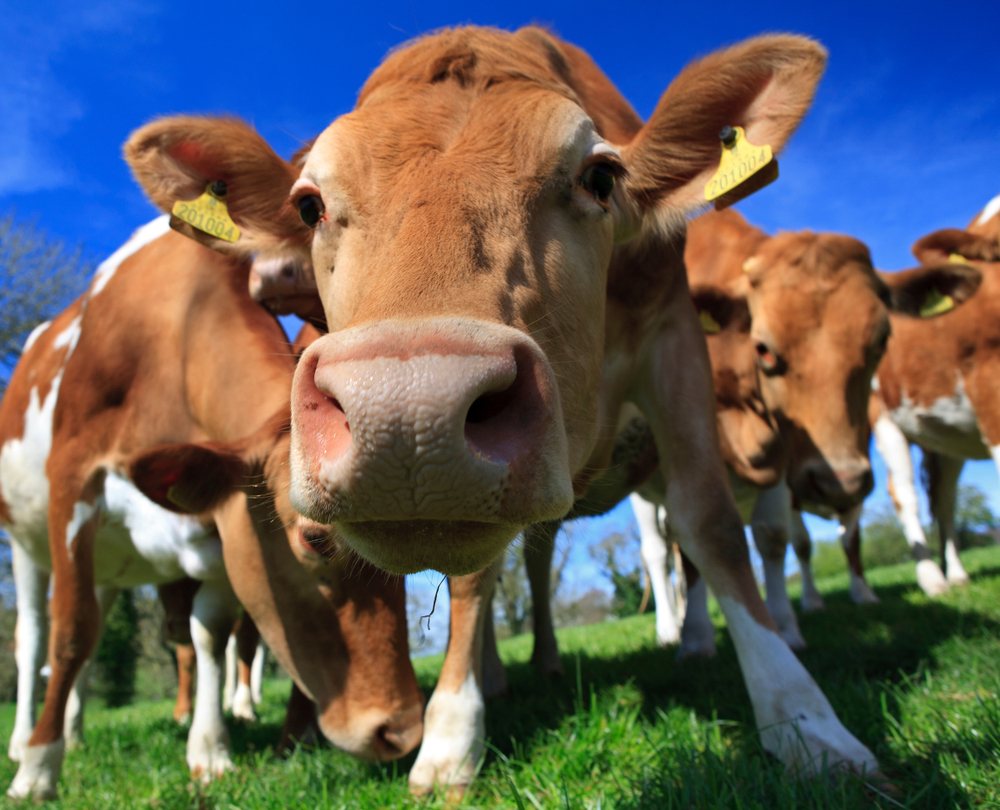
Pictured: cows are responsible for the majority of agricultural methane emissions.
Agriculture, land use change and forestry combined contribute less than 5% of total emissions. The majority of the emissions are methane released by the digestive processes of cattle.
In 2020, Guernsey’s carbon dioxide emissions equated to 4.6 tonnes per capita. This is on par with UK emissions for 2020 which were 4.85 tonnes per capita. The largest emissions that year globally were seen in Qatar with just over 37 tonnes per capita.
