

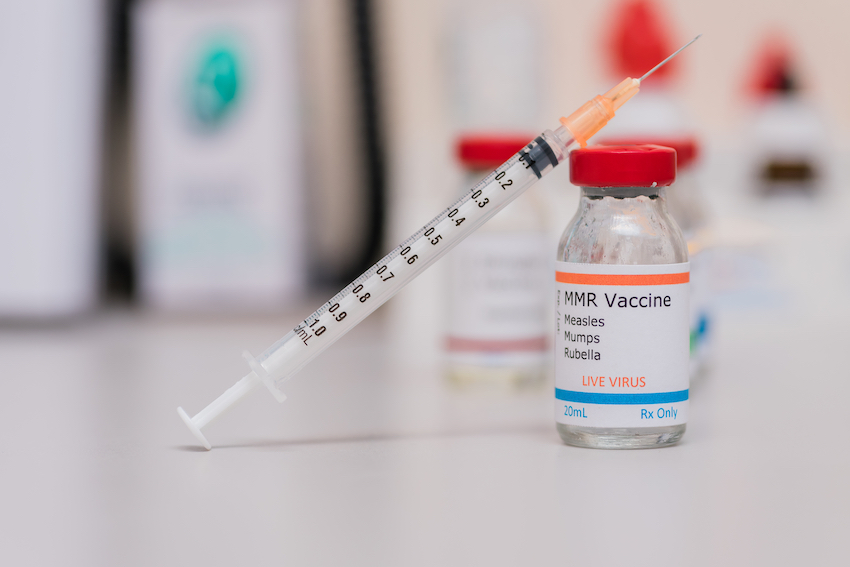
Anyone planning to work in the frontline health sector is also encouraged to be fully vaccinated against measles, mumps and rubella.
There has recently been an outbreak of measles in London, and although there are no reported incidences of measles in the Bailiwick currently, Public Health Services said it wants young adults to be aware of the risks they may face if their vaccinations aren’t up to date.
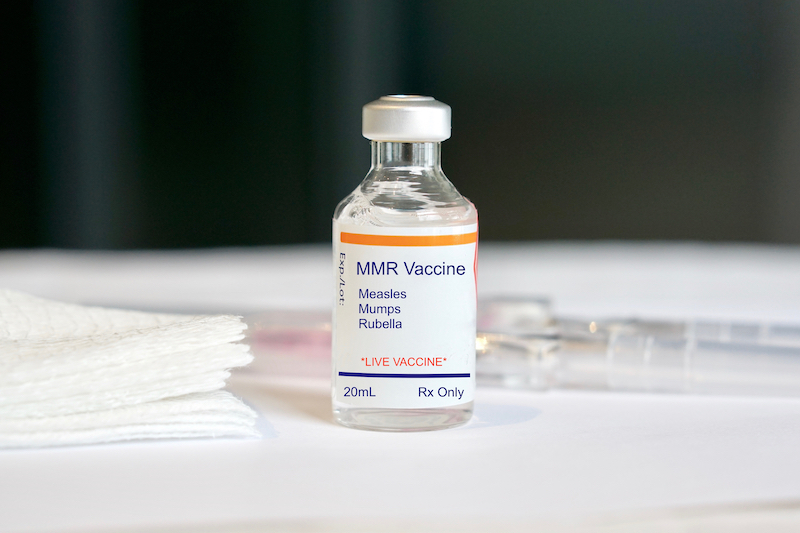
Pictured: The MMR vaccine offers protection against measles, mumps and rubella.
The MMR vaccine is offered free of charge for those up to 25 years old locally, as per the UK’s national immunisation schedule.
The first dose of MMR vaccine is offered when infants are around 12 months old, and the second when they are around three years and four months.
The current MMR uptake is high among children but Public Health said it is concerned that some individuals in older age groups may be susceptible to measles, mumps or rubella because they did not receive both or either of their vaccines.
25-year-olds now would have been infants when there was much concern about alleged side effects caused by the MMR vaccine, Those concerns – reported by the Lancet in February 1998 – were discredited and to date the scientific consensus is that there is ‘no causal connection between MMR, or any other vaccine, and autism’.
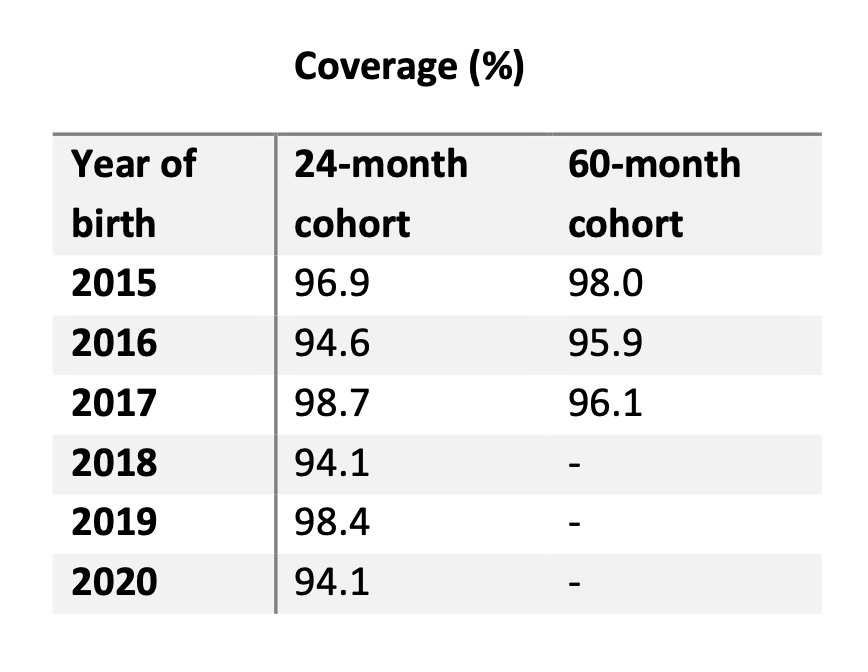
Pictured: The above table below details the MMR take up of vaccine.
Anyone older that 25 is encouraged to also check if their MMR vaccines are up to date but they would have to pay to be vaccinated now.
Those aged under 25 can get the vaccines for free.
Jo Rocha, Health Protection Nurse said: “We are asking people aged 25 and under to review their vaccination records with their parents or guardians if needed, and to contact their GP surgery if there is any doubt about whether they have received 2 doses of vaccine in the past.”
HSC said: “The MMR vaccine is a safe and effective vaccine that provides long-term protection. It is especially important for those who are about to start college or university, are going to travel abroad, are planning a pregnancy, or are a frontline health or social care worker.”
