


The now infamous MyGov project – intended to ‘deliver customer and workforce improvements’ – was beset with problems caused by ‘weak governance, poor financial control, and an over-reliance on external contractors’.
The States’ Chief Executive and the Head of Guernsey’s Public Service has concluded that “more than £21 million” was spent on it, “with no meaningful benefit to taxpayers”.
In a report researched and written himself, Boley Smillie has found that no one intended for it to go so badly wrong, but the writing was on the wall from the start due to “poor leadership and a failure to act decisively when warning signs emerged”.
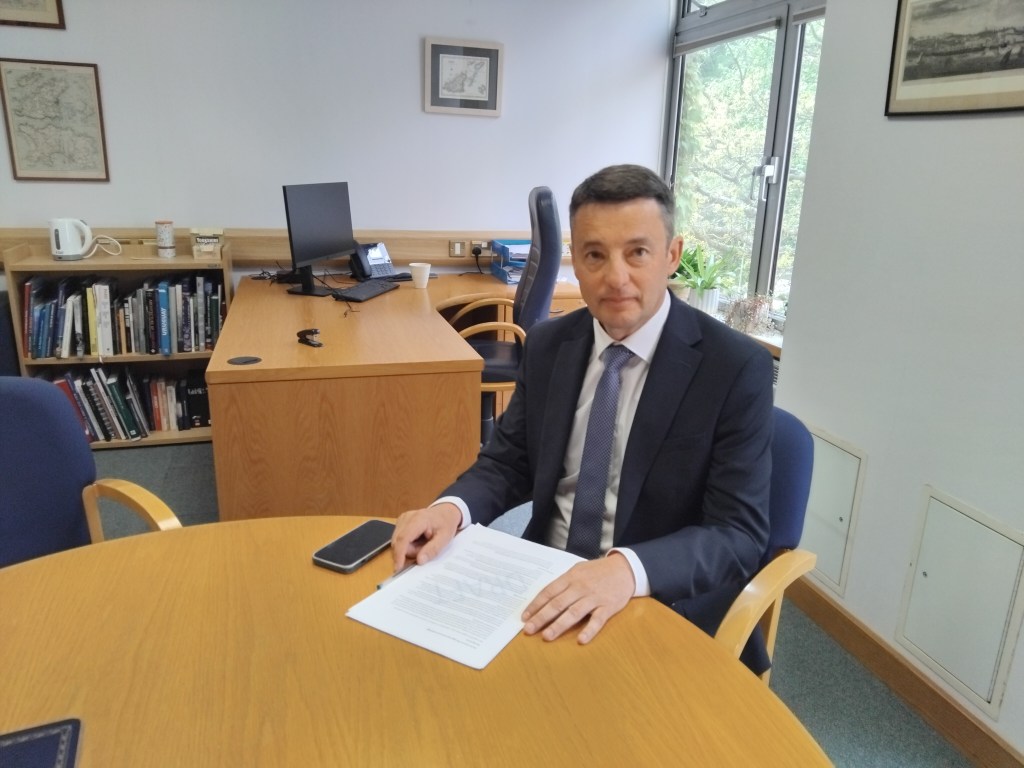
“The original MyGov project did not deliver what the people of Guernsey were promised, nor what they deserved,” he said.
“This review has required us to look squarely at a programme that failed on multiple levels.”
Mr Smillie’s review has found that MyGov was never properly defined, with projects repeatedly rebranded and rescoped.
He has also said that governance arrangements became increasingly complex, with more than 20 boards and groups referenced in programme documentation, and that deputies were unable to provide effective oversight because of how the project developed.
Instead, the programme became “heavily dependent on external contractors, particularly Agilisys, which sat as part of the Board accountable for the programme. This created a conflict that weakened scrutiny,” he found
“Among the many failings identified, it is clear that we placed too much reliance on external suppliers, including giving them influence within the most senior decision-making forum that had ultimate accountability for the programme.
“Concerns were raised by our own staff but these weren’t given enough weight, and the programme was allowed to continue. The issues were serious and persisted long enough to require earlier and more decisive leadership intervention.
“This report shines a harsh light on the MyGov programme, highlighting significant issues that need addressing. However, these findings do not define the civil service as a whole. The majority of our public servants are professional, highly effective, and deeply committed to serving our community. By addressing the issues within MyGov, it is my belief we can then start to build public trust and highlight the dedication and values that define the rest of the civil service.
Mr Smillie has now launched a “wide-ranging programme of reforms” to prevent this happening again, he said, which includes:
- Leadership changes
- strengthening the Board which oversees the delivery of all major projects, with independent expertise
- publishing a new annual report with transparent updates on major programmes
- introducing Chief Officers aligned to Principal Committees to ensure clear accountability
- rebuilding internal control of technology following the decision to end the Agilisys contract.
- simplifying governance; streamlining exercise done by end of year
- reducing reliance on external contractors
- strengthening accountability at senior leadership level
“I will now take the actions needed to ensure these failures are never repeated,” pledged Mr Smillie.

“Several of the issues seen in MyGov have been repeated across other transformational programmes. The time for analysis has passed; the focus now is on action. Some changes have already been implemented, others are underway.
“In the face of such a significant failure, I want to assure the community that this review was not an exercise in ‘lessons learned’ but rather it identifies where tangible action is needed, and will be delivered.”
More to follow…
