

As the Bailiwick begins to enter phase three of its lockdown plans have been released today for a phased reopening of the islands’ schools.
With no confirmed cases in Alderney, Sark or Herm, discussions are taking place with the headteachers and school staff in those islands to work out a plan to best suit them.
In Guernsey – with decreasing numbers of active cases, and no new positive results for two weeks, a phased return to school life has been deemed essential, with primary age pupils the first to go back, but not until a week after the next half term starts.
That means no schools will be open to any more pupils until Monday 8 June. Then it will be a phased return for primary pupils with secondary schools unlikely to go back before September, but that will be kept under review for the final half of the summer term.

Pictured: Bailiwick schools closed to all pupils, bar the children of essential workers, or those with special needs or deemed vulnerable, on Friday 20 March. Lessons were due to resume in most schools for the final half term on Monday 1 June, before schools closed for the summer in July. A phased return to the classroom has been announced instead with details HERE.
The plan for a phased return to primary education will see pupils split into groups, with half attending lessons on Monday and Tuesdays, and half on Thursday and Friday, with all schools closed for deep cleaning on Wednesdays, from 8 June.
Distance Learning will be maintained for the first week of term. Vulnerable students and children of essential workers will continue to be supported on all days when primary schools are open.
For the time being, and until public health guidance is relaxed further, secondary schools will remain closed to most students, meaning only vulnerable students and children of essential workers will be at lessons after half term.
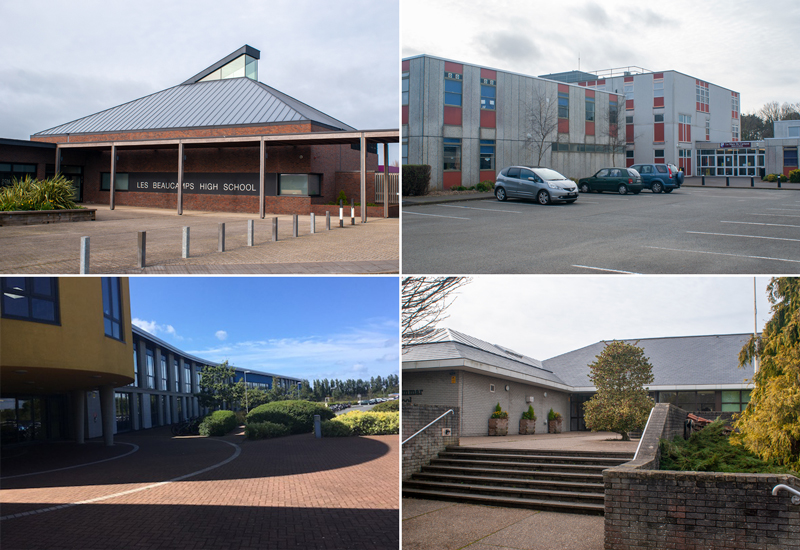
Pictured: The four States run secondary schools will be staying closed to most pupils for a while longer.
The Committee for Education, Sport and Culture said distance learning will continue for most pupils, as it wouldn’t be possible to provide subject lessons safely at this time, with pupils confined to one classroom. This will be kept under review and schools will open sooner if they’re able to.
Students attending the College of Further Education may be able to resume studies on campus from the beginning of next month.
From 1 June, the College, which is part of The Guernsey Institute, will invite students to attend who would ‘benefit most from on-site tuition taking into account the specific requirements of their courses’.
In order to comply with social distancing measures, College campuses will accommodate no more than 50% of their normal number of students at any one time.
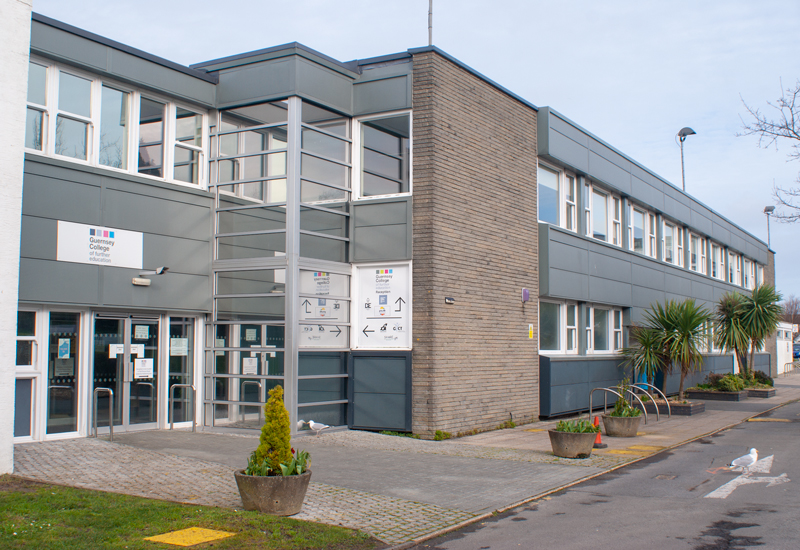
Pictured: One of the College of Further Education campuses.
Deputy Matt Fallaize, President of the Committee for Education, Sport & Culture, said: “These are finely-balanced decisions and the Committee has been very careful to look at all the possible options from every angle and take into account the advice of professionals in public health and education. The ideal is for schools and colleges to be fully open and for all students to be allowed on site. Unfortunately, at the moment, that is impossible as we must follow the public health advice. None of the potential options for phased return were without weaknesses and challenges, and none would work well for every student, parent and member of staff.
“Primary education is delivered in a way which makes it possible to get all students back into school two days each week. For example, it is normal for children to spend most of their lesson time in the same class and so it is less challenging to comply with public health requirements to maintain single classroom bubbles. On the other three days of the week, Distance Learning will not necessarily be quite the same as parents have come to recognise it in recent weeks, but teachers will provide some learning activities to be done at home. This strikes the best balance currently available: all younger children will get back to having some experience of school with the opportunities that presents to spend time with other children and continue to develop their social skills.
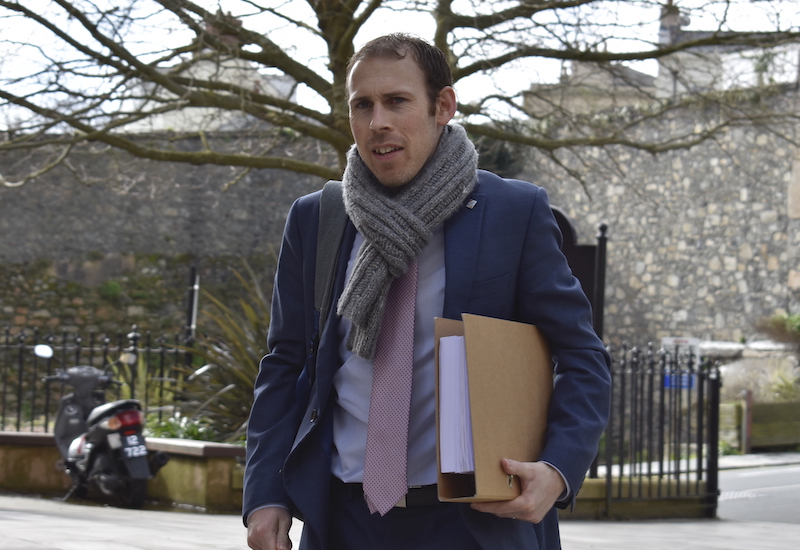
Pictured: Deputy Matt Fallaize.
“Secondary education is delivered in a way which is very different from primary education. For example, students move around every hour or so as they go from lesson to lesson. They have many different teachers every day. In many cases students have different classmates from one lesson to the next. At the moment, such practices are not possible in line with public health guidance on social distancing and bubbles. The strong advice from the leaders of our secondary schools was that if more students were back in school there would only be very limited opportunities for meaningful learning. In addition, staff would not be able to maintain Distance Learning of the current standard. All of this means that for the time being the best educational experience for secondary students will be delivered by maintaining the current Distance Learning offer five days a week. We know this means that many students will have less social interaction with their peers than is desirable, but the other options we considered in conjunction with education professionals would result in an unacceptable decline in the standard of education offered to all students.”
Dr Nicola Brink, Director of Public Health, said:
“Closing schools, colleges and early years providers for all but those who are the children of essential workers and vulnerable students has been a key part of our response to this pandemic to date. I have no doubt that it helped slow the transmission of the virus that causes COVID-19 within the community. But given the gains we have made and the current positive position as we move through the phases of our exit strategy, now is the right time for schools to have the opportunity to start re-introducing more students as long as numbers are restricted, social distancing maintained and enhanced hygiene in place. Of note, is that this will only occur in three weeks’ time, giving us a further opportunity to build on what we, as a community, have achieved to date. While I am not an educationalist and so am not in a position to advise on models, I am confident that Education is committed to following the guidelines that I have provided for a return to education for more pupils. The Public Health Team will continue to work closely with Education as we move towards a phased re-opening on schools.”
Pictured top: Primary schools will be the first to return to ‘normal lessons’ under a phased plan announced today.
