

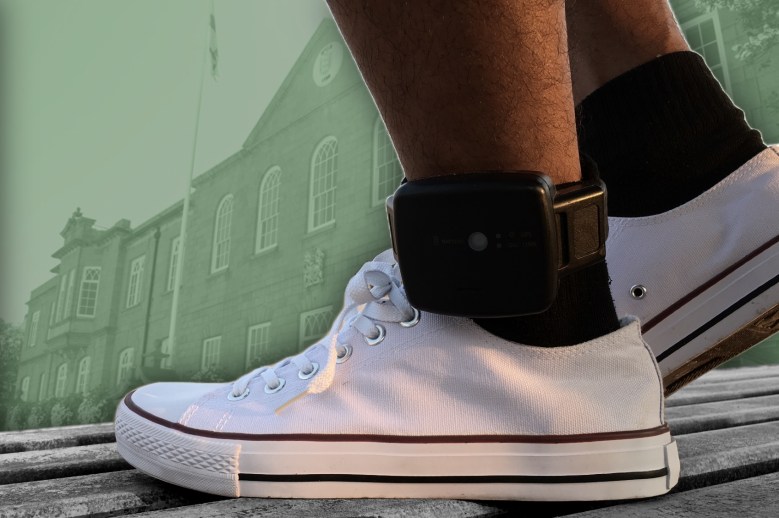
Guernsey’s deputies have briefly debated the merits, considerations, and concerns generated by an independent report into the conditions of Guernsey’s Prison – with electronic tagging described as a priority for the future by the Home Affairs President.
Conducted by the prison watchdog, the Independent Monitoring Panel found that “significant challenges” had been created by an increase in the number of women incarcerated in Guernsey’s mixed prison population.
Deputy Gavin St Pier proposed the Motion to Debate, seconded by Deputy Jayne Ozanne, to prevent the report being ‘nodded through’ without scrutiny.
The debate was “welcomed” by Deputy Marc Leadbeater, President of Home Affairs, who stated he was listening with interest to “any points or concerns that members may have in respect of the panel and the wider issues contained within it”.
Guernsey’s elected officials then focussed on several different aspects of the report, with Deputy Rhona Humphreys pointing to rehabilitation and opportunities for those who’ve completed their sentence.
The most recent report found that “insufficient support is available to individuals upon their release from Prison”. It also pointed to barriers to employment, housing, and basic needs, and a lack of a community facility offering “transitional opportunities for those seeking to reintegrate into society”.
Deputy Humphreys shared her own experiences as an employer and a family member, and said she wanted further clarity on the possible remedies.
“I have personal experience and consideration that one faces both as an employer when considering opportunities for these individuals, alongside considering the position of a close family member of mine, who has indeed been subject to repeated release and reincarceration, a situation that may not have arisen if he had been offered opportunity appropriate to his age, education and abilities,” she explained.
“I would like to understand what the committee might be able to do with regard to these type of people, rehabilitation of offenders in order that they become net contributors, rather than take us from our society.”

Meanwhile, Deputy Ozanne referenced a finding in the report that housing opportunities aren’t there for those seeking to reintegrate.
“I’d like to put it on on on record, that there is a Christian charity that provides support to prisoners, but I do wonder if this is something as a States that we should be taking more ownership of?”, she asked.
“Because the risk to our community is great if we are looking at putting people in a place where they may end up reoffending in order just to get accommodation.”
Meanwhile, Deputies John Gollop, Yvonne Burford, Andy Cameron, and St Pier all brought up the issue of Electronic Monitoring as an option for rehabilitation.
It was something formally recommended by the IMP – to explore “tagging” as an alternative option for sentencing.
So instead of prison time, the IMP said this would be a potential alternative, due to those “significant challenges” of running Guernsey’s mixed population prison.
In response to the debate, Deputy Leadbeater confirmed that “tagging” is a priority for his Committee, as part of work reviewing sentencing guidelines.
The Home Affairs President said: “Tagging is right up there. Tagging is one of our priorities. We’re going to be looking at sentencing guidelines”, adding, “We’ve already directed officers to start some scoping work on the review of sentencing, including the introduction of tagging as a disposal.”
