

A damaged section of the 52km cable powering Guernsey at Greve de Lecq plunged the island into the dark for almost an hour during the home-time rush hour last month.
Since then, the island has had to rely on 6,000 tonnes of fuel oil to meet the island’s demand for electricity.
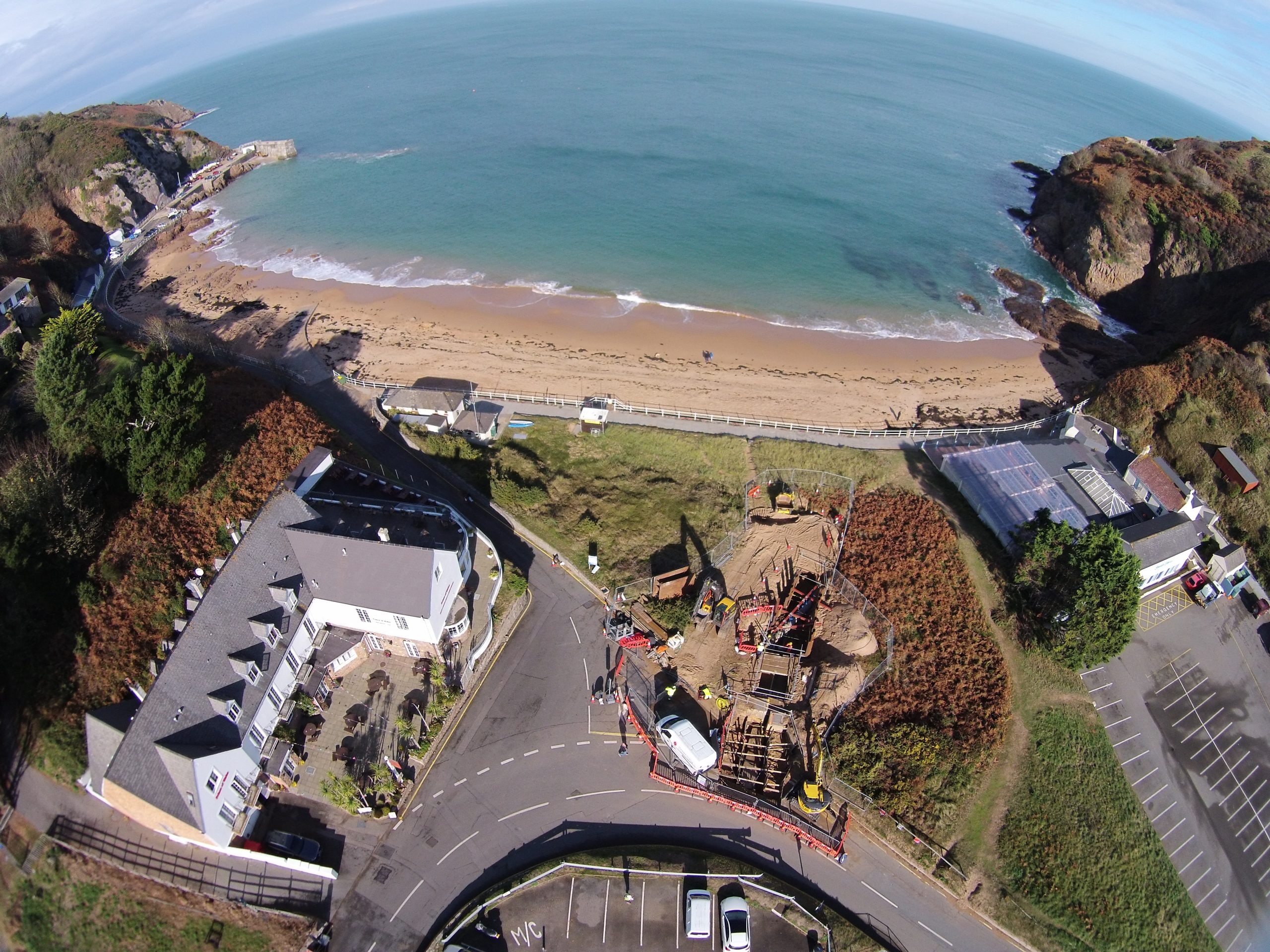
Engineers worked furiously to fix the problem, resolving to dig a hole at the northern beach to identify where exactly the problem was.

Pictured: A close-up of the excavation works at Greve de Lecq. (Guernsey Electricity)
Now, after four weeks, the involvement of Jersey and Guernsey Electricity and nine other specialist organisations, and the removal of 300 tonnes of sand, the faulty part has now been extracted and that work can begin to ascertain the cause of the failure.
Work to replace that section will start next week, and is hoped to be complete by the end of the month.
Guernsey Electricity’s Head of Asset Management, Stuart Blondel, described the job as “technically challenging”, adding that “some planned activities may prove to be more difficult and time consuming than hoped.”
He later said that the fault reinforced the need for Guernsey to have a second subsea electricity cable.
“This will allow us to achieve our aim of providing a secure, sustainable, affordable and low carbon electricity supply. Guernsey Electricity continues to progress discussions on the potential second cable connection direct to France,” he explained.
