
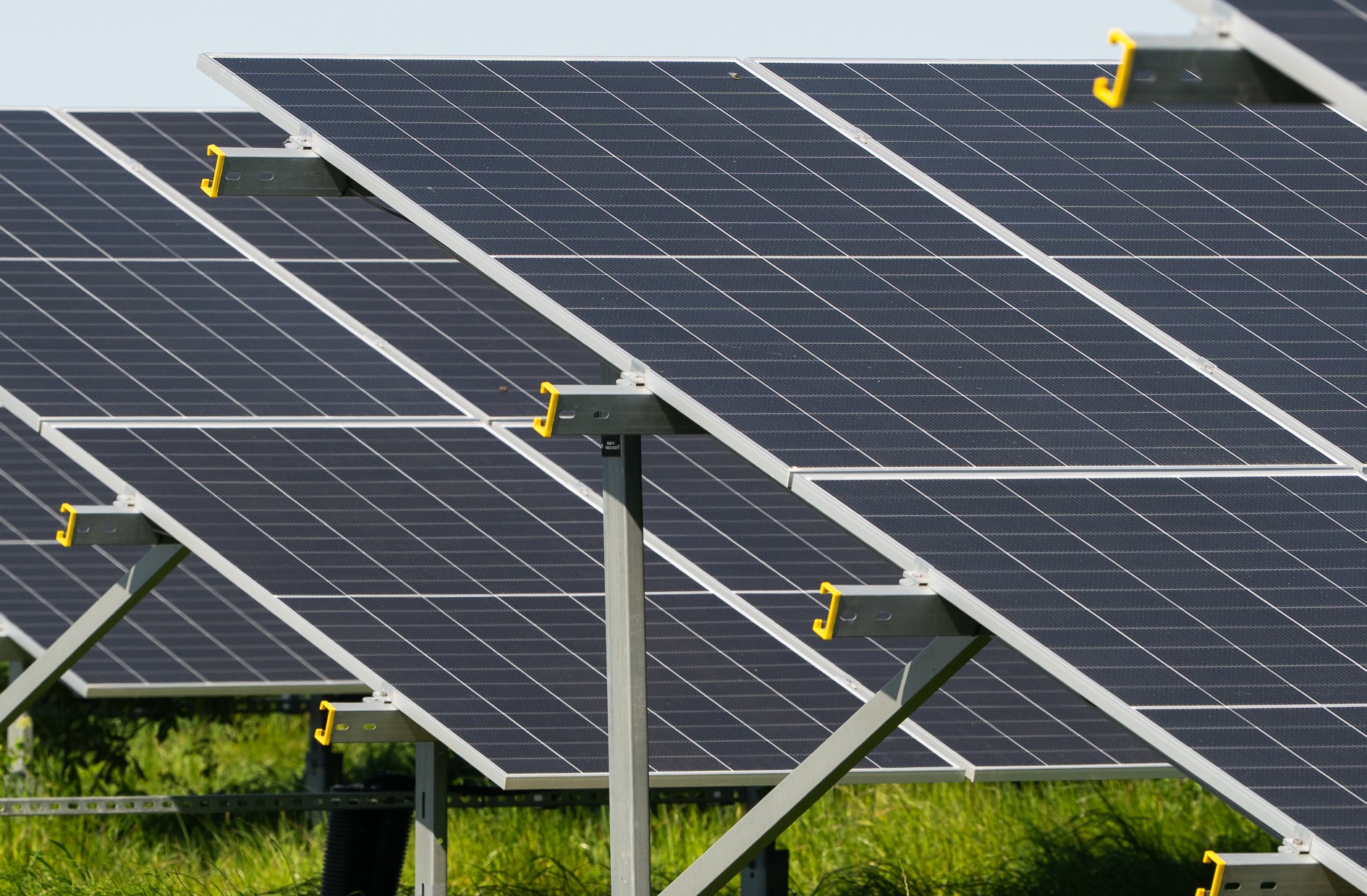

Campaigners who got hundreds of people to sign a paper petition – that resulted in States Members agreeing to enhance protections for agricultural land against ground-mounted solar developments – have praised the long-established democratic process as a “fantastic” way for the public to bring matters before the Assembly.
The paper petition, which was signed by more than 800 people, called for the States Assembly to agree that the prohibition of ground-mounted solar developments on agricultural land should be included within the next Island Plan.
This was taken forward by St Brelade Deputy Montfort Tadier in the form of a proposition, which he later amended to instead seek a “presumption against” such installations, citing feedback received from some States Members and the petitioners themselves.
It was approved last Friday, with 23 votes in favour and 19 votes against.
There’s no point in having elected officials if the general feel and opinion of the public isn’t actually heard
William Layzell
The other two components of the proposition were also successful, requesting that the next Environment Minister consider strengthening protections for the loss of agricultural land to solar ground mounts and that the next Infrastructure Minister bring forward a policy to promote the installation of solar panels on suitable States-owned buildings.
One of the petition’s organisers, William Layzell, said the debate had sent a “very strong message” that “green fields should be protected and should not be looked at as an option for putting solar panels on before all other options have been explored and exhausted”.
“We’re obviously incredibly pleased about it,” he added.
Mr Layzell also noted the quality of the debate and pointed to comments made by Deputy Sir Philip Bailhache, who raised questions around the legality of such developments in relation to the Agricultural Land (Control of Sales and Leases) (Jersey) Law 1974.
He said the use of the paper petition was “a fantastic example of democracy”.

A more traditional form of petitioning in comparison to the online process, a paper petition relies on physical signatures gathered in person and is typically then taken forward by a States Member in the form of a formal proposition for debate.
Mr Layzell said: “That process has been a great process and something that Deputy Tadier has really supported us on, because he feels it’s a very important process.
“There’s no point in having elected officials if the general feel and opinion of the public isn’t actually heard.
“As a mechanism of having that opinion heard in the Assembly, it’s superb. So we’ve really welcomed it and I think it’s been a very successful process.”
Another of the campaigners behind the petition, Peter Hargreaves, described the paper petition mechanism as “an established way of getting things done in the island” and a “direct contribution to democracy”.
“It was quite a big job to get over 800 signatures,” he noted, though he added the “considerable effort” was “100%” worth it.
