


Steve Harvey of Brightly, which supports children those in and leaving care up to the age of 25, explained how communications from the charity were often ignored and that complaints weren’t always dealt with in a public submission to a review of the island’s children’s services.
Responding to questions from politicians conducting the review over whether his charity felt supported by the Government, Mr Harvey’s answer was blunt: “The short and disappointing answer is no.”

Pictured: Brightly CEO Steve Harvey said that the charity said that “too frequently” emails to Government weren’t responded to.
Speaking more broadly about the charity’s feelings, he said: “Actions speak louder than words. A mantra that says ‘putting children first’ is only worth having if things do fundamentally change for the better and children and their needs are put first.
“As a charity that has been meeting the needs of children in Jersey for almost 100 years, we have seen precious little progress towards achieving positive and meaningful change for children over recent years, despite the pledge from the GoJ.”
He flagged up e-mails which aren’t replied to, and complaints and issues that were sometimes left unresolved.
Elaborating on what would improve the charity’s relationship with the Government, Mr Harvey said that he wanted to see “regular, open, honest communication.”
“Typically, it is difficult to reach many GoJ colleagues, when we do manage to do so they are often unable to provide a response, or we receive conflicting information,” he said.
“Even when information is written down, we do not see it being followed or implemented. Acknowledgement of communications is key, but too frequently emails are just not responded to.”
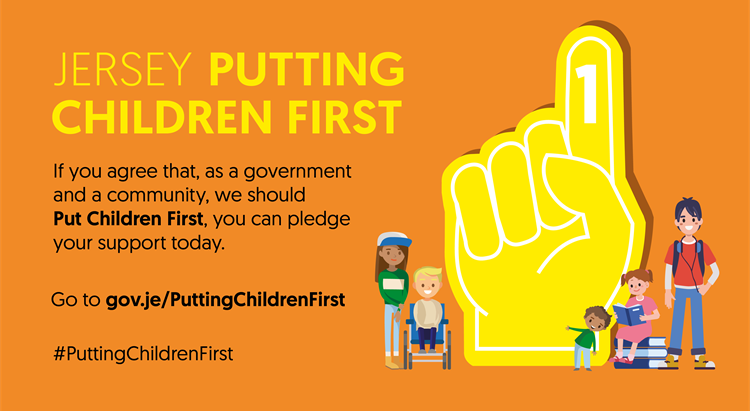
Pictured: Mr Harvey said that “a mantra that says ‘Putting Children First’ is only worth having if things do fundamentally change for the better and children and their needs are put first.”
On complaints to the Government, he said they “raise issues as they occur [and] if things remain unresolved, we informally address it by talking to the appropriate senior officer. Sometimes the matter is resolved sometimes not.”
Suggesting a solution, he pitched a “a tiered approach whereby everyday matters are swiftly responded to at officer level, with a mechanism to effectively engage others as and if necessary.
“If the intention is to be transparent then each issue/complaint needs to be logged and the steps taken and outcomes published on a weekly or monthly basis.”
Mr Harvey concluded that “sadly, we have low confidence in any of the GoJ departments we interface with.”
“Occasionally we come across a well informed and helpful individual however this is the exception rather than the norm. Improving things in our opinion requires a multifactored approach and expert support,” he said.
It comes at a time when both Children’s Services and the wider Government’s pledge to ‘put children first’ has come under intense scrutiny and criticism – last month, Haute Vallée’s Governors handed a poster with the pledge on it back to the Government.
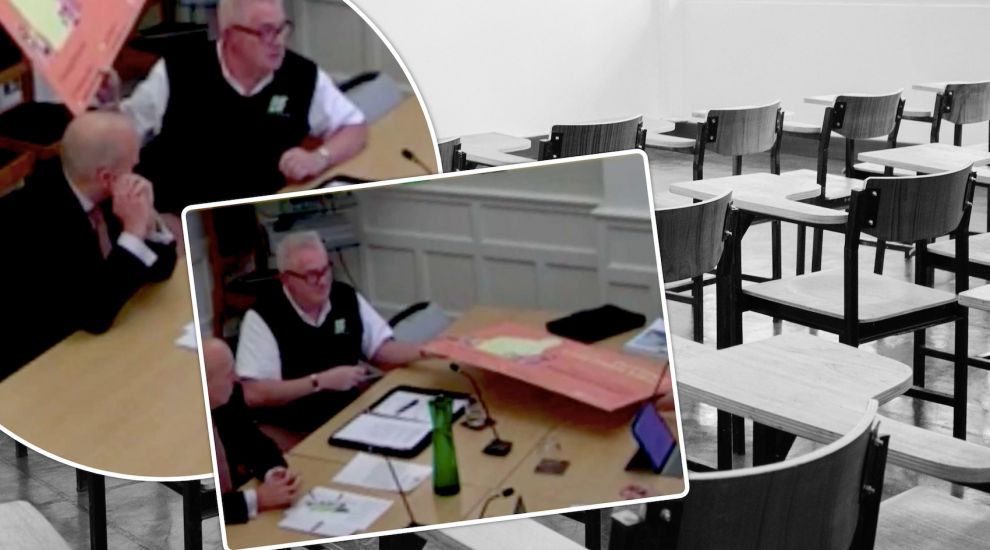
Pictured: Haute Vallée Governor Phil Le Claire handed back the Government’s ‘Putting Children First’ sign to them during an explosive Scrutiny Panel hearing last month.
They said that the school had been operating with budgets slashed “to the bone” due to “gross underfunding” spanning many years, pointing to a finding that non-fee-paying schools were £23m short of cash.
“After we’ve paid the bills and the wages, there’s no money left. We cannot buy school books, we cannot buy pencils,” Mr Le Claire explained.
In terms of children in care, a Government report penned earlier this year admitted: “We do not have sufficient on-island care settings – Foster Care and Residential Care – for children in the care of the Minster and those children and young people on the edge of care.
“We have had to establish care settings outside of regulations and we have placed children in our children’s homes outside of the Statement of Purpose we have previously agreed with the Jersey Care Commission.”
Mirroring Brightly’s complaints around a lack of communication, the Children’s Commissioner also accused Ministers of breaching the law at the start of the pandemic, after not consulting her “on several matters which were pertinent to the rights of children and young people.”
