


With the current groundswell of opinion against single-use plastics, perhaps it is time for Jersey to push even harder to look after the environment – on both land and sea – which is one of its major assets. Leading local environmentalist, Mike Stentiford MBE, believes it’s time for the island to go much further – why not have a group of volunteers in every Parish, organised by each Constable, whose role it is to after their local environment?
“It could be said that Oscar Wilde was spot on when stating, ‘It seems to me that we look at nature too much and live with her too little.’
Referring to an age when shooting things rather than protecting them was regarded as de rigueur we can, at least, now take heart at the steady increase in today’s general levels of environmental understanding.
Since those long gone days of the 1800s, the way we now look and live with nature and, more importantly, how we respond to it with practical concern, has changed way beyond Oscar’s ‘Wildest’ expectations.
The encouraging reality for any conservationist is that these current changes seem to be gaining serious traction in the public conscience.
Taking full credit for hurling environmental awareness directly into the path of the viewing public is the BBCs Blue Planet II.
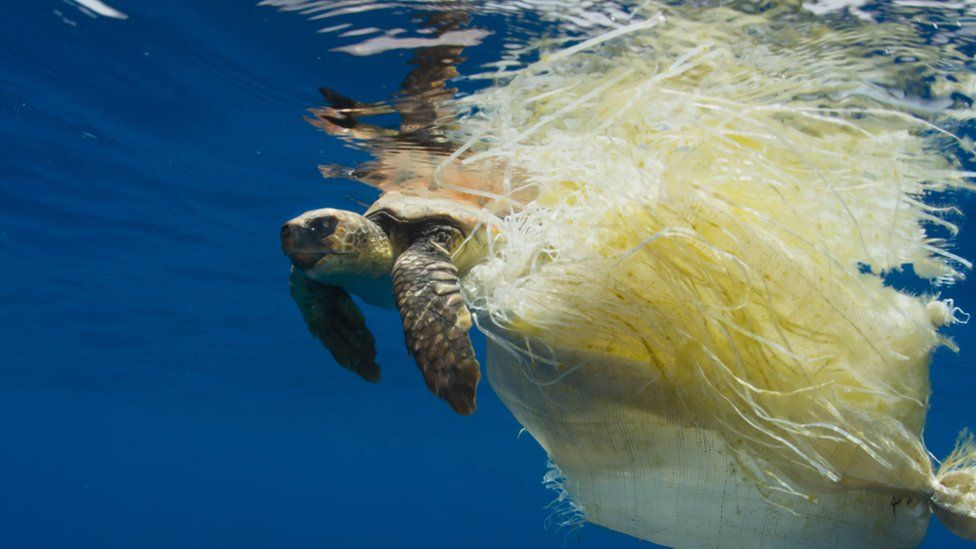
Pictured: The shocking impact that discarded plastic is having on marine wildlife is universally recognised as being totally unacceptable. Credit: Blue Planet
More than any other previously well-intentioned nature documentary, this series struck deep into the public sub-conscience as no other programme has ever done before.
In its powerful slipstream has been a remarkable and somewhat surprising gear-change in environmental attitudes which, to put it mildly, appears to have been universally endorsed almost overnight.
Certainly the major talking point since the programme was aired earlier this year is our dependent over-use of plastics.
Who, in all honesty, would have imagined, this time last year, that the word plastic would have become such a topic of media and general conversation?
Likewise, its capacious versatility of serving a commercial purpose for around 150 years – in many cases quite literally – at once confirms both its usefulness and its stubborn longevity.
But why is it that so many commercial businesses and the consuming public at large have suddenly joined in and embraced such a determined war on this prolific product?

Pictured: With just a little encouragement, many environmental improvements could be voluntarily achieved through parish community projects
This is even more difficult to understand knowing that the vast majority of our collective anxieties refer to the impact on threatened species of marine wildlife that are seldom, if ever, encountered in local waters.
That such caring instincts have developed so quickly demonstrates a massive step forward from any previous relationship we’ve had with the natural world.
Encouragingly, this sudden concern for the environment is being borne out on home ground in a number of practical ways: through major voluntary beach cleans and by a much needed injection of countryside TLC undertaken by temporarily ‘laid off’ farm workers.
To my knowledge, this unexpected big-time surge of community assistance towards our environment has never happened in Jersey before.
The fact that it is a ‘here and now’ voluntary effort by concerned islanders suggests new and clear-cut potential for future likeminded initiatives.
It shouldn’t, for instance, be beyond the ken of each of our twelve Constables to garner a voluntary community group within their respective parish to carry out general tidy-ups or nature conservation projects when or wherever required.
These might also link-up with other small independent voluntary charities and organisations already involved in conservation initiatives.
Such simple endeavours would collectively endorse the frequently heard proclamation that Jersey is ‘a special place.’
More specifically, it would further rubber stamp the declaration that, truly and honestly, we really do care about our Island.
It might even add a capital P to the word ‘Pride’ and emphasise that taking voluntary responsibility for our parochial environment is as much to do with community spirit as it is to a demand for political commitment.
Perhaps such Utopian imagination is no more than a distant item on a conservationists wish list?
But, once it’s accepted that discovering one’s own personal state of fulfillment is entirely dependent on the likewise state of our immediate surroundings then, who knows, our current desire to seriously deal with the disastrous issue of plastics might easily morph into something as equally productive and even more environmentally satisfying.”
