


A Condor crew member who is serving a 20-month prison sentence for his involvement in a collision that caused the deaths of three fishermen has failed to appeal his sentence.
Lewis Peter Carr (31) was the more senior of two Condor crew who were on the bridge of the freight ship Commodore Goodwill when it struck the L’Ecume II fishing boat in the early hours of 8 December 2022.
The collision caused the deaths of the three men on board the trawler: skipper Michael Michieli (62), and crew members Larry Simyunn (33) and Jervis Baligat (31).
After a month-long trial last year, Carr was convicted of one count of conduct endangering ships, structures of individuals under the Shipping (Jersey) Law 2022.
The trial resulted in a hung jury on three charges of gross negligence manslaughter, but he was found guilty of an alternative, less serious charge.
Carr was jailed for 20 months in December.
Appealing this sentence in front of the Superior Number of the Royal Court today, Advocate Simon Thomas said the sentence was “manifestly excessive” – arguing that the starting point used by the sentencing court was too high, and that his mitigation hadn’t been given enough importance.
He said Carr’s culpability was not as high as what the sentencing court had thought.
Reconstructions showed that Carr had made “a broad alteration of course” about 45 seconds before the collision.
Advocate Thomas said this was an attempt to avoid a collision – even if it was “too little, too late”.
He argued that his client had been following the Colregs – a set of maritime rules designed to avoid collisions.
Under those rules, there is a “give-way” vessel and a “standby” vessel. The standby vessel is required to keep the same course and speed up to allow the give-way vessel to navigate around.
This means that the standby vessel is only able to make a last-minute alteration to avoid a collision, Advocate Thomas said.
Commissioner John Saunders had decided that Carr should be sentenced on the basis that the Condor was the stand-by vessel.
Advocate Thomas said: “A deliberate act or act under the influence of drugs would be a matter more culpable, more blameworthy than breach of duty.”
He acknowledged that “no proper lookout” was kept and that Carr didn’t make “proper use” of the radars available to him.
“It would be wrong to think it was a continuous period of doing other things,” he added.
But the sentence was decided “ascribing too great a significance” to the impact of the collision on the Condor crew members’ families, Advocate Thomas said.
“Everyone expresses their sympathies for those left behind,” he added.
Carr had multiple character references, including from the Commodore Goodwill’s captain and other officers – who had appeared as prosecution witnesses at trial, his advocate said.
Advocate Thomas said that Carr had written a letter of remorse, was of good character, and had lost a career he had “worked hard and applied himself to obtain”.
But Crown Advocate Matthew Maletroit, representing the Attorney General, said that Carr had breached his duties in ten different ways – including not staying a minimum distance of one nautical mile away from other vessels and not keeping a “full and proper lookout”.
Had Carr just followed the “one-nautical-mile rule”, he said, there would never have been a risk of collision.
Keeping a lookout would have involved using the technology available onboard and working with his officer of the watch – neither of which Carr did, added Crown Advocate Maletroit.
And after spotting L’Ecume II 15 minutes before the collision, he said, Carr’s efforts should have been focused on safety and on avoiding a collision.
“Safety is always, always a paramount consideration,” the Crown Advocate said.
Carr should have continued to watch the fishing boat, he said, even though it was supposed to give way. He added that any number of reasons meant another boat might not see the ferry.
“There could be a fire, there could be a medical emergency, there could be equipment failure, the other boat could be taking in water,” explained Crown Advocate Maletroit.
He added that Carr had pleaded not guilty, which meant he couldn’t be afforded the same discount as those who plead guilty. The 15% discount Jurats had taken off from the starting point was therefore “not unreasonable”, he said.
Rejecting the appeal, Commissioner Alan Binnington, presiding, said the offending had caused “serious harm”.
He added that Carr’s sentence should be towards the highest end of the sentences available under the Shipping Law.
Jurats Dulake, Averty, Berry, Powell and Gardener were sitting.
READ MORE…
The L’Ecume II trial

WATCH: Condor seaman jailed for 20 months for L’Ecume II collision
The seaman who was in charge of a Condor freight ship when it hit a fishing trawler off the coast of Jersey in December 2022,…
WATCH: Condor seaman jailed for 20 months for L’Ecume II collision
The seaman who was in charge of a Condor freight ship when it hit a fishing trawler in December 2022, killing its three crew members,…
Condor crew member’s sentencing underway
The sentencing of the seaman who was in charge of a Condor freight ship when it hit a fishing trawler in December 2022, killing its…
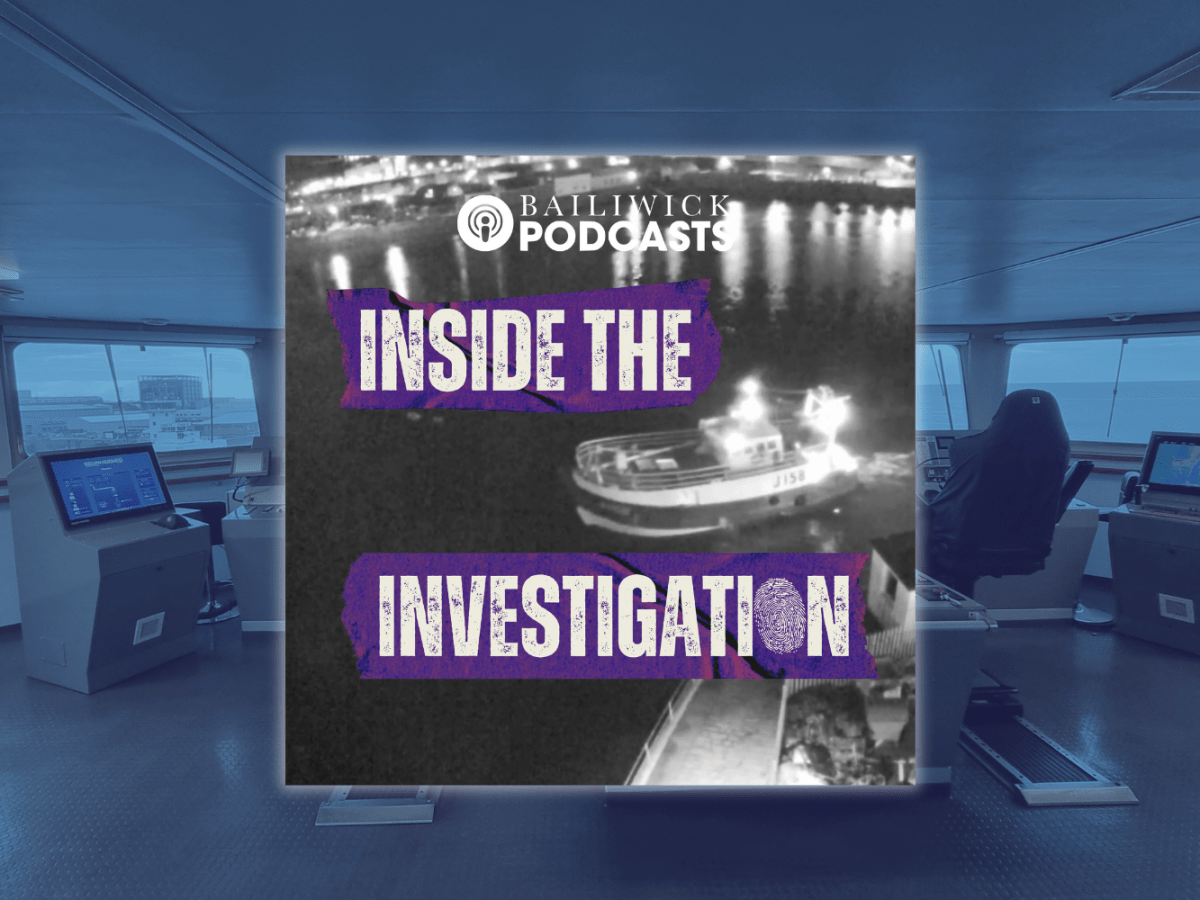
PODCAST: Inside the investigation… The last voyage of L’Ecume II
On the morning of 8 December 2022, the Jersey fishing boat L’Ecume II set out to sea with three men on board. Just after 5.30am,…
Something went wrong. Please refresh the page and/or try again.
