


The ‘FE and Skills Actionable Agenda’ highlighted that 16 to 18-year-olds at Highlands receive less ‘per capita’ funding than the same age group in schools, including Hautlieu.
The report was published by the Education Minister, Deputy Inna Gardiner, and overseen by the Population and Skills Ministerial Group, which was established as part of the Chief Minister’s 100 Day Plan.
It found that this “deeply unfair” funding shows “the regard in which vocational education is held compared to academic provision”, despite Highlands College’s achievement rates being comparable to the best colleges in each of the four UK nations.
It also highlighted that funding for the full-time education of 16 to 18-year-olds at Highlands College is based on an original calculation and formula which has not been updated for at least 10 years.
The FE and Skills Actionable Agenda report found that Highlands College’s commitment to providing catch-up provision to students who have not achieved benchmark standards in English and Maths, and work with students with special educational needs and those from disadvantaged backgrounds, are “not recognised”.
The report concluded that there is a “need for the re-provision of the Highlands College campus”, which is described as “no longer fit for purpose”.
It suggested that the campus could provide a “shop window” to employers which would demonstrate “the seriousness with which the Government of Jersey takes the development of a robust and productive workforce”.
The report also said that an updated Highlands College campus could “provide the opportunity to attract overseas students in a sustainable way, making use of Jersey’s attractions as a safe and pleasant study destination”.
It’s also suggested that the accommodation needs of such overseas students could be “coordinated with residential accommodation for the new hospital at Overdale”.
The FE and Skills Actionable Agenda report proposed a number of other ways to provide funding and support to allow islanders to develop skills throughout their working life, including establishing a Skills Fund to enable a systematic approach to skilling, re-skilling and up-skilling Jersey’s workforce.
Other key action points include an increase in the age for education entitlement from 16 to 18 and up to the age of 25 for young people with special educational needs, and the allocation of separate funds for adult numeracy and literacy, including for people who speak English as a second language.
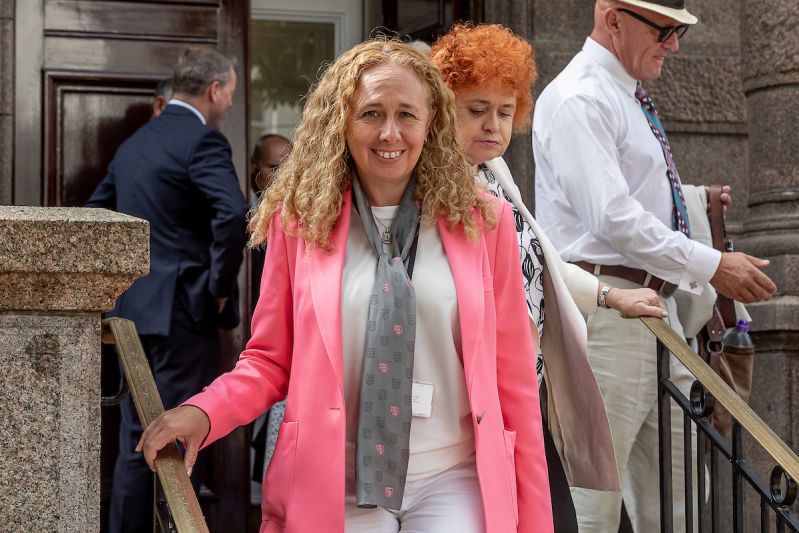
Pictured: Deputy Inna Gardiner, Minister for Children and Education.
Deputy Gardiner said: “The island needs people who have the skills we need to keep the economy healthy. This isn’t just about providing an option for technical and professional education as an alternative to A Levels or IB.
“We must make sure that Islanders can keep learning after the age of 18; that they can build on what they know, develop new skills, or change careers.
“There is already some great work being done in specific areas around digital skills, and through apprenticeship. These actions will build on this good work, and ensure that we have the funding and the structures in place to develop the skills we need for our future.”
The full report can be read here.
