

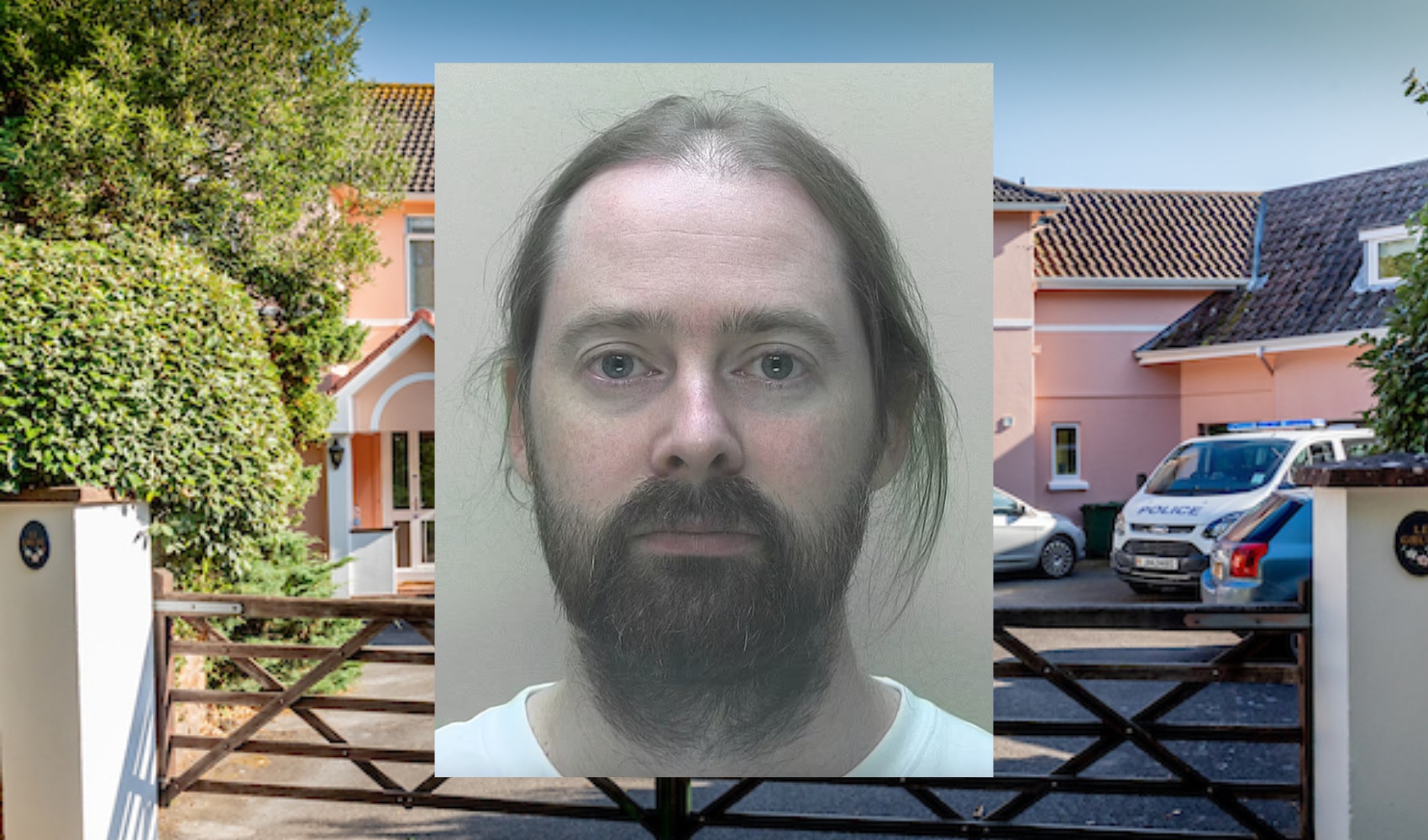
Andrew Nisbet filed a petition in the District Court of the state where his two children now live, claiming that their mother violated the Hague Convention on the Civil Aspects of International Child Abduction when she took the children to the United States.
However, the District Court denied his appeal, finding that the children’s mother presented “clear and convincing evidence” that their return to the UK would present “a grave risk of harm” given Nisbet’s “severe history of violence toward his own family”.
Nisbet killed his mother, former Honorary Police Officer Pamela Nisbet in her kitchen in St Peter on 6 August 2019. There had been an ongoing dispute about Nisbet living in an annex of his parents’ property.
The former radiologist, who has Asperger’s Syndrome and a suspected personality disorder, admitted to manslaughter on the basis of diminished responsibility and was sentenced in August 2020 to remain in a secure psychiatric hospital indefinitely.

Pictured: Pamela Nisbet was a teacher, member of the Law Society’s Disciplinary Panel, honorary police officer and Youth Court panellist.
Earlier this month, a three-day court trial took place in the US after Nisbet invoked the Hague Convention on the Civil Aspects of International Child Abduction and filed a petition requesting that his children be returned to the UK.
Under the Hague Convention, a child who is wrongfully removed from their country of “habitual residence” must be returned to that country unless the return poses a grave risk of harm to the child or otherwise places the child in an intolerable situation.
US District Judge Karin J. Immergut ruled that Nisbet failed to prove that the area of the UK where Nisbet had a flat in which his children and their mother lived for around a year-and-a-half following his arrest was his children’s “habitual residence”.
The Judge found that the children’s mother presented “clear and convincing evidence” that their return to the UK would present “a grave risk of harm” to her young children.
“The children have no familial support network there. Their father remains indefinitely committed to a secure in-patient psychiatric health facility. And [Nisbet] has a history of violent and coercive behaviours that constitute major risk factors for domestic abuse,” wrote Judge Immergut.
The court heard that Nisbet and the children’s mother met in 2012 through a video game that they both played. They first met in person in the US, and moved to the UK together in 2015.
Nisbet’s former partner testified that he became controlling as their relationship developed, including restricting her spending, demanding she get multiple plastic surgeries, and expecting her to be home when he got home every day, according to the judge’s ruling.

Pictured: The St Peter property where Mrs Nisbet was killed in August 2019.
As the couple were expecting their first child, the judgment explained that Nisbet’s lifelong attachment to his parents’ Jersey home “grew into an obsession”.
When Nisbet’s parents informed him that they wished to sell their family home, he did not take the news well, and offered to put money into the property so that he could live their alongside his partner, their soon-to-be-born child, and his parents.
Nisbet attempted suicide after his parents refused. Nisbet and his partner then arrived unannounced in Jersey, and Nisbet’s parents reluctantly allowed them to live in the annex of their house.
After a couple of months, Nisbet’s parents asked them to leave. This resulted in Nisbet’s second suicide attempt, which left him bedridden for nine-and-a-half months.
After Nisbet’s partner gave birth, she moved to the UK with the newborn, but returned to Jersey six months later after Nisbet told her that the family issues had been resolved.
Unfortunately, the situation in Jersey deteriorated further with police and psychiatric services called on multiple occasions to the Nisbet family home.
Nisbet became increasingly angry, smashing his head into walls and throwing furniture. The US District Court noted his “suicide threats, explosive behaviour, refusals of treatment, and unceasing belief that his parents, not he, needed to change their stance concerning the house in Jersey”.
During this period, in summer 2019, Nisbet’s partner became pregnant with the couple’s second child. On 6 August 2019, Nisbet killed his mother.
Nisbet’s partner returned to the UK apartment, and Nisbet kept in touch via online video calls.
The children did not have any friends or family in the UK, the court heard, so the mother eventually moved to the US in summer 2022.

Pictured: An Oregon court denied Nisbet’s appeal to have his children brought back to the UK, concluding that his “extended record of violence means that he meets the major risk factors for domestic violence”.
The court heard that the two children now have a “wide network of friends and family” in America, and “have never mentioned their father” since moving there.
Meanwhile, Nisbet has “continued to display behaviours like those he showed in Jersey” whilst in psychiatric confinement, including punching walls and having physical altercations with staff.
The US court therefore found that the children had a “lack of connection” to the UK and have “no meaningful relationship with their father”.
The court ruled that a return to the UK would pose “a grave risk of harm and intolerable situation” to the children, due to their father’s “extended record of violence means that he meets the major risk factors for domestic violence”.
It was concluded that “the grave risk of displacing the children is starker still when juxtaposed with depriving the children of their mother and their support network” in the US, and Nisbet’s petition for return was denied.
