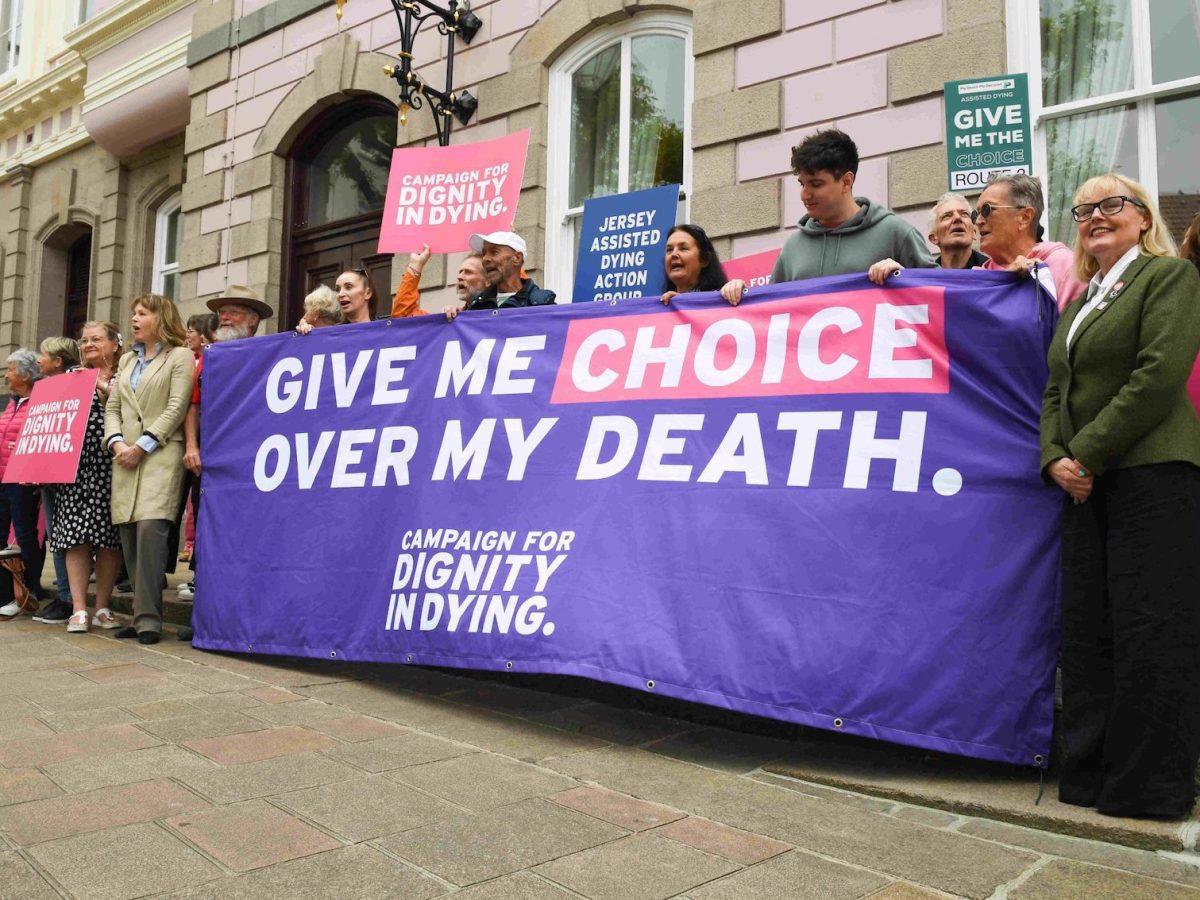
As Jersey continues its journey towards introducing assisted dying, politicians tasked with scrutinising the proposed system have put forward a slew of suggestions for sharpening up the law – including punishments for those who pressure someone into an assisted death, or coerce them into abandoning their wishes.
They suggest that individuals should face up to 14 years in prison for maliciously pressuring someone into an assisted death, but only a fine for coercing them to abandon or halt such a request.
It is one of seven changes put forward by the Assisted Dying Review Scrutiny Panel ahead of the upcoming States Assembly debate on the legislation.
Express took a closer look at what changes are being proposed by the panel – and what they could mean in practice…
Making self-administration of medication the default
This amendment proposes introducing a tiered framework for the administration model of the assisted dying service.
In simple terms, it would make self-administration the default. That means, in most cases, the person approved for assisted dying would take the medication themselves.
However, if someone is physically unable to do that – for example, because of advanced illness or disability – there would be two back-up options:
- Practitioner-assisted – when a clinician helps prepare or position the medication
- Practitioner-administered – when a clinician gives the medication directly.
The panel says this creates a “final safeguard” against coercion because, if someone must take the final step themselves wherever possible, it reinforces that the decision is truly their own.
The amendment is intended to strengthen bodily autonomy at the very last stage.
Removal of appeals from people with “special interest”
The draft law currently allows someone with a “special interest” – such as a close relative – to appeal a decision to allow assisted dying. This amendment would remove that right.
Under the proposed change, only the person seeking assisted dying could challenge a decision.
The panel explained that allowing third parties to appeal is unusual compared to other countries with similar laws. It also believes the provision could create legal risks under Article 8 of the European Convention on Human Rights, which protects private and family life.
In practical terms, the amendment would mean that once all the law’s safeguards have been met, no one else could step in to block the decision through the courts.
Refining the offence of coercion
This amendment has two parts. The first aims to sharpen the wording of the criminal offence around coercion.
The draft law uses the term “dishonestly”. The amendment replaces that with “maliciously”, which the panel says is clearer and more workable in court.
It would also draw a clearer legal line between pressuring someone into having an assisted death, and pressuring someone not to pursue one.
These two offences would have dramatically different penalties.
If someone maliciously pressured a person into assisted dying, the maximum penalty would remain up to 14 years in prison.
But if someone tried to stop or derail a request through coercion, the penalty would be lower – limited to a fine.
The panel argues this reflects the ethical difference between the two acts, while still making both illegal.
Overall, it says the change improves clarity and proportionality in the law.
Restriction on information at GP surgeries
This proposal focuses on how written information about assisted dying is provided in doctors’ surgeries.
It would mean leaflets or written materials could not simply be left out for patients to pick up.
Instead, such information would only be given with a health professional present, so they can explain what it means, answer questions, and direct patients to other services – such as palliative care or psychological support.
The amendment aims to ensure that written material about assisted dying comes with clinical support, rather than being encountered in isolation.
Stronger training on spotting abuse and coercion
The draft law already requires mandatory training for assisted-dying practitioners, certified doctors and care navigators.
But this amendment would go further by ensuring training and guidance explicitly covers coercive control, domestic abuse, emotional and financial abuse, and other forms of undue influence.
It would also require professionals to understand risk factors that may make someone more vulnerable to coercion – including sex, sexual orientation, gender identity, age, disability, and socio-economic circumstances.
The amendment would also make this safeguarding training ongoing and apply it to all relevant agencies, not just the core assisted-dying professionals.
The aim is to strengthen protections so any request for assisted dying is genuinely voluntary and free from pressure.
Disability representation
This amendment introduces two transparency measures. First, it would require a formal review of how the law is working within three years of full implementation.
Second, it would require the Assisted Dying Assurance and Delivery Committee to consult representatives of people with disabilities both during implementation and in that review.
The panel says this ensures that lived experience informs how the service operates, and provides a built-in opportunity to refine guidance, safeguards and delivery if issues arise.
Annual reporting
Finally, the panel proposes making it a legal requirement for the Health Minister to formally present the Committee’s annual report to the States Assembly.
This would ensure States Members receive regular updates on the system, safeguards, concerns and any recommendations for improvement.
The panel believes this level of reporting should be written into the law itself, rather than relying on administrative custom.
“Our amendments are constructive and evidence-based”
Assisted Dying Review Panel chair Deputy Louise Doublet said: “This is one of the most significant pieces of legislation to come before the Assembly in quite some time.
“If approved, Jersey would become one of the first jurisdictions in the British Isles to introduce legislation enabling an Assisted Dying service to be set up.
“My panel has conducted extensive analysis and scrutiny of the draft Law, supported by recommendations and guidance from our expert advisers, whose knowledge and expertise has been of immense value.
“Our amendments are constructive and evidence-based. They will contribute towards the creation of effective legislation, with the aim of delivering an Assisted Dying Service that is safe, respectful and in line with best practice in other jurisdictions around the world.
“We have worked very closely with the Minister and his team throughout this process. I would like to thank him and his officers for their co-operation.”