

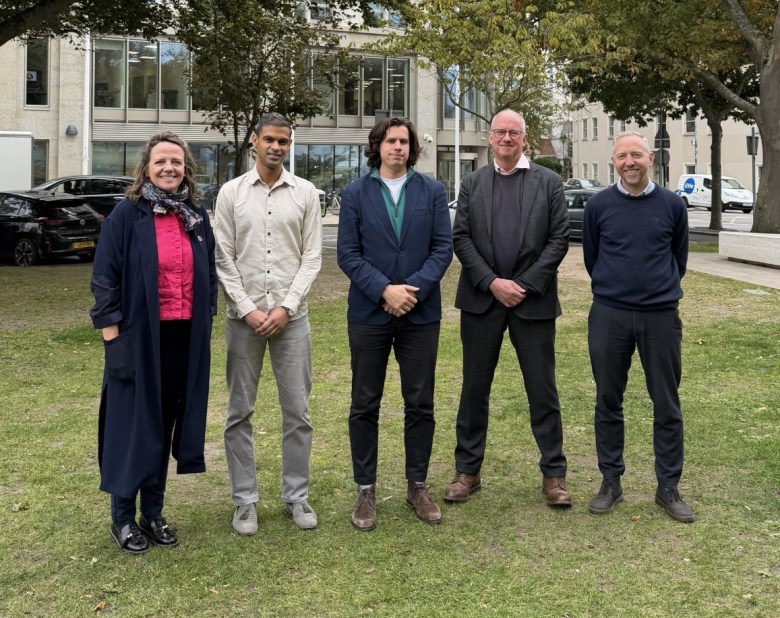
Jersey’s government has commissioned a £40,000 review and five eco-watchdogs – including the leader of BP’s Alternative Energy business – to judge how well the Island is living up to its own green promises.
Environment Minister Steve Luce yesterday announced the creation of Jersey’s first ever ‘Climate Council’, who will be responsible for reviewing efforts made to date to ensure the Island hits net-zero carbon emissions by 2050.
Five people make up the council, each of whom will be remunerated at a daily rate of £500, Express has learned.
So, who is on the panel and how exactly will they seek to mark Jersey’s eco-homework?
Who are Jersey’s climate watchdogs?
Philip New (Chair of the Climate Council)
Mr New is chief executive of BP’s Alternative Energy business.
He has over four decades of experience in the energy sector and now supports the industry through board and advisory roles.
In a previous position as chief executive of Energy Systems Catapult Ltd, he provided independent support to the UK Government to help a transition to reliable low-carbon energy.
Professor Liz Bentley
Professor Bentley is chief executive of the Royal Meteorological Society and president of the European Meteorological Society.
She has over three decades of experience in meteorology and climate science and has held a number of senior leadership and executive roles. She leads independent experts in weather and climate and was also chair of the advisory panel for the Jersey Citizens Assembly in 2021.
Mark Bowden
Mr Bowden is head of water resilience and emergency planning at Jersey Water.
He has over 27 years of professional experience in operational, scientific, technical and leadership roles within the water industry, bringing knowledge of environmental science and management, climate adaptation and stakeholder engagement.
Dr Paul Hodgson
Dr Hodgson is managing director of strategy and systems consultancy pH [Shift].
He has a research background in carbon capture, biofuels, hydrogen and sustainable aviation, both in academia and industry. He brings over a decade of experience spanning sustainable systems engineering, government advisory and innovation leadership roles.
Dipak Vashi
Mr Vashi is head of sustainability at Grant Thornton in the Channel Islands.
He has contributed to UK Government taskforces, including reviews of green finance and net-zero. His experience in the finance sector includes time handling sustainability policy development and related matters.
How did the Climate Council come about?
In 2022, the States Assembly approved the Carbon Neutral Roadmap, setting out a number of policies to reduce greenhouse gas emissions in line with commitments made under the Paris Agreement.
But, to ensure that work would stay on track, States Members agreed following a suggestion from Scrutiny politicians that an independent body should be created to review progress and advise on future climate change mitigation action.
It was later decided that a council would be tasked with producing a report at the end of each four-year delivery phase of the roadmap, the first of which runs from 2022 to the end of this year.
All of the applicants were jointly approved by the Environment Minister and Deputy Hilary Jeune, who was previously Assistant Minister with responsibility for climate change initiatives and now chairs the panel of politicians responsible for scrutinising the government’s environmental progress.
How will the Climate Council assess the Island?
A brief shared with prospective Climate Council members said that work to prepare the four-yearly report was expected to take six days, encompassing an initial “orientation and planning day”, though it was noted that the additional duties of the Chair may necessitate a further paid time commitment not exceeding five days.
In addition to monitoring progress against targets, the brief noted that the Council’s work was also expected to include providing “independent science-based advice on setting and meeting carbon budgets”, “conducting independent analysis into climate change science, economics and policy”, and engaging with a “wide range of organisations and individuals to share evidence and analysis”.

“The Council will also consider and advise on carbon sequestration initiatives that would be applicable to Jersey,” the brief added.
Throughout the review, the team will be supported by a secretariat located in the States Greffe and will convene for short reviews towards the end of each term of government.
The brief said the first report would be due by Q1 2026.
Deputy Luce said that creating the Climate Council was a “vital step in ensuring transparent, independent oversight of our climate commitments”.
Deputy Jeune said it was “a privilege” to have jointly approved the “excellent” appointments to the council, adding: “Now, more than ever, it is vital that we ensure Jersey’s response to the climate emergency delivers targeted and effective action to tackle our greenhouse gas emissions.”
Council chair Mr New stated that he and his fellow members were “committed to maximising this opportunity and helping shape the climate future of this unique island with independence and integrity”.
“Over the course of this rapid review the council will bring together experience from the fields of utilities, climate science, financial management, sustainable energy and engineering to address the interrelated and complex challenges of addressing climate change,” he said.
