

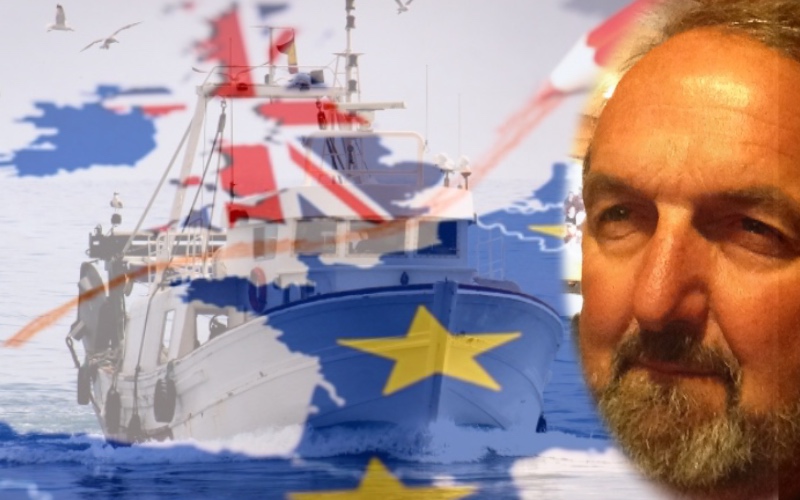
The Jersey Fishermen’s Association says that the situation remains “extremely tense” and “anger among its members has reached boiling point” after they believe the EU “downgraded” Jersey’s clean-water status.
This means that Jersey boats can no longer land their produce in France without first putting their catches through a cleaning ‘depuration’ process, which they didn’t have to do pre-Brexit.
It also prevents Jersey boats directly landing their catch in French ports.

Pictured: Most whelks caught by Jersey fishermen, using baited pots, have been exported directly to French ports, such as Carteret or Granville, but they have been unable to do this since the island because a third country in the eyes of the EU.
The JFA argues that French boats, however, can catch scallops and whelks in Jersey’s territorial waters and take them back into the EU unhindered.
Express understands that Jersey’s clean water classification has not been downgraded per se because there was no classification in place beforehand.
Rather, when Jersey was an equal trading partner with the EU, as defined in Protocol 3, the island’s waters were not classified because it wasn’t necessary.
Now Jersey is deemed a third country, the EU has applied a ‘B’ classification to the island, most likely by extending the existing B classification that Jersey’s oyster beds have in the south-east corner to the rest of the island’s territorial waters.
“Landings of scallop and whelks by Jersey boats are now permanently banned , as a result of the EU’s re-classification of our waters, prohibiting the export of shellfish for human consumption,” said JFA president Don Thompson.
“However, the same shellfish – an estimated 100 tonnes of scallops and similar quantities of whelk caught each week by French vessels in our waters – are being openly landed and sold on French markets.
“Our fishing grounds are being decimated, and exporters and fishermen are struggling for survival amid the crisis.
“It is clear that the EU intends to go to any lengths to punish the UK and Crown Dependencies for leaving the EU and to inflict the maximum amount of damage possible on sectors such as fisheries. Our ministers appear willing to allow this ridiculous and unacceptable situation to continue.”
In response, Environment Minister John Young said: “I can completely understand the strong grievances of our fishermen and we are all determined to get a satisfactory outcome for them, as well as provide money and support.
“Unfortunately, regardless of the terms of the trade agreement, we are no longer part of the EU family when it comes to goods. We are a third country so that brings in all sorts of extra obligations, paperwork, grading and reclassifications.
“Personally, I did not support Brexit but it happened and we now have to deal with the consequences, which are still playing out. We certainly don’t want to return to the old Bay of Granville agreement, which we tried to change over four years of negotiations but failed, and we are far better off with the UK-EU trade agreement than without it.
“I understand that our fishermen are angry so we have to find solutions: getting our waters classified to the required standard, which would require a new sampling regime, is one way, as is potentially having the facilities to depurate scallops and whelks in Jersey before they are exported.

Pictured: Environment Minister John Young: “We have to find solutions”.
“A cooperative in Jersey could also be an answer, to help share the costs and resources among fishermen.”
“It is important to remember that there are communities in Normandy that rely on the Jersey shellfish trade so it is in everyone’s interests to get this fixed. Equally, there are a variety of different strands to Jersey’s fishing industry and there can be different opinions internally too.”
Meanwhile, the JFA say they have now prepared a set of proposals, backed by a “small number of backbench politicians”, aimed at “preventing further decimation of the island’s fish stocks and marine resource”.
The ban on EU boats forms part of this proposal.
