


After years of mounting concerns over leadership, safety, and funding, Jersey’s ambulance service is set to move back to the Health Department this summer – undoing a major structural change made in 2018.
The shift, confirmed by Home Affairs Minister Mary Le Hegarat this week, comes amid claims that placing the service under Justice and Home Affairs during previous Government CEO Charlie Parker’s OneGov restructuring weakened coordination with hospital care.
Health Minister Tom Binet is also working on a new “all-encompassing” health system, and in four months’ time, the ambulance service will once again sit where many say it belongs.
“It’s expected to take place on the first of July. [The Health Minister and I] had interim discussions about it, and we are all in agreement that it sits better under Health, where they were before,” Deputy Le Hegarat said.
Deputy Le Hegarat said it was “no secret” that she had opposed moving the ambulance service to Justice and Home Affairs seven years ago.
“Even though it is a blue light service, it clearly is a health service and cares for the community,” she argued.
“I’ll make no bones about it, I was opposed. It doesn’t fit under Home Affairs because it has a blue light,” she said.
Where has this all come from?
The decision comes after a difficult year for the ambulance service in which serious concerns have been raised about leadership, demand and capacity, funding and safety of staff.
While the service has been in the spotlight more recently following the Royal Court case of paramedics Tom Le Sauteur and John Sutherland, many say the issues extend back several years – and can, in part, be traced to the public sector-wide restructure of 2018.

The biggest restructure of the civil service in living memory, ‘OneGov’ tore up several Government departments and saw several new ones created – among them, Justice and Home Affairs, under which all the emergency services were to sit.
It was argued at the time that bringing the three – the Ambulance Service, States of Jersey Police and Fire Service – under one umbrella would lead to greater efficiency.
However, some insiders told Express that having the service sit outside of Health actually weakened coordination – what should be a seamless transition from a JHA-run ambulance to Health-run A&E was no longer as seamless as it should be, and synchronising improvements were now harder to implement, they claimed.
Violence… a symptom or a cause of pressure?
The upcoming restructure will also mean new management, which, for some paramedics, will be welcome.
Many have told Express of a trust breakdown in the lead-up to and following the Le Sauteur and Sutherland case, following concerns about the conditions under which paramedics are operating which they claim have not been taken seriously.
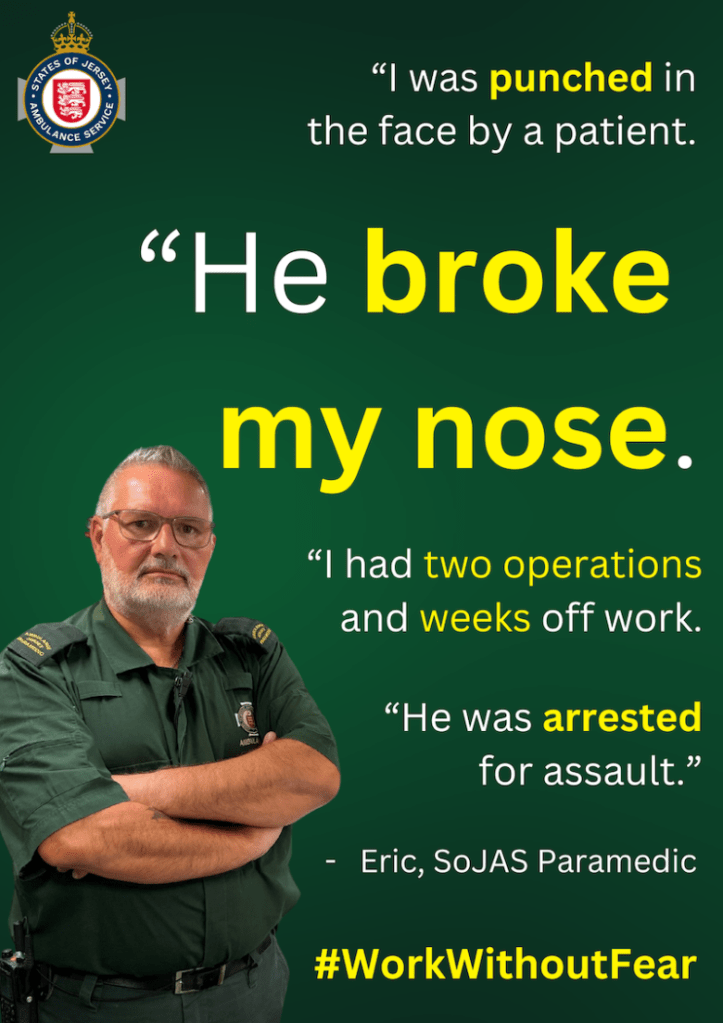
While management has always maintained it has a “zero-tolerance” approach to violence, it recently emerged that paramedics have faced a steep rise in assaults over the past four years, with 26 incidents recorded in 2024 – more than the total of the previous two years combined. One paramedic had his nose broken.
A campaign entitled ‘Work Without Fear’ was recently launched to encourage the public to show respect to Ambulance colleagues – but some staff told Express they felt this was no more than PR, and distracted from alleged “systemic issues”.
After some shared their stories with Express and other media, they received a warning email from Ms Briden reminding them that speaking to media may lead to disciplinary action.
Management have repeatedly denied claims of a “toxic” workplace and maintained that it is “not true that Ambulance Service colleagues are undervalued”. They said that feedback should be raised with line managers, and that they would seek to take it into account and make improvements.

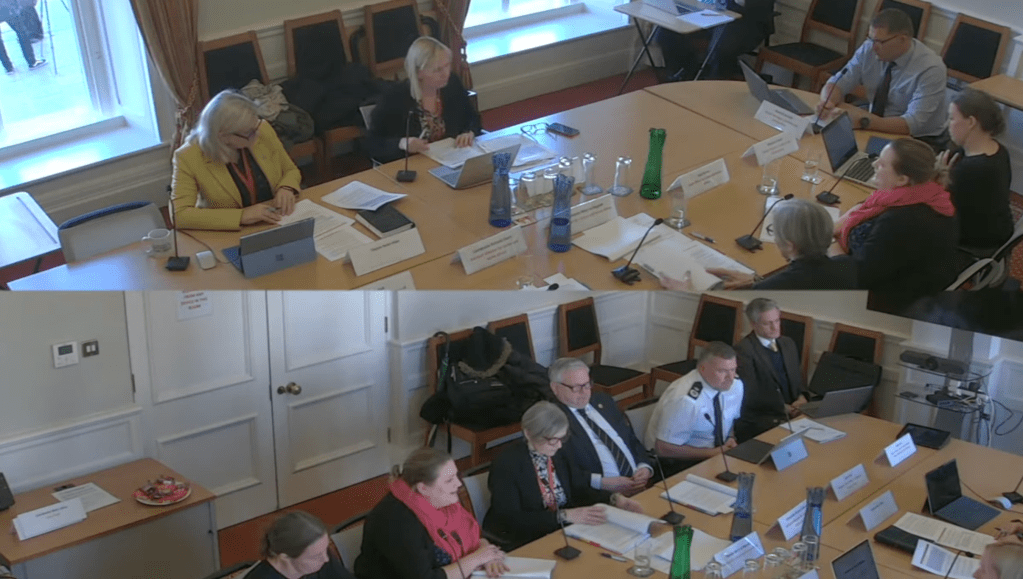
While responsibility for the service will soon be changing, Ms Briden told scrutiny politicians on Thursday of some of the changes already underway in response to staff concerns.
What has actually improved?
“There’s been very good joint working with the States of Jersey Police, and that’s been a joint work-stream for about a year, ensuring that we get the balance right in terms of what can be dealt with appropriately when ambulance personnel are faced with instances of violence and aggression.”
Ms Briden also told the panel that efforts are being made to ensure staff concerns are properly logged and addressed.
“One of the things that staff have been particularly concerned about is that where they use DATIX, which is the logging system… those concerns are properly registered, understood and actioned,” Ms Briden said
The panel also heard that additional training is being planned for ambulance staff on de-escalation techniques through a licensed UK provider.
Work is also underway with facilitation company TCM to improve workplace culture.
Kate Briden said: “They’re an experienced facilitation company in the UK, and the reason we went with them is because they’ve experienced in this healthcare space of working with teams on their leadership, their management and their culture. And there is an action plan arising from that which is just being shared with staff.”

She added that the plan focuses on “key actions around communication within the service, a newly formed and well-engaged wellbeing plan.”
An upgrade of the radio system used by emergency services is also planned, according to Assistant Home Affairs Minister Richard Vibert.
“There is a planned major upgrade of the existing platform between March and April 2025 and that’s being done by digital services and the supplier,” Constable Vibert said.
He explained that the current radio models are no longer supported by the supplier, and that new models will improve coverage in areas with “black spots” around the island – an issue that has been previously raised by paramedics.
