

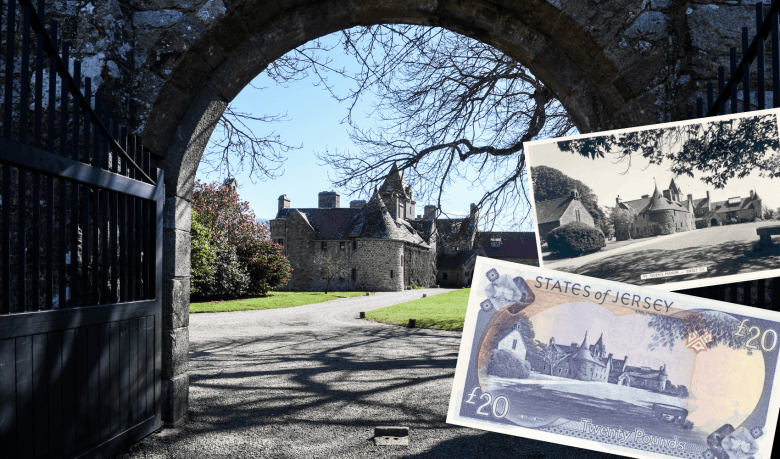
You’ve probably seen it before – even if you’ve never stepped beyond its ancient gates.
Perched amid sprawling lawns, a wooded valley and lily-dotted moat, St Ouen’s Manor has long been one of Jersey’s most recognisable buildings. So iconic is its silhouette that for years it featured on the £20 note, tucked discreetly into islanders’ wallets and purses – but how many know the story behind the stone and the ongoing work to preserve it?
With origins stretching back to the 12th century, this grand family seat has borne witness to centuries of change – architectural, political and personal. A rhythm of design influences, from Jacobean wings to a 19th-century battlement wall, now echoes through the property and its grounds, shaped over generations by the de Carteret family.
Today, the custodianship of this Grade 1-listed gem rests with Seigneur of St Ouen Charlie Malet de Carteret and his wife Georgina, who moved into the Manor in 2016. And while its historic façade may be familiar to many, their story is one of quiet, careful transformation, as Express discovered…
Looking after a listed building can pose a unique challenge – a balancing act of respecting its history while making necessary changes to ensure its future.
Such a challenge is even more apparent when the property in question has been passed down through successive generations of a prominent Jersey family.
St Ouen’s Manor is home to Charlie and Georgina Malet de Carteret, who have been living there since 2016.
The Grade 1-listed property is one of the oldest homes in the island, with its history stretching back hundreds of years.

“The earliest record of the house is lost in the midst of time, but it is likely we, the family, built it at some point in the 12th century,” Mr Malet de Carteret explained.
“We can demonstrate we’ve been living in Jersey since 1125, but this house, the current house, doesn’t contain any elements of that house – it would have been a wooden house which would have fallen down or burned down
“The early settlements of this house date back to the 14th century, which isn’t too bad in and of itself.
“So the house that we’re living in today was built by my ancestors and has been passed down from father to son in successive generations since then.”

As might be expected, the Manor has evolved a number of times, with around three major refurbishments taking place over the course of its existence.
“From one side of the house it looks like a Jacobean, formal house and from the other side it looks more like a Scottish baronial castle,” Mr Malet de Carteret continued.
“It’s very hard to pigeon-hole it – it’s unique in so many ways.
“But the way it looks and feels today is a result of the significant alterations and landscaping that my great-great-grandfather did in the 1880s and 1890s.”
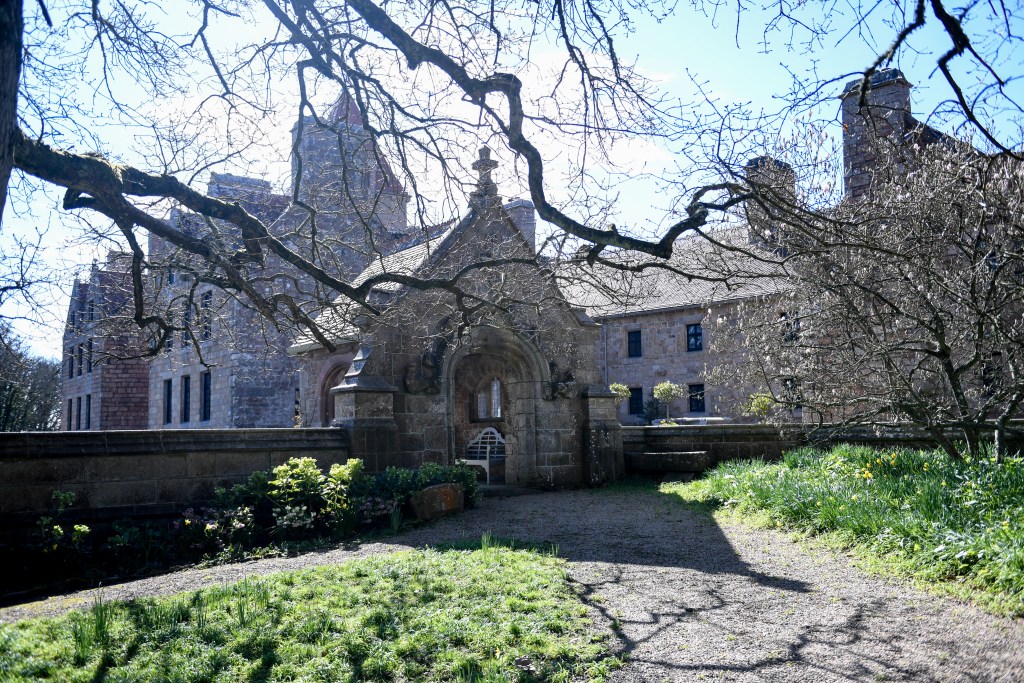
The couple also undertook a comprehensive programme of redecoration and refurbishment when they moved in eight years ago.
“Obviously we are very mindful of all of our listed obligations,” Mr Malet de Carteret noted.
“Our objective as far as possible is to renew and restore the interior of the house without anyone noticing that anything had been done.
“We’ve been restoring the rooms back to what they would have looked like at the last refurbishment, so we’ve done a certain amount of work but it’s difficult to see because of that objective.”
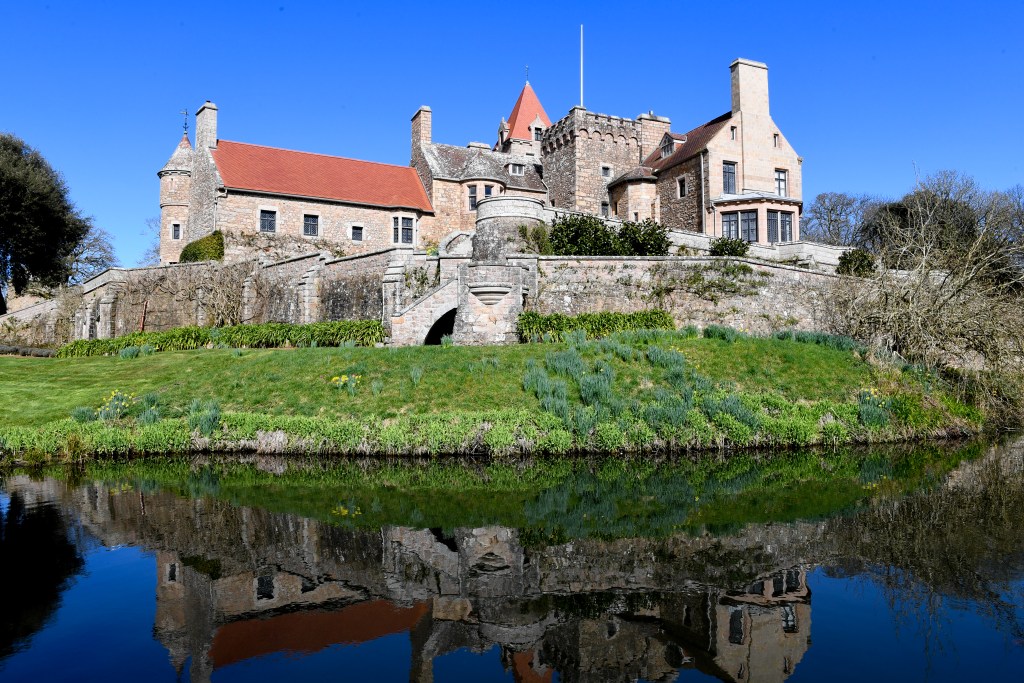
He continued: “Having said that, we did a major restoration of one of the wings, which we call our billiards room.
“If you look on the £20 note [that has the Manor on it] you’ll see that there’s a Victorian skylight in the roof, which is the only mistake I think my great-great-grandfather made.
“It was useful in letting light into his billiard room, but from the outside it looked incredibly ugly.
“Georgina and I bit the bullet and had it removed.
“While we were at it we had the roof replaced, insulated up to modern standards and the interior of the room was completely refurbished at the same time.
“So that’s the major structural work that we did and that’s probably something that we are most proud of in terms of the house.”
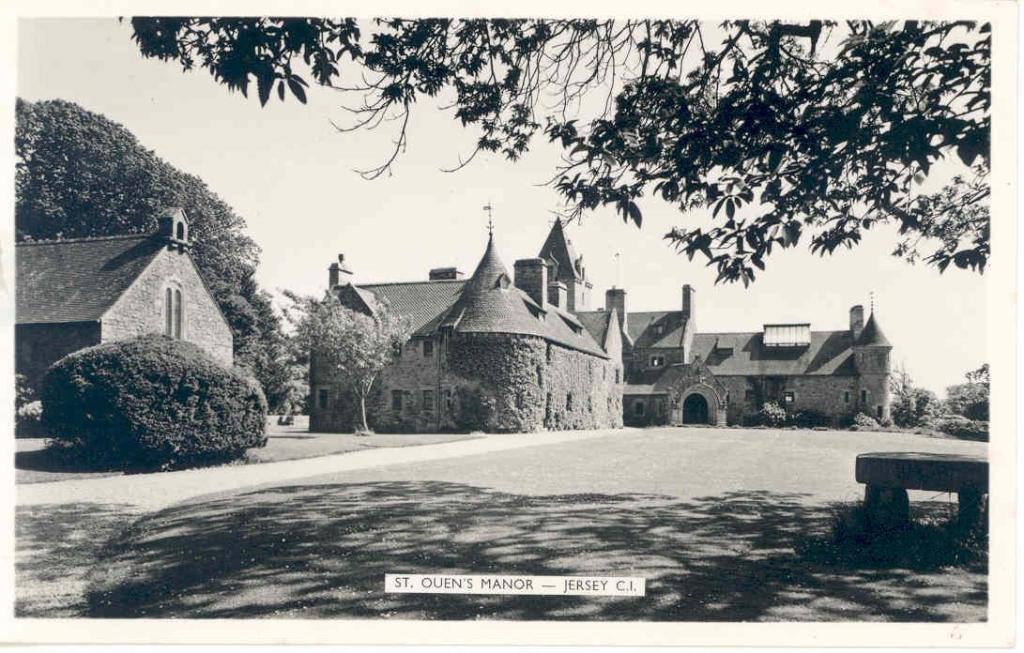

Additionally, Mr Malet de Carteret said he and his wife had ensured the grounds were subject to a programme of repairs, clearance, replanting and renewal.
“The landscaping, which had very good structural bones put in place by my great-great-grandfather, had been somewhat neglected in recent times.
“This is something that Georgina is passionate about and we’ve done a huge program of gardening and garden improvements, tree planting and flower planting. So we’re also very proud of what we’ve done there.”
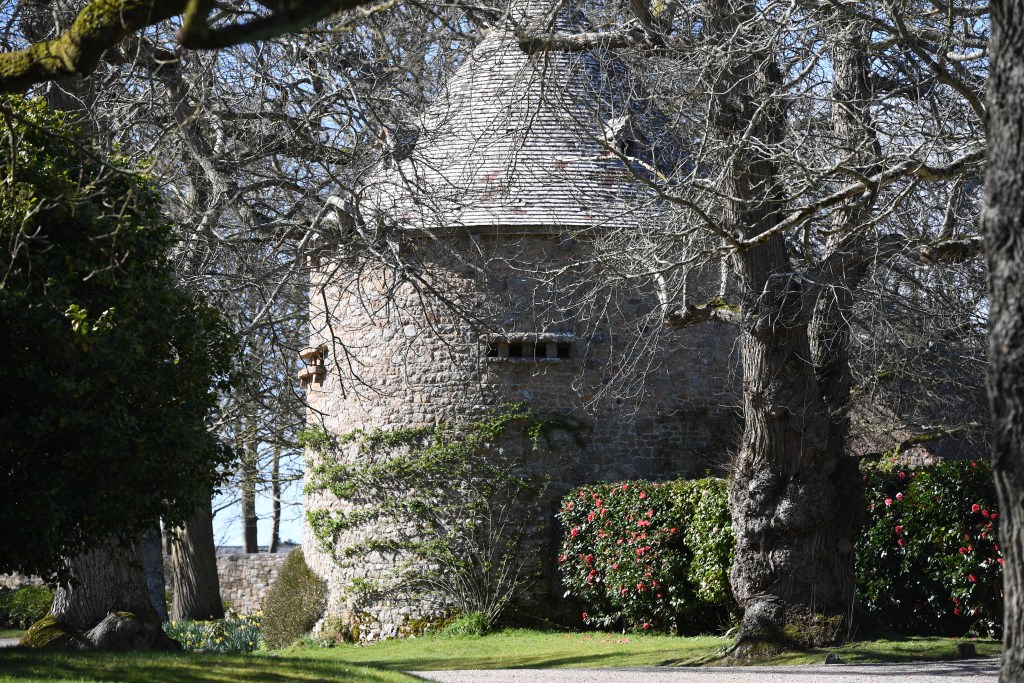
Mr Malet de Carteret acknowledged the challenge of making changes to the Manor was “to preserve everything that is good about the house while making it liveable in the 21st century”.
“Rather like my great-great-grandfather had similar challenges when he completely remodelled the house and took out many features dating back to medieval times, and putting in modern plumbing and heating at the time.
“And as those standards evolved, it’s a challenge to keep the house liveable in the modern age but respecting its heritage. For example, the challenges of putting Wi-Fi into a building like this are considerable.
“It was a process and, like with any new house, whatever plans you had when you moved in change as you live there.
“So our plans evolve, but with the overriding principle of keeping it the same.”
READ MORE…
This article appears in the Liberation special edition of Connect Magazine – AIM Plus subscribers can enjoy an exclusive first look at the magazine here…
