

“Fraud.” The word was thrown at her as she stopped outside a shop in St Helier, white cane in hand, checking her mobile phone. A passerby had shouted at her, unable to understand how someone with a cane could possibly use a phone.
This was a real encounter recalled by a visually impaired islander, and it’s far from an isolated experience.
For many living with visual impairments, the daily challenge isn’t just navigating the world with limited sight, but confronting the assumptions of those around them. Now, islanders with lived experience and advocates are speaking out – calling for greater awareness and understanding.


One of the most common misconceptions is that people with visual impairments are either fully blind or fully sighted. In reality, most people with sight loss live somewhere in between.
Conditions like retinitis pigmentosa, which causes progressive and unpredictable vision loss, often leaves people in a this grey area where their condition has a significant impact on their lives – but is invisible to others.
Back in 2023, members of sight-loss charity EYECAN took to the streets of St Helier to dispel the myth that everyone who uses a white cane is fully blind.

The Cane Awareness Day walk was organised after charity members reported unpleasant interactions in public – such as being accused of fraudulently using a cane or being “manhandled” by strangers.
But, two years later, they don’t feel like enough has changed.
“You don’t want to talk to strangers about your medical history”
Annette Rioda, diagnosed with retinitis pigmentosa in 2003, is all too familiar with these misunderstandings.
“I use a white roller cane, and if people see you looking at your phone, they can’t understand why you can see it,” she explained.
“I’ve been in town with my cane, and people have said odd things. I’ve had people come up to me asking, ‘what’s wrong with your eyes?’. It’s really confronting.
“You don’t necessarily want to talk to strangers about your personal medical history.”
Rachel Forster, who also has retinitis pigmentosa but doesn’t yet use a cane, has a different experience – one that reflects how the lack of visible indicators can leave people feeling misunderstood.
“I do bump into people, and I find that I’m apologising a lot. That’s where the cane would help, because it makes other people more aware,” she said.
Rachel’s retinitis pigmentosa was caused by a rare genetic disease called Usher syndrome, which causes hearing loss and visual impairment.
It took her around three years to fully accept her diagnosis.
“You don’t know how bad it’s going to get, so that’s hard,” she said.
“After reading up a lot on it, I think I accepted it about three years down the line.
“I just lived, and now I’ve had it for 14 years.”

Rachel explained: “The last two years have been more difficult because, even though I’ve still got central vision, my eyes have become very light sensitive.
“If I walk into a busy supermarket, I cannot see a thing for five minutes – it’s literally like a blanket has come down on me.
“It’s become more difficult with light, and constantly knocking into things.”
Through growing up deaf, she has a intimate understanding of people’s misconceptions about hidden disabilities.
Rachel explained: “If I miss something, sometimes people say, ‘Are you deaf or what?’ And I’ll be like, ‘Well, actually I am.’
“Some people are just rude. They’ve just got no patience at all – and that’s the same with my eyesight.”
She added: “I do get a little bit insecure, but I do try and make myself do things.
“I think that’s one thing that does worry me, that I will lose confidence.”
“Someone accused her of being a fraud”
Both women’s experiences underscore a deeper challenge: people often fail to understand that visual impairments are not always immediately apparent.
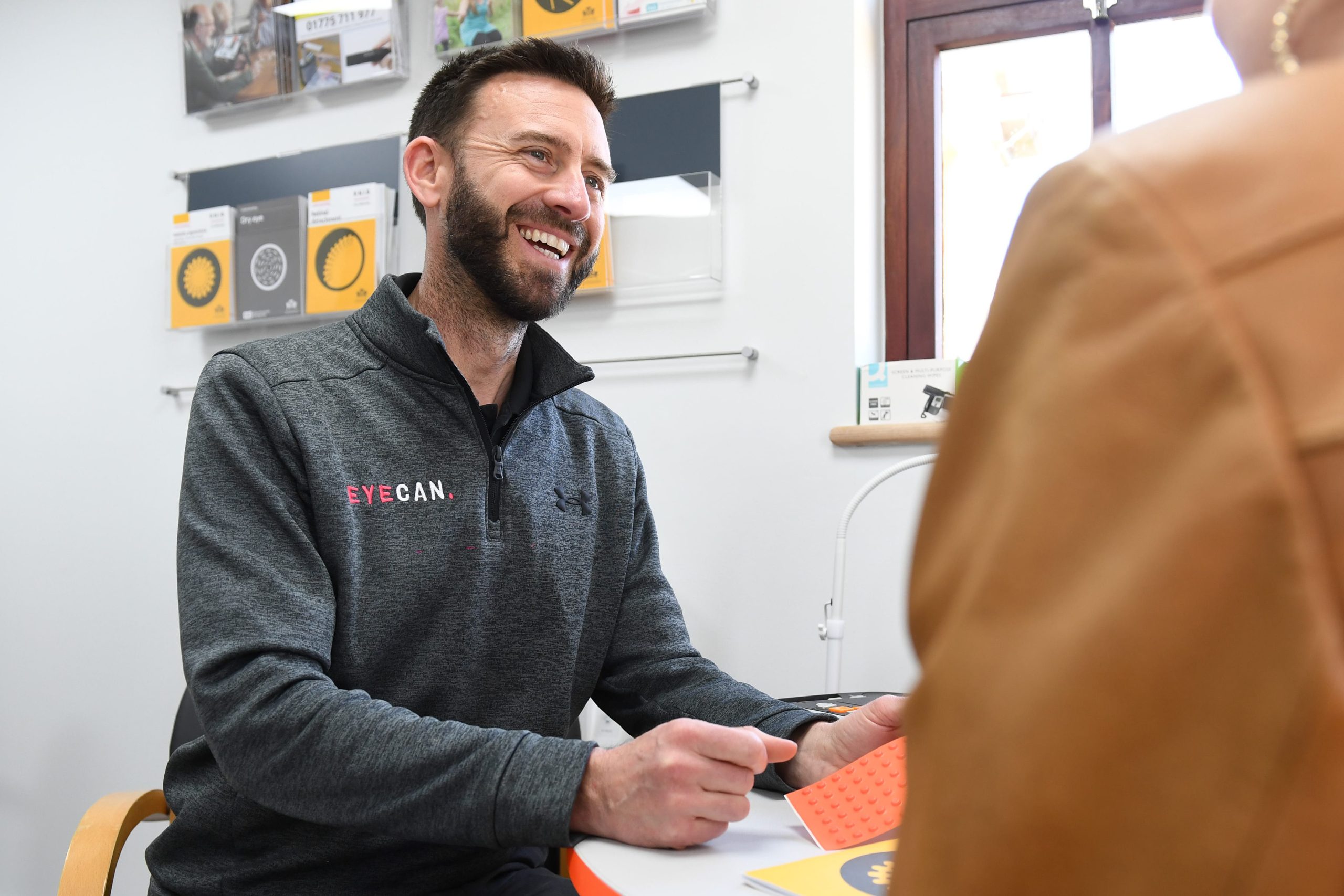
As Chris Frost from the local sight impairment charity EYECAN explained, this misunderstanding can be a source of frustration.
“It’s a hidden disability for the most part,” he said. “Probably 95% of our clients’ eyes don’t look any different.”
Chris explained: “We’ve had an instance where a woman with a white cane stopped outside a shop to look at her mobile phone.
“Someone accused her of being a fraud – they couldn’t understand how she could use a mobile phone if she was visually impaired.
“But she has retinitis pigmentosa, and while her vision is limited, she can still use her phone.”
It’s not just assumptions from strangers that can make navigating the world challenging for those with sight loss.
Public spaces are often not designed with the needs of people with vision impairments in mind, making mobility even more difficult.
Chris explained that many urban spaces are designed without considering diverse mobility needs, treating visual navigation as an afterthought rather than a primary consideration.
“Public spaces are often visually confusing,” he said.
“If there’s lots of dark elements and light elements mixed in, it can be difficult to navigate for someone with visual impairments.”
EYECAN CEO Mark Coxshall echoed this concern. Whilst the built environment has become more inclusive for those in wheelchairs, he explained that people with visual impairments are often forgotten.
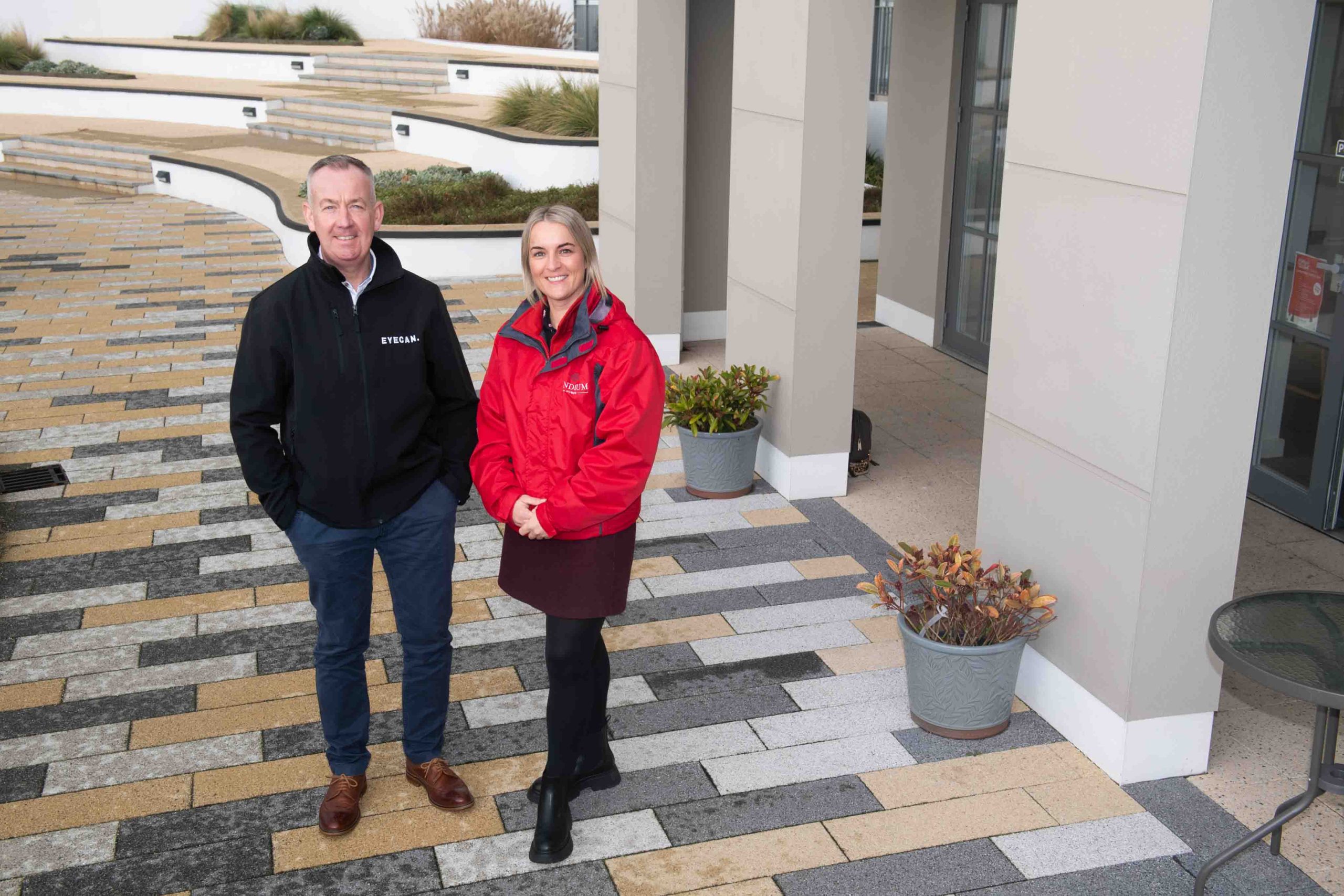
He pointed out that common features like street furniture or signage often create additional barriers.
“People, quite innocently, have black boards or street furniture outside their shops,” said Mark.
“New flower pots look fantastic, but it’s just taking that time to think what impact it could have on someone visually impaired.”
“Often it’s the general public that isn’t paying attention”
Even the general public can unintentionally be a hazard, especially when it comes to people distracted by their phones.
“One of the comments I get on a weekly basis is about people walking through town on their mobile phones – looking down and not being aware of what’s going on,” said Chris.
“Someone with a visual impairment is trying to mind their own business, but often it’s the general public that isn’t paying attention.”



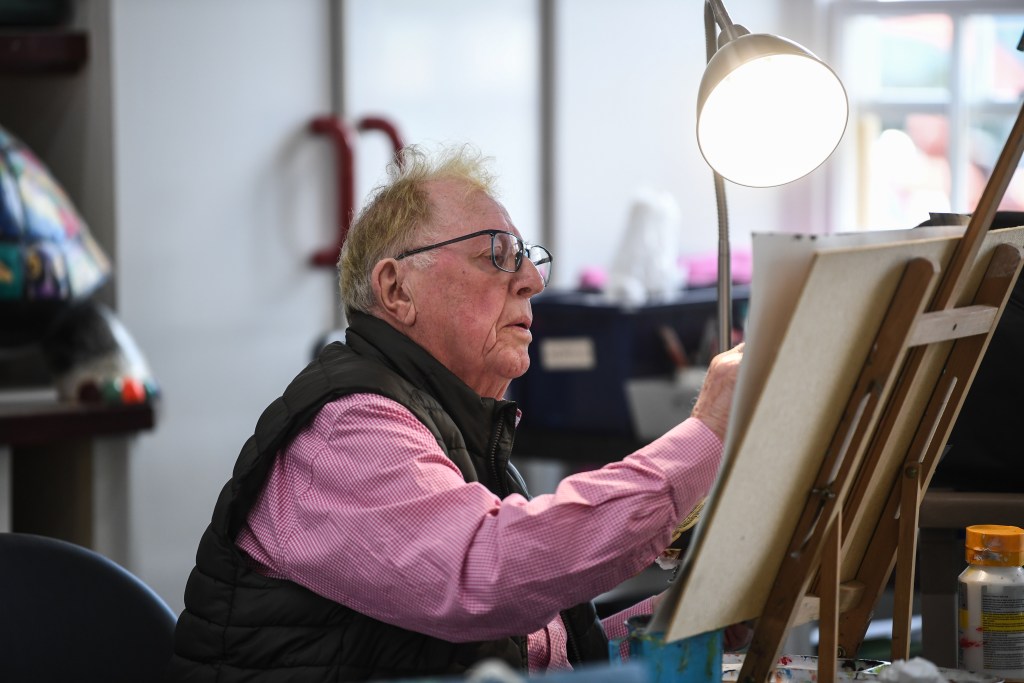
Rachel echoed this, explaining that navigating through crowds can be more challenging when others aren’t paying attention.
“The thing I find strange is the number of people on their phones walking down the road and not looking,” she said.
“If you can’t see properly, you concentrate so hard, but others are just walking into you.”
Even in everyday spaces like supermarkets, the layout can create unexpected dangers.
“Supermarkets are the worst,” said Rachel.
“When staff are unpacking, they leave big crates in the aisles. I have bruises all over my legs from those.
“They’re always dark green or something – they should be orange or not left in the aisles at all!”
“You lose your independence”
Despite these challenges, both Annette and Rachel agree that the hardest part of their diagnosis was the loss of independence – specifically, giving up driving.
For Annette, it was a difficult transition.
“Not being able to drive was the worst part of it, because you lose your independence,” she said.
“Apart from that, I was lucky to have really good central vision, which for many years was absolutely fine.
“But in 2023, I had to have cataract operations, and since then, it’s made the retinitis pigmentosa slightly worse, so it’s more blurry vision. It’s not as good as it used to be.”
Rachel faced a similar challenge.
“I stopped driving as soon as I was diagnosed,” she said.
“At the time, my first daughter was just 18 months old, so it had a huge impact on my independence. I drove for convenience, so that was the first big shock.”
Mark from EYECAN noted that while giving up driving can feel like a huge loss, many people are reluctant to embrace assistive devices like canes.
“We have people who could really benefit from using a cane but don’t want to,” he said.
“They’re just not ready for it yet. And driving is a big thing to give up. It’s so important to people that they feel like they’re giving up their independence.”
That’s something I would tell myself: get a cane sooner.
annette rioda
But for Annette, the decision to use a cane was one she ultimately embraced.
“I think that’s something I would tell myself: get a cane sooner,” she said. “It does make your life much easier.”
Embracing high-tech and low-tech solutions
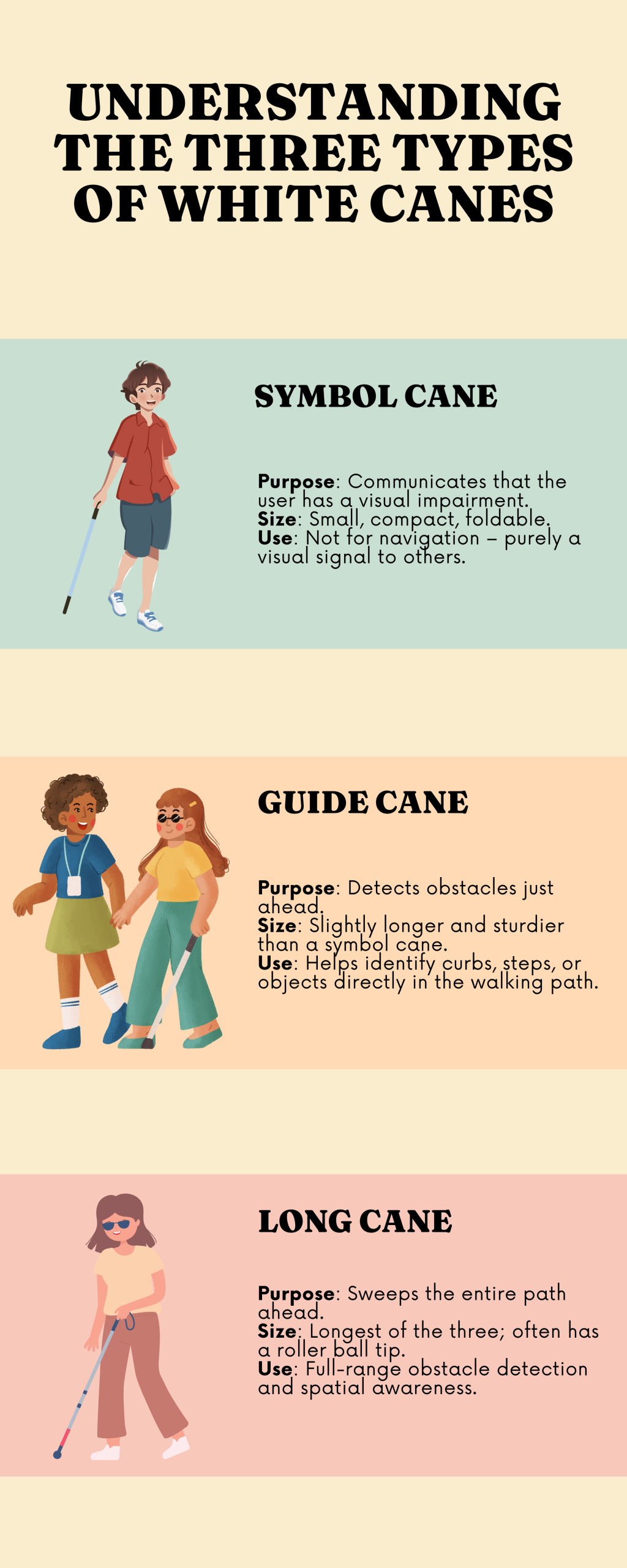
Chris outlined the three different types of white canes:
- the symbol cane, a small, fold-out cane that signals to others that the person has a visual impairment;
- the slightly longer and more substantial guide cane, which is used to check the immediate environment; and
- the long cane, which has a roller ball at the end, is used to sweep the full path ahead to detect obstacles.
Peer support has also been crucial for both Annette and Rachel in adjusting to their diagnosis. Both have found strength in connecting with others who understand their experiences.
Rachel joined Facebook groups for people with retinitis pigmentosa and found them to be a valuable source of support.
“If you’ve had a bad day, you can have a good moan, and everyone understands,” she said.
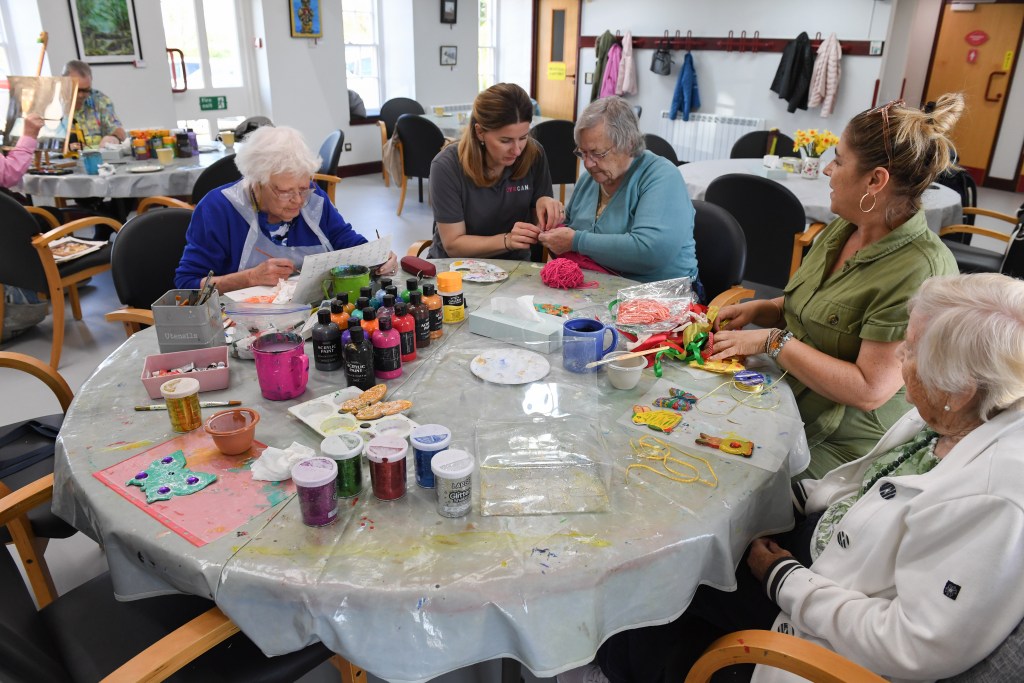
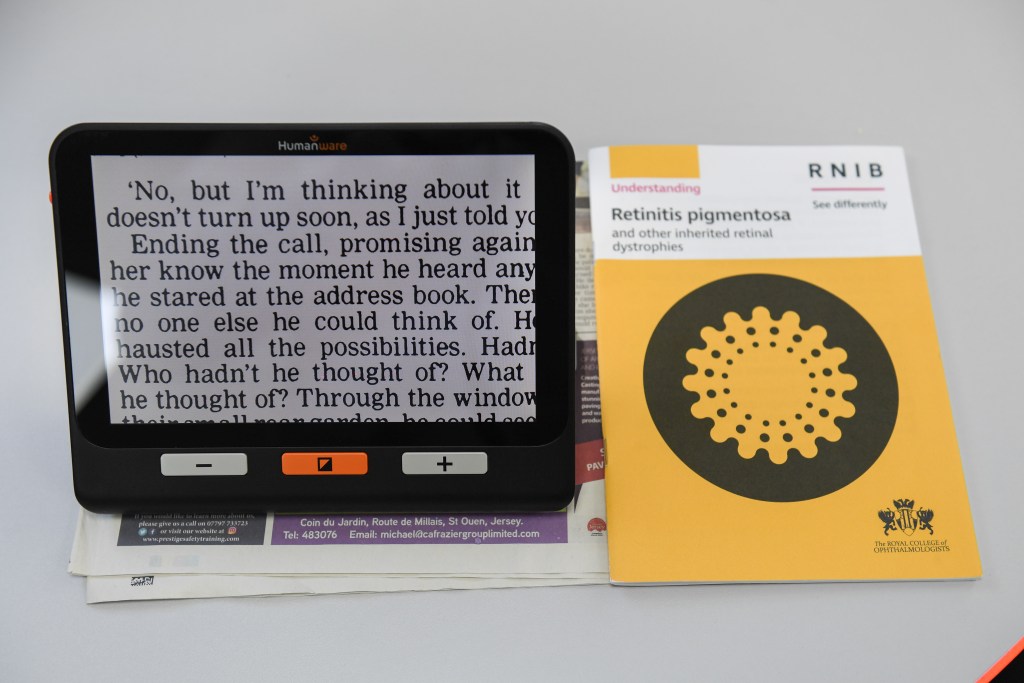
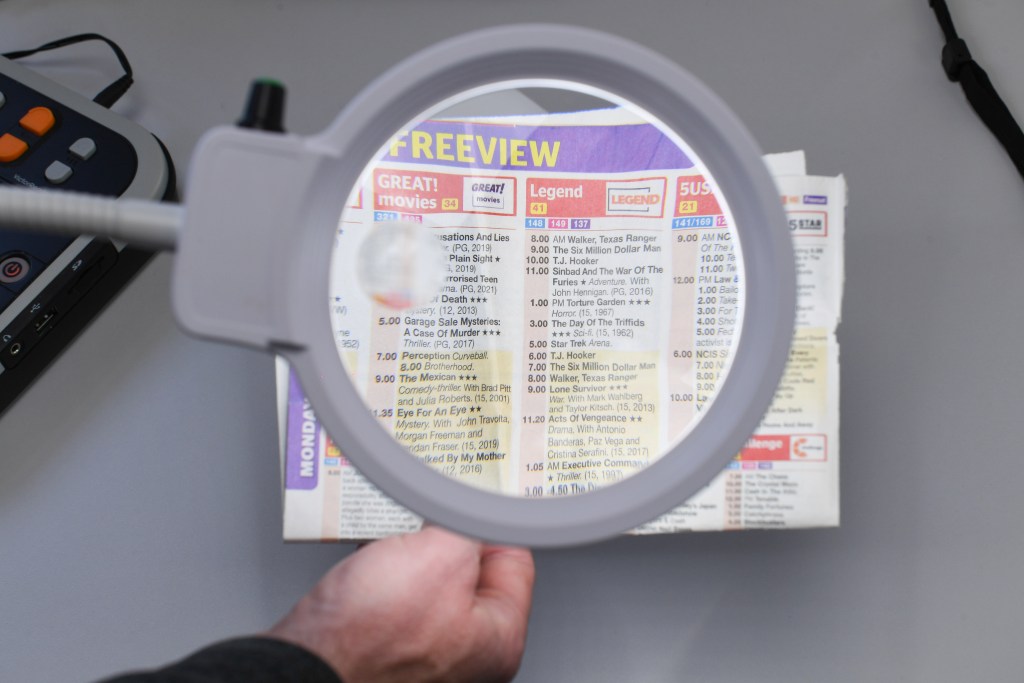
Technology has also been a major help, with many EYECAN clients benefitting from magnifiers, text-to-speech apps, talking clocks and watches, and voice activation devices.
“When I first started 20 years ago, technology was almost prohibitively expensive,” Chris explained.
“Now it comes free as an app on your smartphone. That’s been a massive jump – the fact that it’s all there and often built in.”


Annette uses several apps to assist with daily tasks, including one that helps her identify colours.
“I’ve got an app on my phone where I can point at clothes, and it’ll tell me what colour they are,” she said.
While high-tech solutions are useful, Annette also embraces low-tech solutions.
“Since having my cataract operations, I can’t see colours as well – I know the names of colours, but I just can’t see them as well,” she explained.
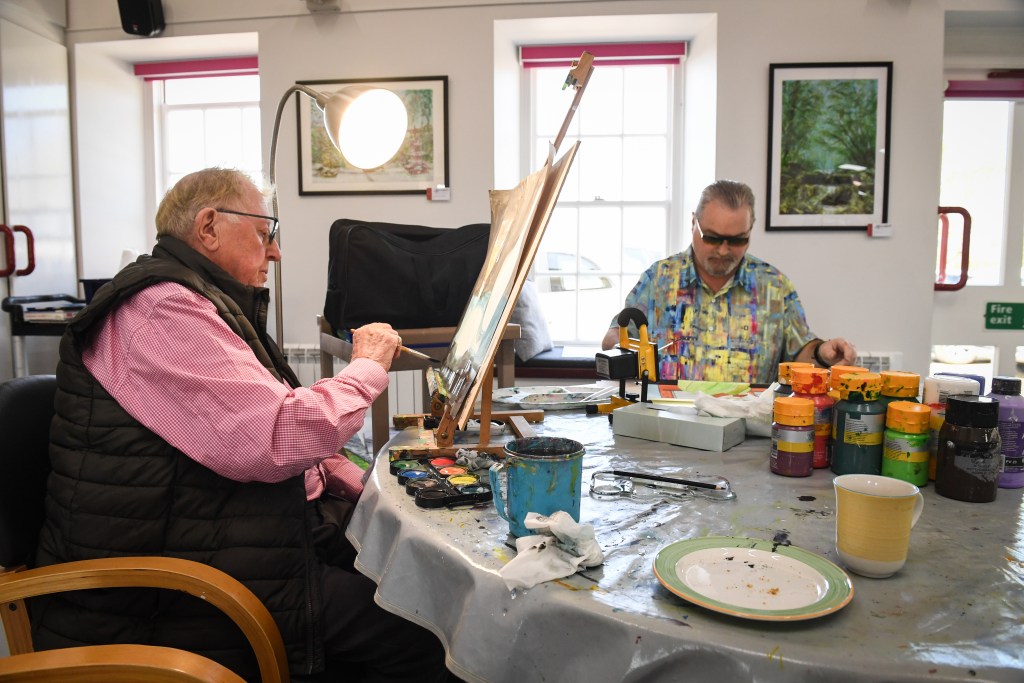
“So I’ve relabelled all my paints at home with big letters so I can actually see what they are.”
“You can’t possibly know what someone is seeing”
Despite all these advancements, the biggest challenge isn’t necessarily what people with retinitis pigmentosa can or cannot see – it’s what others assume they cannot do.
“Just don’t presume you know what’s wrong with someone,” Annette said.
“There’s so many eye conditions, and you can’t possibly know what someone is seeing.
“Two people with retinitis pigmentosa will see something entirely different.”
Annette explained that one of the effects of her condition is the time it takes for her eyes to adjust to changes in light.
“Sometimes I have to just stand there waiting for my eyes to adjust, and people ask if I’m okay because they can’t understand why I’m just standing there,” she said.
“You have to try and act normal, or people start asking questions.”
Two people with retinitis pigmentosa will see something entirely different
annette Rioda
For Annette, the worst part is when people assume she wants help without asking.
“People just assume you want help, they don’t ask, ‘Would you like help?’” she said.
“I was in a supermarket looking for something, and I was more or less pushed through the supermarket to get to what I wanted.
“I think people should respect your personal space and ask if you want help rather than just assume you do.”
While Annette emphasised the importance of not making assumptions about people with vision loss, Rachel reflected on how her own approach to sharing her diagnosis evolved over time.
“The first few years after my diagnosis, I didn’t tell people. I kept quite quiet about it,” she said.
“And then as I got more used to it myself and accepted it, then I was quite open about it.
“Now I realise it’s a lot easier just to let people know that I’m just visually impaired – because otherwise you do look a bit stupid sometimes.”
“You just adapt the best you can”
Despite these challenges, both Annette and Rachel have embraced their diagnosis and adapted to their changing circumstances with resilience.
“You have to adapt and just accept that that’s the best way to do it,” said Annette.
“It’s quite challenging, but it’s not the end of the world. There’s a lot of worse visual impairments that I could have, so you just adapt the best you can really.”
Rachel added: “I always kept in my mind, ‘I’m going to do the best I can’.
“Obviously, I’ve had to stop cycling, and that was one of my favourite hobbies. But I just had to accept it.
“It was difficult. I’m not saying it was easy, but I’m 14 years down the line. So I never say I can’t do anything, I will always try.”
For those newly diagnosed, she offered simple but powerful advice: “Stay positive, just do what you can, and slow down.”
