


Colette Bonner was recently appointed by LV Care Group to lead the Dementia wing at St. Joseph’s Residential and Nursing Home and act as the dedicated dementia champion and clinical lead for the group.
As part of the newly created role, she will be providing expert advice to the senior management and helping develop policies around the group’s dementia care strategy.
Colette has been a nurse for 36 years and has significant knowledge and experience of the Gold Standards Framework in palliative care, specifically dementia care and team management. Along with a master’s degree in Dementia, she previously trained for the Caring Homes Group-accredited City and Guilds dementia care programme ‘Living in my world.’

Pictured: Colette Bonner has been a nurse for 36 years.
Colette says she has always been drawn to elderly care in her work and has always had a “special interest” for the area, which grew into an interest into palliative care and dementia after she worked in France following her qualifications.
After she moved back to the island in 2014, having spent 17 years working in Europe with the Little Sisters of the Poor, she joined the Caring Homes Group, which runs L’Hermitage Care Centre and Beaumont Villa in the island, two homes specialised in dementia care.
“With the elderly, the care is more long term,” Colette explained.
“In an elderly care setting, it’s not the rush-rush of the hospital. With it comes history – you can build up a picture of the person, you get to know their entourage and you follow that person through their journey.”
Pictured: “There is much more story behind the elderly and it’s much more rewarding,” Colette said.
She continued: “There is much more story behind the elderly and it’s much more rewarding. You most certainly become attached, and I would even say if you do not have any feelings for the people you look after, you would question whether it is the right thing for you.
“Some people mistake it as being easy, they think it’s something you should be doing when you retire as a nurse. But it is on par with the Accident and Emergency Department, the nurse has to diagnose multiple issues on her own, without the support around her, they have to be quite knowledgeable and holistically look after the person – psychologically, physically, nutritionally, medically.”
In her new role, Colette is helping to raise the standards of dementia care locally to ensure islanders with the condition can live their life to their full potential.
Her goal is for islanders with dementia to receive the “same excellence of care” patients in a hospice receive, with a package of care that includes nutrition, physiotherapy, pain control and everything else they might need.
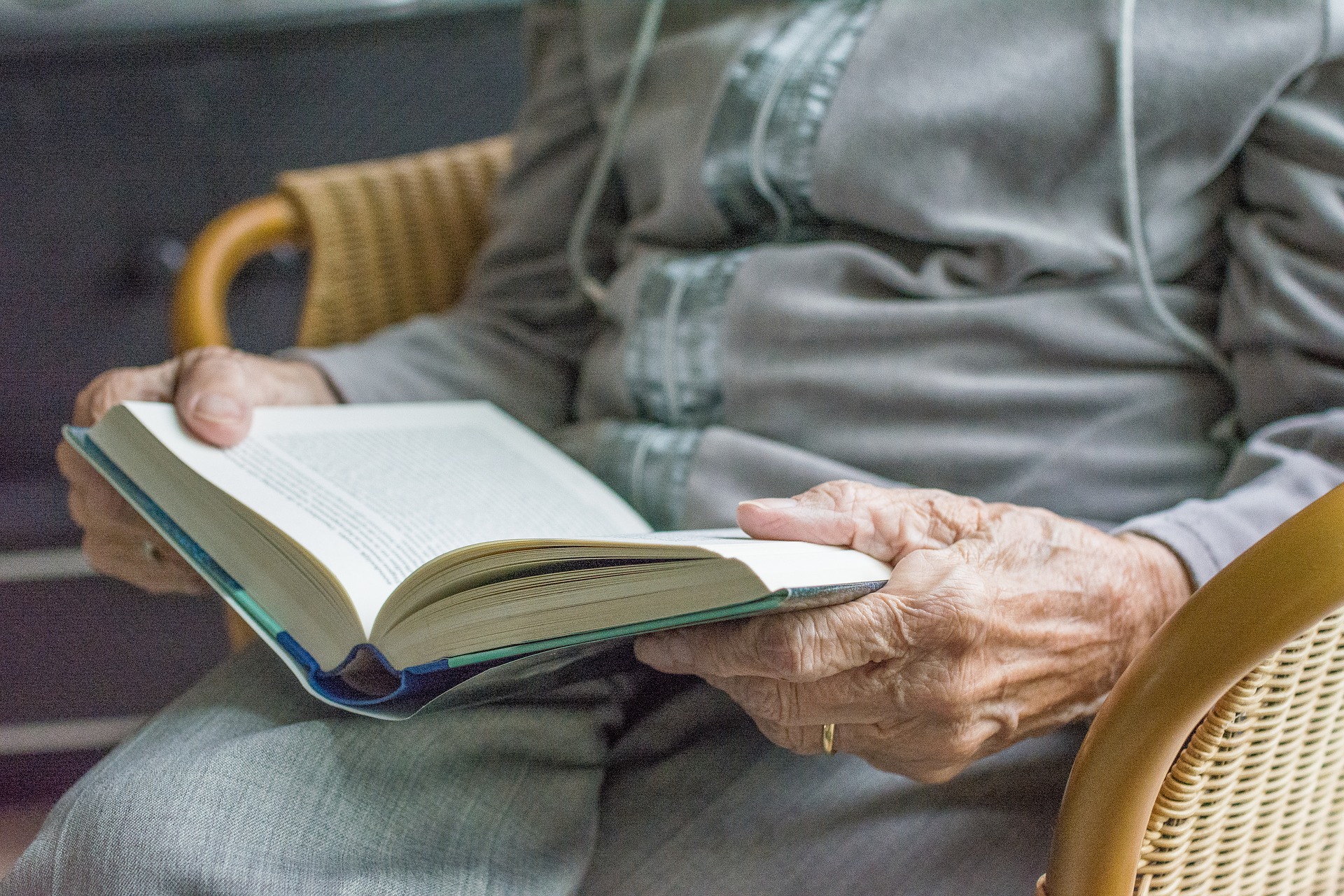
Pictured: Dementia affects different people differently and the condition will progress differently for each individual.
To ensure the best outcomes for patients, Colette says the care needs to be bespoke to each individual, as dementia affects different people differently and the condition will progress differently for each individual.
She explained that, while some people might not be ready to come into the “restricted set-up” that is a care home, it is the only solution for some.
“It’s very difficult in a current care home setting to address people adequately individually because it is a care home set-up,” she explained. “If they are not able to be supported in the community, which can be quite difficult for the family – we cannot deny how difficult it is for families. If it is an elderly spousem they have to be alert at all times, for example.
“It’s very, very difficult, so the solution at the moment is the care home. Within the care home, you have people who are very early on set, who need little support and those who need more support. It’s difficult to get the right balance and it could lead to some people regressing very quickly.
“We need to individualise the care so that patients can live their full potential.”
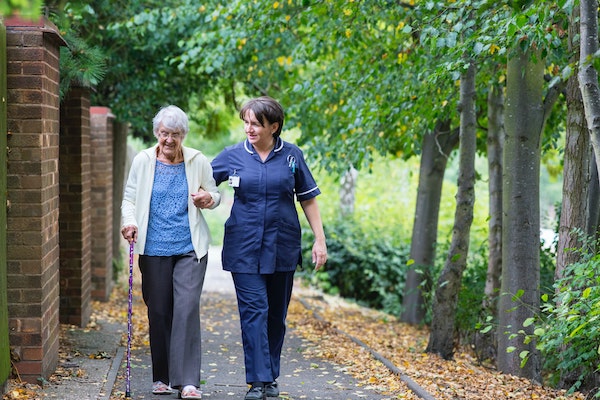
Pictured: “We need to individualise the care so that patients can live their full potential,” Colette said.
To improve dementia care, staff also need to understand the condition and how it affects individuals and their ability to communicate. One thing that Colette does not tolerate is staff describing a patient’s behaviour as “challenging”.
“There is no ‘challenging’ behaviour in dementia – there is distressed behaviour that is either caused by ourselves, or because the environment is wrong, or because the person needs something. This causes distress because they are trying to communicate what they want and they are not able to, or the staff cannot understand what it is.
“Someone might say they want to go home but in fact what they mean is they want to go to their bedroom. If you see a patient get up and walk, you don’t just tell them to sit down, you walk with them and try and understand where it is they want to go.
“It’s about taking a step back and thinking about what’s happening and how we can resolve it so that we can create that calm atmosphere.”

Pictured: LV Care is developing a concept of a dedicated dementia village, that would include small households’ units where people of the same capacity are grouped together, like in the Netherlands.
Colette is also helping LV Care develop a concept of a dedicated ‘dementia village’, which would include small household units where people of the same capacity are grouped together, like in the Netherlands.
The homes have six or seven bedrooms, a lounge, a kitchen and the residents are able to have “a normal day” and maintain their routine, such doing the washing up and the dusting, with the level of support adjusted to their capacity and progressing from people who need less help to palliative care.
While the village is still in development, Colette’s approach has already been adopted within the group and brought great results for some of the patients.
“There is a lady who came into the home last November – she was not walking, she was not communicating. I arrived in February and I could see she had much more potential.
“Within a week she was standing, now she is walking, communicating very well, laughing and she is even going out with her family in the car a couple of times a week. She came from a different setting and she had the potential to do that, but she was not using that capacity.
“People with dementia, they take their surroundings in and sit with them; if their surroundings are not stimulating, they will regress.
“This is why we need to speak to the patient’s entourage, to their family, ask them what made them feel happy, what they liked, and we need to introduce that in their life.”
