

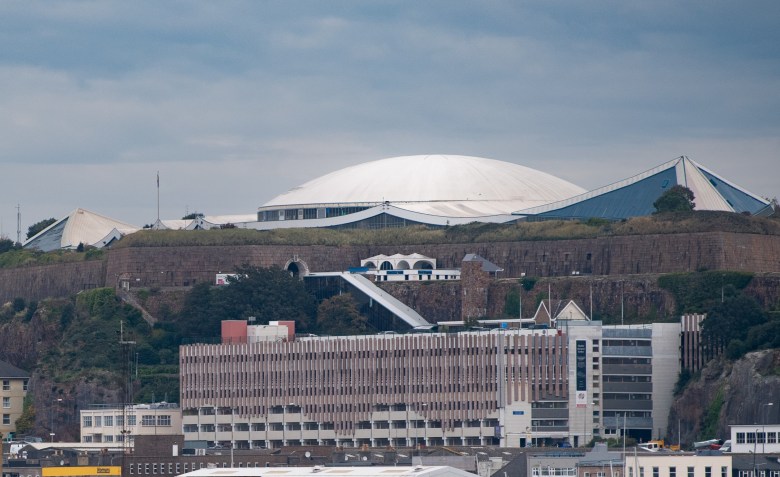
A full closure of Fort Regent has been deemed “the best option for the public” to enable plans for a major refurbishment of the ageing site, according to the Infrastructure Minister – who said a shuttering of the facility “could be mandated on any day due to critical infrastructure failure”.
Andy Jehan made the comments while responding to a written question from St Helier Deputy David Warr, who questioned why a phased approach was not being undertaken for the delivery of recently-unveiled £110m regeneration plans.
Constable Jehan said that co-ordinating a phased approach could add “significant complexity and cost” to the works, which he noted would “almost certainly” mean large parts of the Fort would be shut for longer.

Outlining its new vision for the site, the Government has previously stated that Fort Regent needs to close at the end of the year to enable work that cannot be carried out while the public have access to the building.
The current timeframe for the proposed plans would see the Fort reopened at the end of 2028.
A “fragile” electrical system
Constable Jehan also stressed that the site’s closure “could be mandated on any day due to critical infrastructure failure, including water and electrical systems, asbestos, and deterioration of the roof and glazing”.
“The operational infrastructure in the Fort is more than 50 years old and has been coaxed through the recent years,” he continued.
“The electrical system is very fragile – if one of the five transformers fail, then a new transformer will be required as the original items are obsolete and not available.”
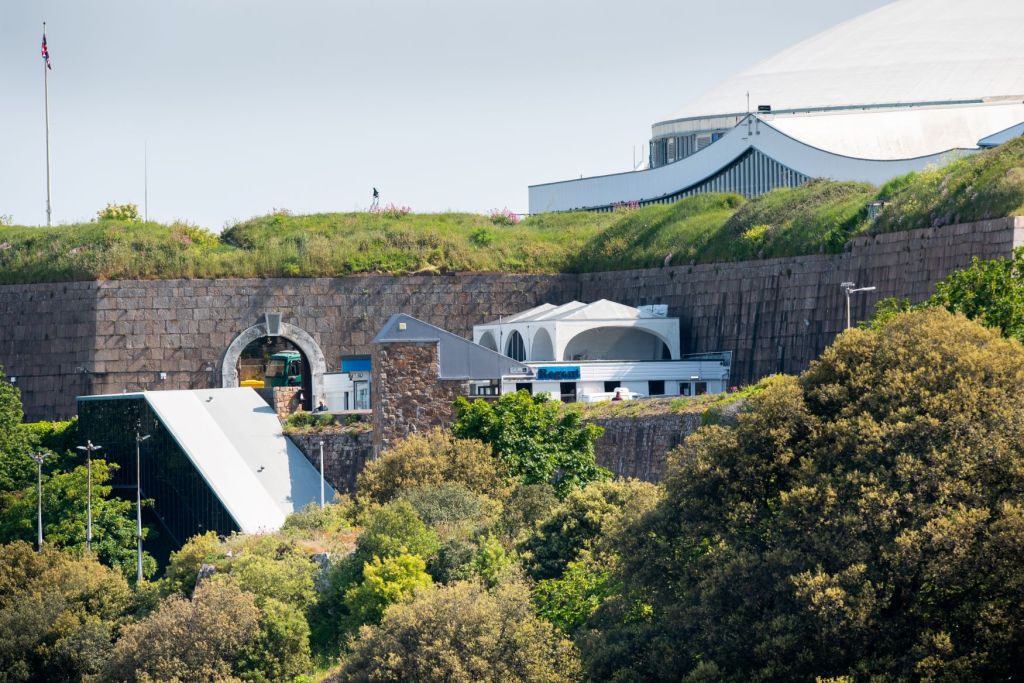
Such a situation, Constable Jehan explained, would require new electrical distribution boards and wiring that would “probably disturb hazardous material” contained within the structure.
“This would necessitate closure of the Fort anyway, but precipitate it in an unplanned way that will have a greater effect on those businesses trying to operate,” he added.
“By closing the venue completely, management of unauthorised access is much easier.”
“The best option for the public”
Once the Fort is fully vacated, work on the main structure, including the removal of asbestos, is anticipated to begin in January.
Constable Jehan also said that “anti-social behaviour issues” around the site were increasing and that by excluding any public access, it would be “easier to mitigate activities which could harm the structure and the individuals”.
“For these reasons, a full closure of the site, enabling a quicker re-opening, is deemed to be the best option for the public,” he added.

It is not the first time that Deputy Warr has questioned the lack of a phased approach, having previously discussed the impact “shutting the Fort down in its entirety” could have while the redevelopment took place.
The St Helier South Deputy has also levelled criticism at Jersey Property Holdings regarding the management of the Lido at Havre des Pas.
READ MORE…
Fort Regent regeneration plans “not dependent” on hotel, says Minister
FOCUS: Are the £110m Fort Regent plans achievable?
Transformed Fort Regent facility due to re-open at end of 2028
