


Between 1 January and 17 April, the Government signed 10 non-disclosure agreements (NDAs) worth a total of £223,828.97 – an average value of more than £22,000 per contract.
In comparison, the Government spent £284,000 on 15 NDAs for departing staff last year – an average of just under £19,000 in each case.
The figures were published by the Government in response to a request made under the Freedom of Information Law request.
In its response, the Government said that it signed NDAs for “several different reasons, including: prior to or as part of a commercial arrangement at or for the benefit of the organisation, arrangements with external investigators, due to certain staff members undertaking certain sensitive work, and in settlement arrangements.”
However, the response explained that the Government “does not hold a central record of all non-disclosure agreements signed by the Government of Jersey”, and only provided figures for “staff exiting the organisation”.
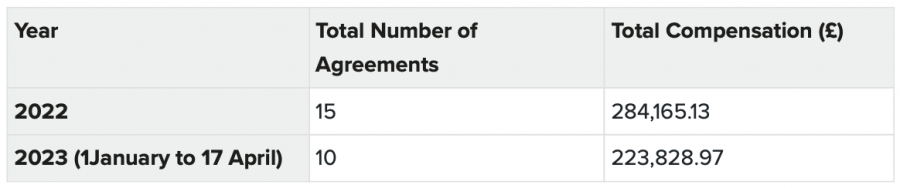
Pictured: The number of confidentiality or non-disclosure agreements the Government of Jersey has signed in 2022 and 2023 for staff exiting the organisation.
The response said that the compensation payments for these staff are “processed in-line with the Public Finance Manual requirements, authorisation and approval is sought by the Accountable Officer for the department, the Law Officers’ Department, and the Treasurer”.
It added that “this ‘special payment’ process is in place to ensure that any payment represents good value and meets the requirements and criteria as set out in the Public Finance Manual to maintain effective financial management”.
The Government’s handling of ‘special payments’ previously came under fire when it emerged that ex-Chief Executive Charlie Parker received a £500,000 ‘golden handshake’ to avert legal action over his early departure in 2020 – contrary to rules covering how public money should be handled.
While the Public Finances Manual says that Treasury Department approval must always be sought for “special severance payments” because they are “typically novel, contentious, potentially repercussive, and may set a precedent”, Treasury officials were not consulted in advance about Mr Parker’s payout. Chief Minister at the time, John Le Fondré, described this as an “oversight”.
