

Small, fast and pinkish brown, Jersey’s agile frog once bred all over the Island – until a pesticide spill in the 1980s left the species teetering on the edge of extinction.
But today the frogs’ fortunes are much brighter, thanks to a little-known project run from a shipping container tucked away at Jersey Zoo, which is now getting recognition more than 20 years and 75,000 tadpoles later…
Meet the agile frog
The agile frog (or Rana dalmatina) – which can grow up to 9cm and enjoys snacking on earthworms and small insects such as flies and beetles – is one of only three amphibian species native to Jersey and is found nowhere else in the British Isles.
The island’s population is also genetically distinct from those in mainland Europe due to its long isolation.

By the 1980s, the agile frog had declined and was found at just two sites in the island, and following a pesticide spill in 1987, it reduced even further to a single breeding location.
In response, a Species Action Plan was launched in 2001.
The unseen rescue mission
Since then, the government’s Natural Environment Department has managed and monitored the frog’s habitats at Ouaisné Common, creating new ponds to support breeding.
Durrell, meanwhile, has focused on “head-starting” frogspawn to boost population numbers.

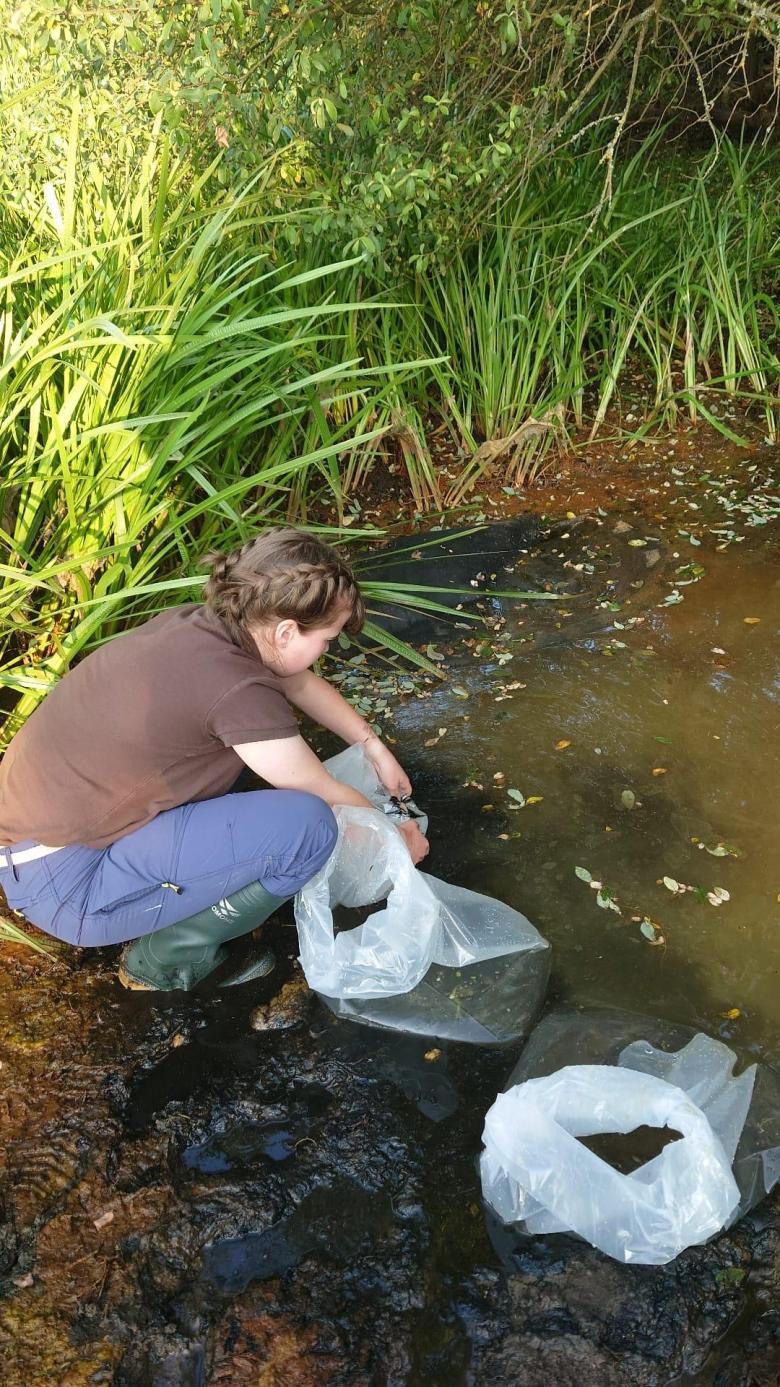
The programme involves raising tiny, jelly-like tadpoles through their most vulnerable weeks of life in a bio-secure converted shipping container at Jersey Zoo, before they are later released into the wild.
To date, Durrell has successfully raised and released over 75,000 tadpoles into ponds at Ouaisné, Noirmont, and Beauport.
But that work tends to go unseen, which is one of the reasons being shortlisted this week for a Great British Wildlife Restoration Award means so much to the team.
“Due to biosecurity reasons, we take care of our agile frog tadpoles far away from our visitors, so the light rarely gets to shine on this project,” explained Emma Michel, Durrell’s Herpetology and Invertebrate Team Leader, who leads the agile frog project.
“As an organisation, Durrell puts a lot of work into the conservation of endangered species all around the world, but it is just as important to preserve the biodiversity on our doorstep.
“Our dedicated staff put a lot of time, passion and some frozen toes into it. Our motivation is to know that without this contribution, the species would have probably completely disappeared from Jersey by now.”
MPs and Lords to vote
Organised by the British and Irish Association of Zoos and Aquariums (BIAZA), the awards are a new initiative aiming to highlight and celebrate the work being done across the British Isles to reverse the decline of native species and to encourage politicians to “act now for nature”.

Durrell’s Agile Frog Programme is one of 27 projects shortlisted, and the winner will be chosen by Members of Parliament and the House of Lords early next year.
This will be followed by a special awards ceremony that will take place at the Speaker’s House in the UK Parliament in January 2026.
Andy Hall, founder of the Great British Wildlife Restoration Awards, said: “These amazing projects are just a snapshot of the decades of dedicated work that conservationists are putting into our great British wildlife.
“It’s up to all of us to make a difference and make sure future generations will live in a better and wilder world.”
The work continues
In the meantime, the work doesn’t stop for Durrell.
Building on the success of the project to date, a new Species Action Plan was agreed in 2024.
“…We will keep developing the project to increase the population of this wonderful Jersey native frog,” added Ms Michel.
