


The wasps which have spread across France and were first found in Jersey last year threaten native species.
So far 13 nests – three of them in the last week – have been discovered locally. The DoE says as winter approaches the nests become more visible.
The department has also updated its notes on how to recognise the hornets and their nests and issued general safety advice:
Asian hornets are black with yellow legs, and a yellow-orange band on the bottom of their abdomen.

Look out for nests – they could be sited high or low, for example, in trees, bushes, hedgerows or structures like sheds or roof spaces.
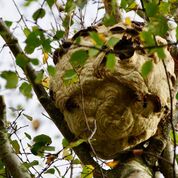
People working outdoors in the countryside or in gardens should take a good look around an area for nests before starting work.
If you see a nest, don’t go near it. Stay ten metres or more away, and don’t touch, disturb or cause vibrations around the nest. A nest can contain up to 3,000 hornets and hornets may vigorously defend their nest.
Report hornet or nest sightings to the Department of the Environment on +44 (0) 1534 441600. An officer or registered pest controller will come to identify the nest and remove it.
Lone hornets aren’t more of a risk to human health than other wasps, but their sting can be more severe and they may sting more than once.
The Asian hornet sting may present more of a risk of a severe allergic reaction or anaphylactic shock than other wasp stings.
