
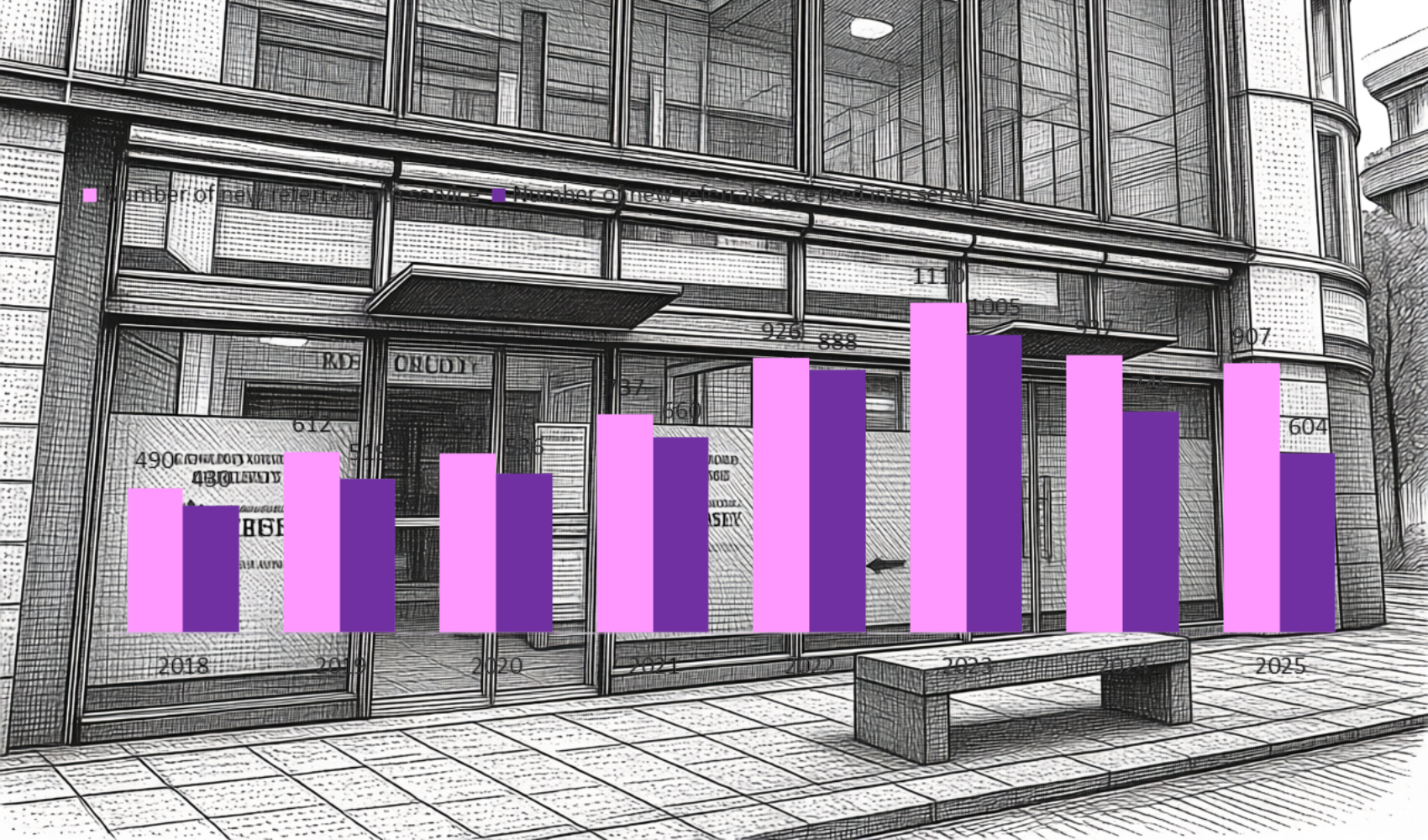

Jersey’s Child and Adolescent Mental Health Service accepted just 67% of referrals in 2025 – the lowest rate recorded since at least 2018, according to its latest annual report.
The Child and Adolescent Mental Health Service’s annual report for 2025 revealed that the service’s acceptance rate has fallen sharply from 90% in 2023, and now sits below the UK average of 77%.
There was a total of 907 new referrals to CAMHS last year – down from a peak of 1,110 in 2023 and a decrease from the 937 in 2024.
Of those, 604 new patients were accepted into the service during 2025.
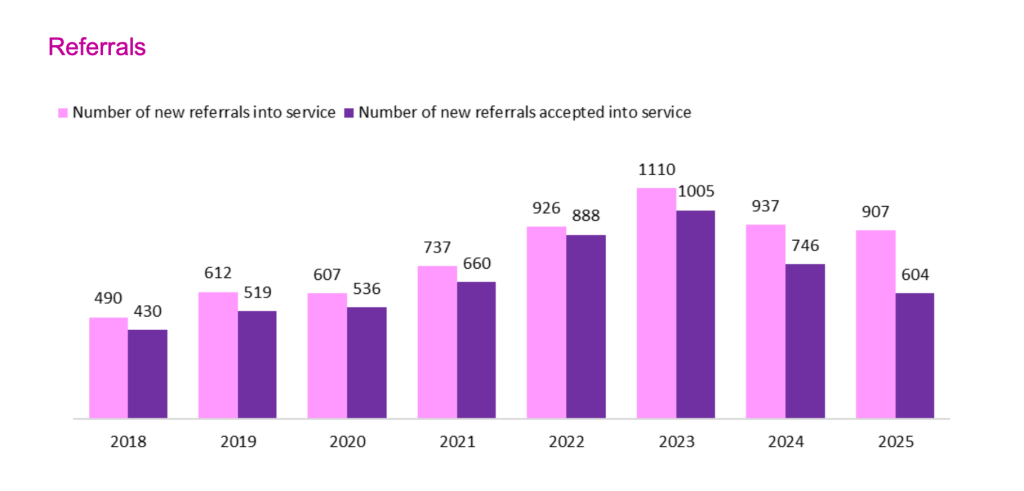
“In 2024, Jersey accepted a similar proportion of referrals (80%) compared to the
national average of 77%,” the report said.
“Our rate in 2025 has dropped to 67%, due to local investment and signposting to early intervention and universal services and change in referral acceptance for neurodevelopmental assessments.”
Jersey continues to carry a significantly heavier workload than comparable UK services, with 4,208 young people per 100,000 population on its caseload – more than double the national median.
The report also revealed that 61% of the active caseload is linked to neurodevelopmental needs, including ADHD and autism.
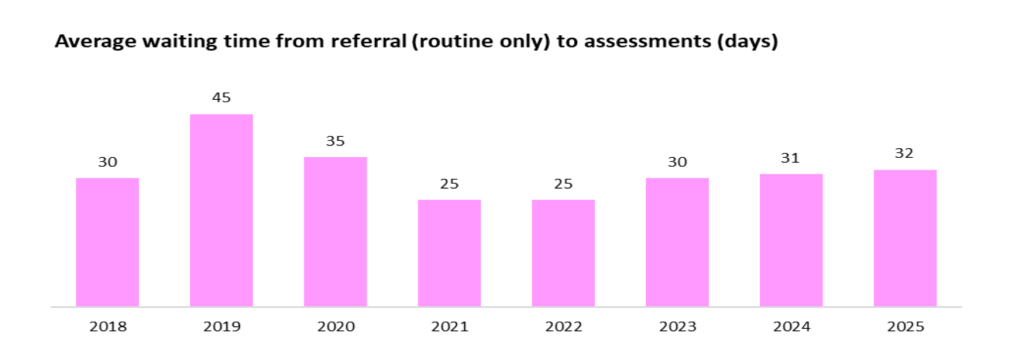
While routine mental-health assessments are completed in an average of 32 days, comfortably within the 36-day target, children requiring neurodevelopmental assessments face waits of nearly 17 months on average.
The demand for ADHD and autism services remains significant, with 307 neurodevelopmental referrals in 2025, including 132 for ADHD and 175 for autism – although this represents a drop from previous peak years.
During the year, 63 young people were admitted to Robin Ward, accounting for 470 bed nights, alongside six admissions to Orchard Ward.
The report also pointed to increasing concern around eating disorders, which are contributing to higher levels of inpatient demand and stretching specialist services.
Last year, CAMHS added more specialist staff to the eating disorder pathway and drafted new protocol guidance to be ratified in 2026.

A permanent dietician will commence employment as part of the eating disorder service this year, with a new eating disorder and ARFID protocol also due to be introduced.
Staffing and resources have grown in response to demand, with the CAMHS workforce reaching 88 staff members in 2025, while the overall budget stood at just over £7 million.
The service continues to receive positive feedback, with 63 compliments compared to 19 complaints last year.
