
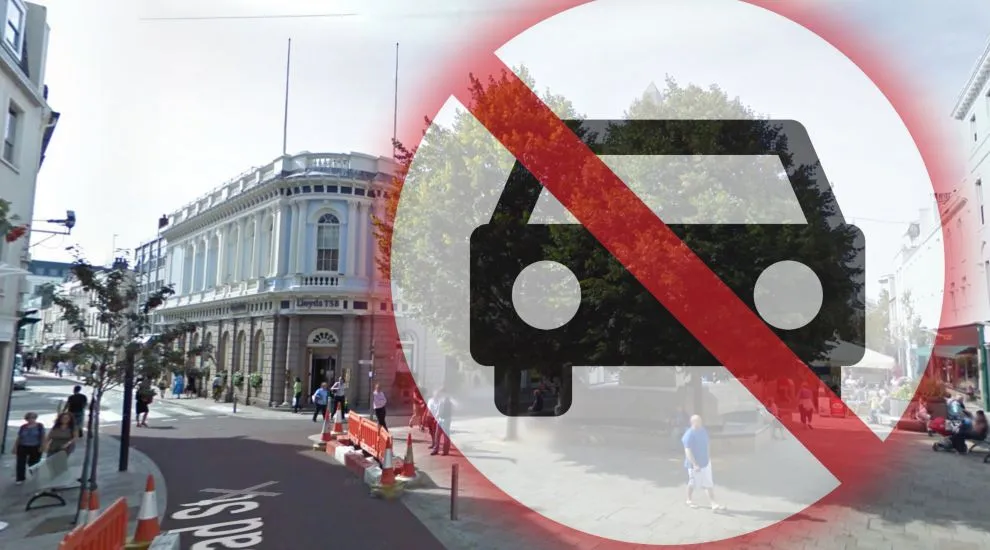

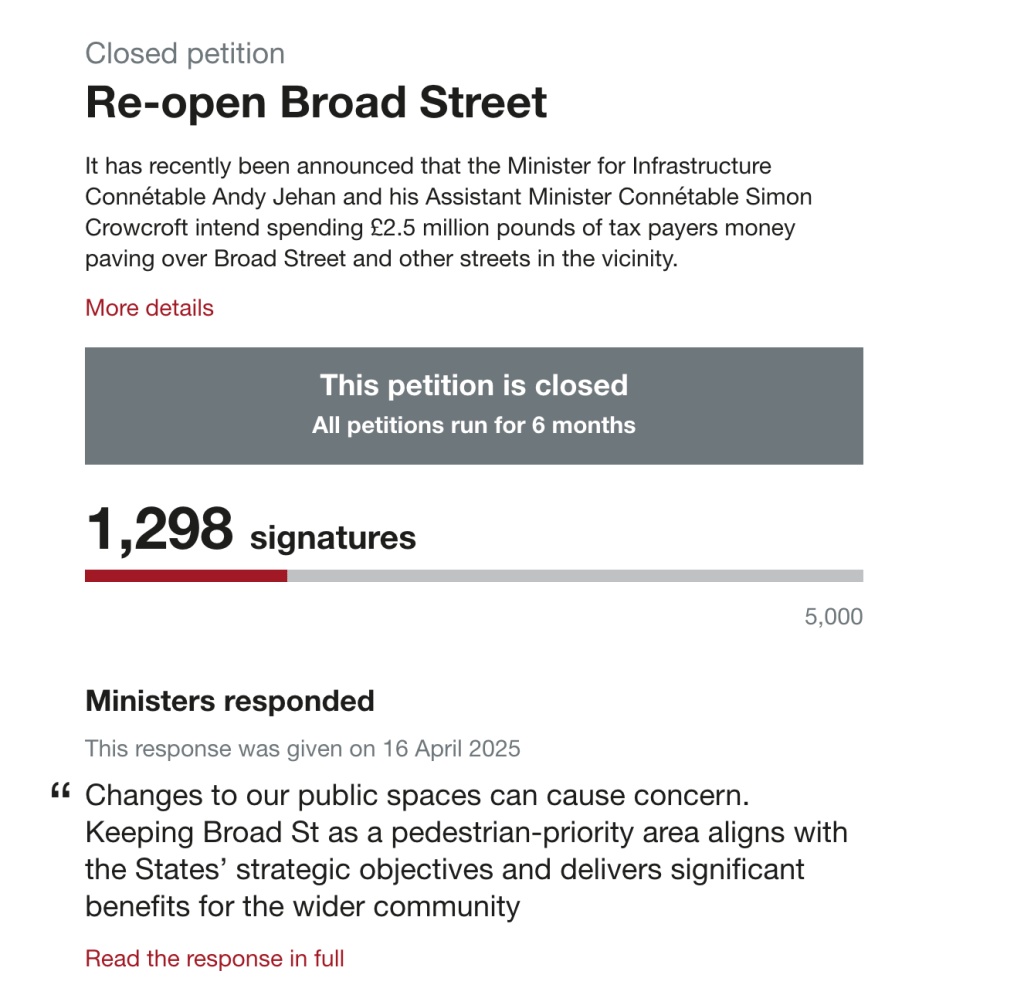
A petition signed by nearly 1,300 islanders calling for Broad Street to be reopened to traffic has been dismissed by the Infrastructure Minister.
In a written response, Constable Andy Jehan defended the Government’s plans to invest £2.5 million into pedestrian-focused improvements in the area.
He argued that keeping Broad Street as a “pedestrian-priority area” was in line with the island’s strategic objectives and long-term plans to revitalise St Helier and create a more accessible and vibrant town centre.
“I fully appreciate that changes to our streets and public spaces can cause concern, particularly when they affect access, travel habits, or involve public investment,” he acknowledged.
“However, keeping Broad Street a pedestrian-priority area aligns with the States’ strategic objectives and delivers significant benefits for the wider community.”

The petition, which is now closed, described the redesign of the street as a “vanity project” and argued that the money could be better spent on supporting mental health charities.
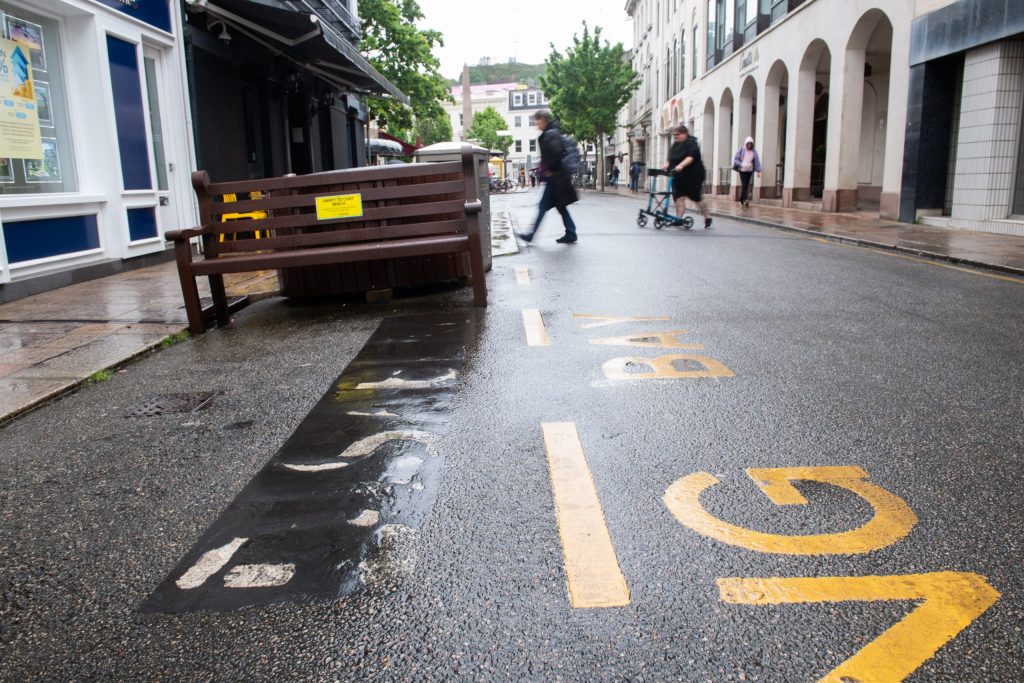
It also raised concerns about the impact of pedestrianisation on disabled parking and changes to bus routes.
Broad Street was originally closed to traffic in 2020 as a temporary Covid measure to support social distancing in King Street and at the Charing Cross intersection during the pandemic, prompting criticism over the removal of centrally located disabled parking spaces.
In the summer of 2021, Ministers agreed to extend the closure following a proposal from St Helier Constable Simon Crowcroft, with only buses and bicycles allowed to use the road.
Responding to concerns about spending, Connétable Jehan stressed that the £2.5 million is not being spent solely on Broad Street and is part of a wider package of public realm improvements covering areas including Charing Cross and New Cut.
He also wrote that this funding comes from a separate capital budget, not used for day-to-day spending on services or charities.
“One-off capital work programmes such as this do not divert ongoing annual revenue funding from charities, they are entirely separate budget streams,” he said.
“While the capital works are a one-off investment, it must be understood they will support vibrancy, economic vitality, and quality of our town centre long into the future – helping to sustain tourism, commerce, and the quality of town life.”
The Minister went on to list recent improvements to Halkett Street and Charing Cross as evidence that these types of upgrades can boost business confidence, reduce vacancy rates, and attract further private investment.
“There is strong evidence that realm improvements increase business confidence and unlock further private investment, increasing the value of the initial government capital spend,” he said.
Responding to concerns around accessibility, Constable Jehan said that 20 Blue Badge parking spaces had been added in nearby locations, including new bays in Library Place and existing provision in Dumaresq Street.
He said the design of the improvements includes features such as flush paving and additional seating to support wheelchair users and people with limited mobility.
“These inclusive urban design measures ensure that people with mobility impairments can continue to access and support local businesses,” he said.
“The Department remains in ongoing dialogue with disability groups to ensure the design addresses their needs as far as possible.”
Constable Jehan also pointed to the broader health and environmental benefits of reducing traffic in the town centre, including improved air quality, lower noise levels, and increased opportunities for active travel.
“Buses and taxis will continue to serve the town centre users, with appropriately located accessible stops and ranks around the town core, providing a reliable and inclusive alternative to private car use,” he added.
Concluding, Constable Jehan said: “Maintaining Broad Street as a pedestrian-priority area is consistent with government policy and the Parish’s strong ambition to improve St Helier’s public realm and create a people-focused town centre.
“Change requires vision and leadership that looks beyond the immediate political cycle, focusing instead on delivering long-term improvements and the wider public good.
“While such decisions may not always enjoy universal support in the short term, they are often necessary to ensure a sustainable and vibrant future for our town.”
The petition, called “Re-open Broad Street,” closed after running for six months and gaining 1,298 signatures.
