


Jersey has a much higher rate of people being admitted to hospital with conditions directly linked to alcohol than the UK, according to a new report.
Figures released yesterday show 1,059 islanders were admitted to hospital in 2023 for alcohol-specific conditions, such as liver disease or alcohol poisoning – with 78% of those patients being men.
Another 412 admissions were alcohol-related – meaning alcohol was a contributing factor but not the only cause.
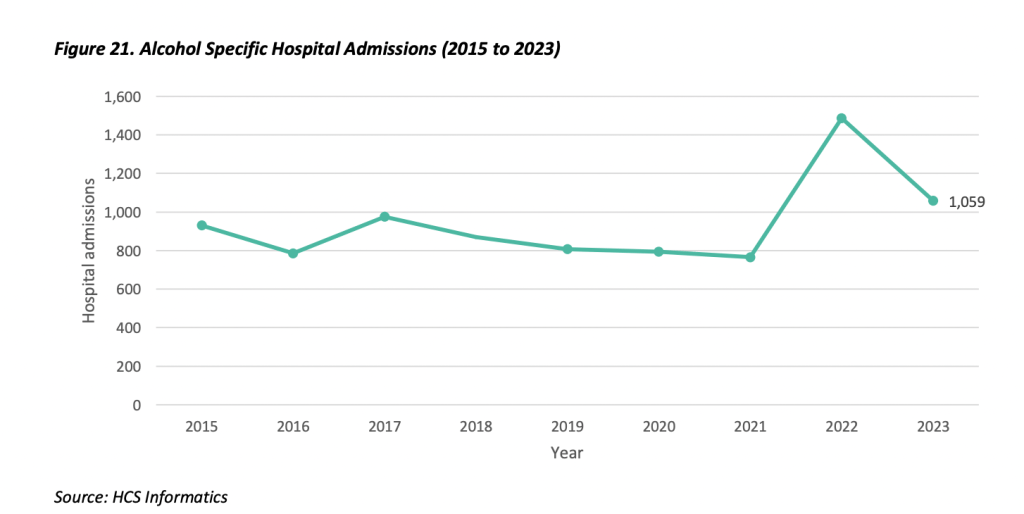
The figures, published by Public Health in the latest Alcohol Profile, show that while the number of alcohol-specific admissions has fallen slightly since 2022, it is over one-and-a-half times the average seen in England.
This works out at around 1,022 per 100,000 population in Jersey, compared to the UK rate of 626 per 100,000 people.
Deaths from alcohol-related causes increasing
As well as hospital admissions, the number of deaths caused by alcohol is also rising.
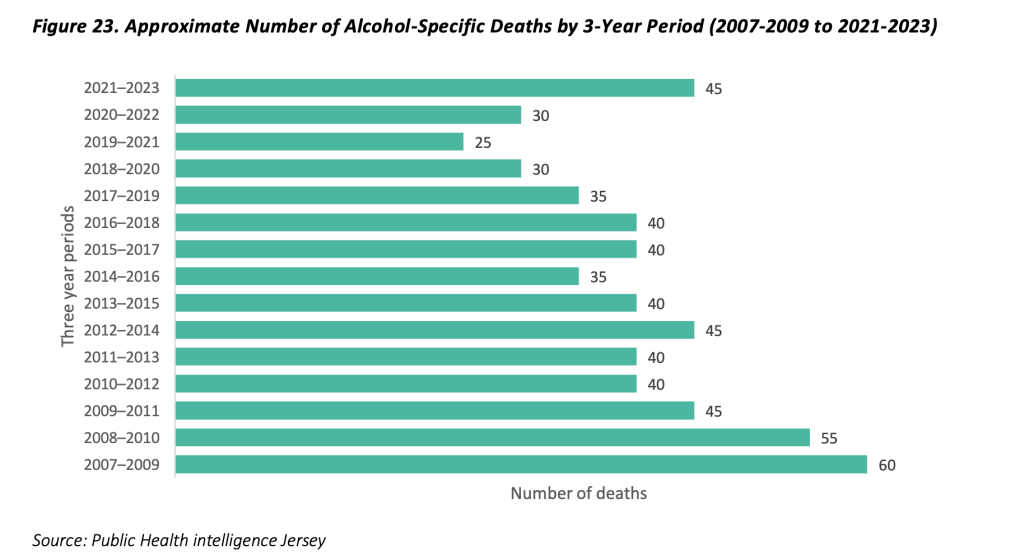
Between 2021 and 2023, 45 people died from alcohol-specific causes, including liver disease and alcohol-related mental health conditions. That’s up from 25 deaths recorded between 2019 and 2021.
Again, around 80% of these deaths were men.
Jersey’s drinking levels among the world’s highest
The new statistics from Public Health also highlighted that Islanders continue to drink more per person than many other Western jurisdictions, although this has decreased slightly in recent years.
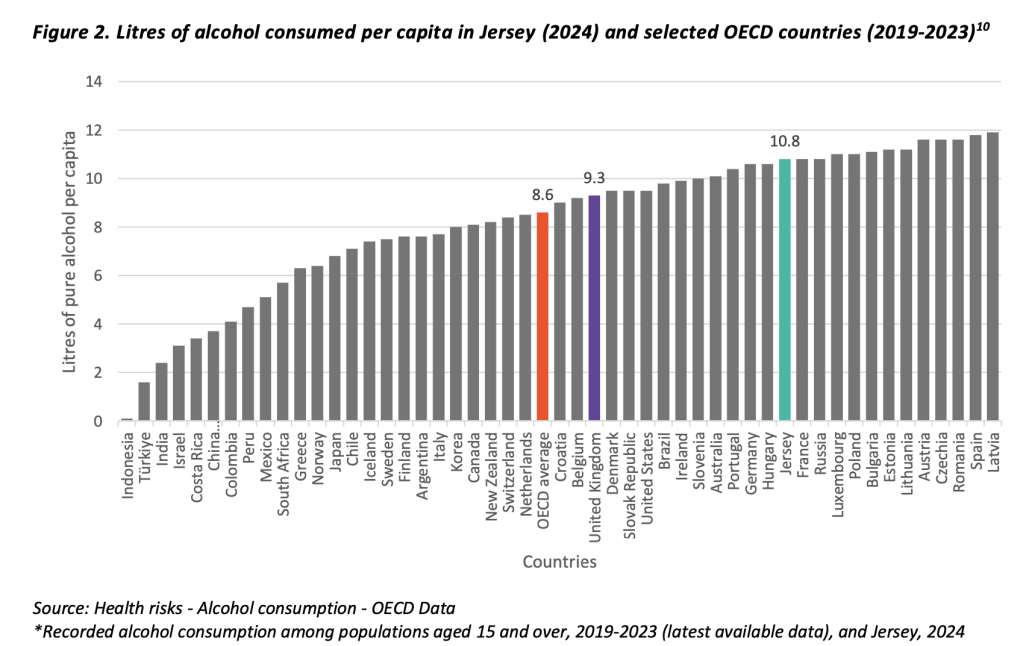
The Island’s per capita alcohol consumption now stands at 10.8 litres of pure alcohol per person, down from 12 litres in 2022 but above the UK (9.3 litres) and in line with high-consuming countries like France and Russia.
One-in-five adults drinking over weekly guidelines
One in five adults said they regularly drank more than the NHS-recommended limit of 14 units per week (about 1.6 bottles of wine or 5 pints of strong beer).
In total, 29% of men and 12% of women reported drinking more than the advised weekly limit.
Meanwhile, two-thirds (66%) of adults in Jersey reported binge drinking at least once in the past year, including 74% of men and 59% of women.
Binge drinking is defined as consuming more than 6 units (women) or 8 units (men) of alcohol on a single occasion.
The most frequent binge drinking happens among Islanders aged 45 to 54, according to the report.
One-in-four adults drinking at “harmful” levels
The report also revealed that one in four adults were drinking at “harmful” levels.
One in three men were classified under the ‘harmful’ banner – which is classified through a scoring system rather than a set ‘units per week’ calculation – compared with one in six women.
Night-time violence and sexual offences linked to alcohol
The report also looked at alcohol-related crime, particularly during the night-time economy in St Helier.
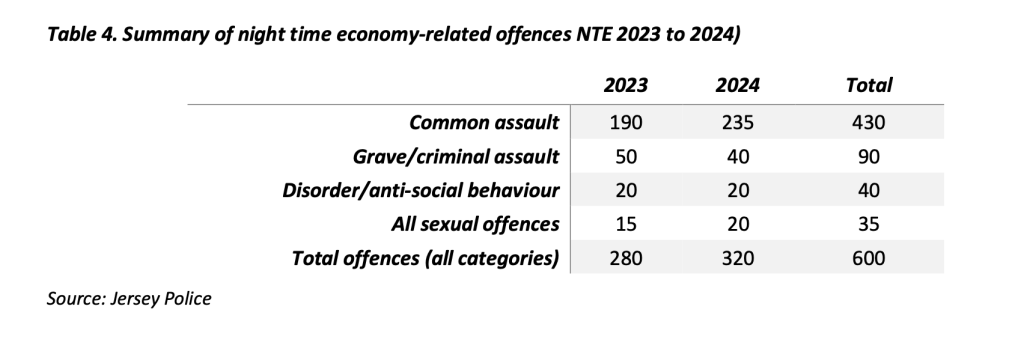
Between 2023 and 2024, police recorded 600 offences during the night-time period, including 430 assaults and 90 grave or criminal assaults
Alcohol-related sexual assaults rose from 10 cases in 2023 to 15 in 2024.
Cost of alcohol rising – but demand stays high
The cost of alcohol in Jersey has more than doubled since 2000, increasing faster than inflation.

The average household now spends £14.10 per week on alcohol to drink at home, and £8.90 on alcohol in bars and restaurants.
Wine is the most commonly purchased drink, followed by beer and then spirits.
Younger islanders turning away from alcohol
There are signs that younger people in Jersey are turning away from alcohol, with more than half of secondary school students saying they’ve never drunk alcohol.
Among Year 8 students, the change is even more dramatic: 70% said they had never tried alcohol in 2024, compared to just 17% in 2006.
The report found that 55% of students across Years 6, 8, 10 and 12 had never consumed alcohol – a modest increase from 52% in 2021.
Earlier this year, Express spoke to young islanders who are choosing sobriety and taking a more conscious approach to drinking.
Jersey-born photographer and filmmaker Cleo Leather (23) gave up alcohol in early 2022 after noticing its impact on her mental and physical health, relationships, and finances.
Cleo believes that growing awareness of addiction and its generational effects may explain why many young people are choosing sobriety.
Harry Gurd, who has been sober since 2021, points to broader cultural and economic shifts as a driver for reduced drinking among younger people.
He noted that younger generations are increasingly aware of the importance of physical and mental health, thanks in part to social media and influential online voices.
Harry also praised charities like the Silkworth Group for providing support for those struggling with addiction.
Availability of alcohol in Jersey
Speaking to Express following the release of the report, Head of Public Health Improvement Martin Knight said that factors like affordability and accessibility likely play a role in Jersey’s drinking habits.
“Jersey’s had a long history of availability of alcohol across many different types of both on- and off-licences,” he said.
“So I suppose it could be a relationship to that kind of proximity and us being a small island with that accessibility.”
When asked when drinking levels are higher among men, Mr Knight said that they tend to take part in higher-risk behaviours, which is consistent with long-term international trends.
“It’s really difficult to kind of make any correlation between why and understanding of why it is that men drink higher levels than women,” he added.
“Small changes can make a big difference”
Mr Knight explained that the government’s Substance Use Strategy is focused on reducing alcohol consumption across the population – with a particular emphasis on people drinking at harmful levels.
“Small changes and small differences at an individual level can make a big difference at the population level,” he said.
“So we’re starting to see some of that shift in terms of drinking habits. We want to reduce alcohol consumption across the population as a whole, but particularly target those we know are drinking the most.”
The strategy includes working with pharmacies and charities to offer free alcohol assessments, advice and support, and signposting for additional help.
Campaigns have also shifted focus from long-term health consequences to the short-term benefits of reducing drinking – such as better sleep, mood and energy.
“We’ve been working more closely with community pharmacies and Social Security,” said Mr Knight.
“Skilled staff can offer free alcohol assessments, advice and support, and when necessary, signpost people to where they can get help.”
He added that the Government had also launched a “community alcohol champion” scheme in partnership with charities to reach people who might not normally seek support or engage with Public Health messaging.
Balancing public health and economy
Mr Knight also said the Government is working with the Economy Department on proposed changes to the alcohol licensing law, which aim to balance public health concerns with the needs of the hospitality sector.
The reform of the 1974 Licensing Law, which regulates the sale and consumption of alcohol in the island, aims to make it simpler and less expensive for businesses to operate.
“As a government, we have strong commitments to community, environment and economy,” Mr Knight said.
“This means we have to work really hard to get synergies and actions across departments, recognising that islanders expect us to deliver in all three areas.”
He explained the Government is aiming to “recognise what are the issues leading to consumption from different alcohol types, from different places” while “balancing the really important contribution we get from the nighttime economy and hospitality environments, which are an essential part of our island life.”
“That culture shift is really helpful”
Mr Knight added that the rise in drinking at home, rather than in pubs or bars, is something Public Health is watching closely.
“Indicators suggest a reasonable portion of hazardous and harmful drinking is actually happening in the home,” he said.
This comes after 46% of adults reported they drink socially or alone at home in the most recent Jersey Opinions and Lifestyle Survey.
Mr Knight said the rise in abstention among students reflects a cultural shift towards healthy lifestyles and credited both young people and adults for changing attitudes.
“We do often talk about the importance and the value of good role modelling,” he said.
“But we also note that more adults are reporting not drinking, or abstaining for short periods. They’re saying the reason for that is wanting a healthier lifestyle.”
He added: “That culture shift is really helpful. It’s a good shift in relation to the alcohol-related risks that are well established.”
