

A homelessness charity has called for increased investment in mental health and addiction support – after new figures highlighted a rise in the number of islanders seeking help from its services.
Newly-released data shows that more islanders sought help from homeless accommodation and service providers between the start of July and the end of September last year than in the previous quarter.
Housing Minister Sam Mézec’s latest ‘Homelessness in Jersey’ report, covering the third quarter of 2024, draws together information from several organisations providing support to vulnerable Islanders.
This includes data collected from Freeda – formerly Jersey Women’s Refuge – as well as the Housing Advice Service, Sanctuary Trust, the Shelter Trust, and the Jersey Association of Youth and Friendship.
It showed that, between 1 July and 30 September 2024, there were 265 service visits by 246 islanders to homeless accommodation and service providers, compared with 220 service visits by 204 Islanders in the previous quarter.
Of those 246 individuals, 176 people were classed as being “houseless”, meaning they have a temporary place to sleep, such as institutional or shelter accommodation.
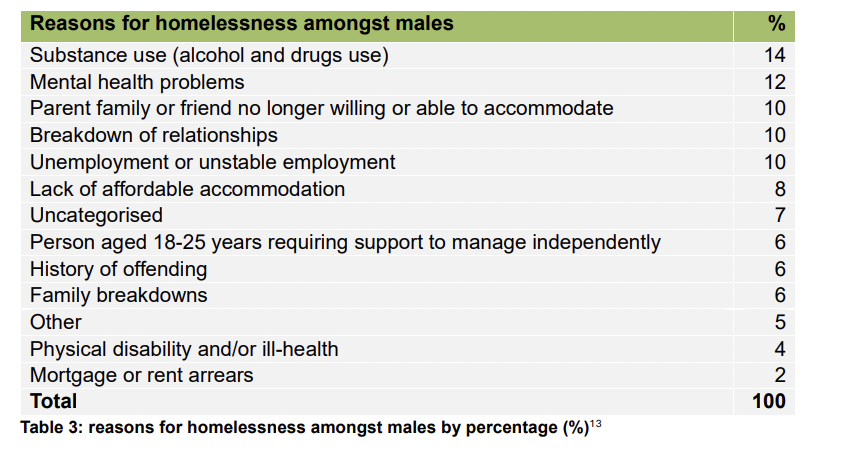
Pictured: Substance use was the main recorded reason for homelessness among males in 14% of cases.
And 59 were classed as living in “insecure housing”, which includes situations where a person is living in an insecure tenancy, under an eviction order, living temporarily with friends or family, or living in a domestic abuse situation.
There were 11 people classed as being “roofless”, which includes those sleeping rough.
The report also documented a number of reasons for a person becoming homeless or being at risk of experiencing homelessness, of which mental health problems and alcohol and drug use were among the most frequently recorded.
Commenting on the report, Sanctuary Trust operations manager Jack Slater said: “One key takeaway, from our perspective, is the necessity for massive investment into the mental-health and addiction services; this is an island-wide crisis that is worsening year-on-year.
“Without large-scale investment into these services, particularly for young people, we can, unfortunately, only expect the problem of homelessness to deepen among the most vulnerable of islanders.”
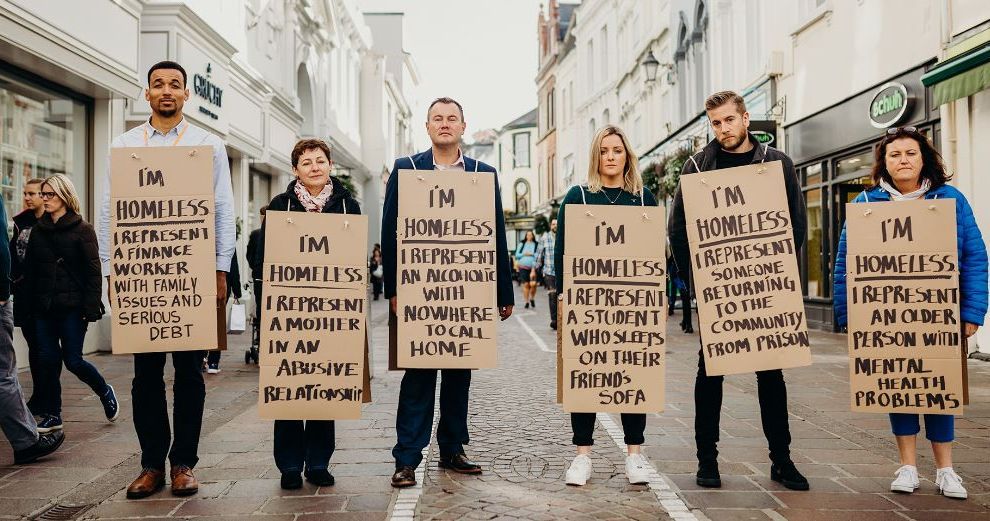
Pictured top: Volunteers posing as homeless people on King Street in 2032 to raise awareness on World Homeless Day.
