


Both landlords and tenants have said that “baseline protections” are needed to safeguard their interests within Guernsey’s swollen rental market.
A survey carried out as part of a wider consultation looking at the rental market, saw both landlords and tenants agree that they need protection and that the private rental sector needs to be better regulated.
The consultation was carried out by the Committee for the Environment & Infrastructure as part of its remit for housing.
E&I has said it will use the data from the consultation to tackle the island’s housing pressures.
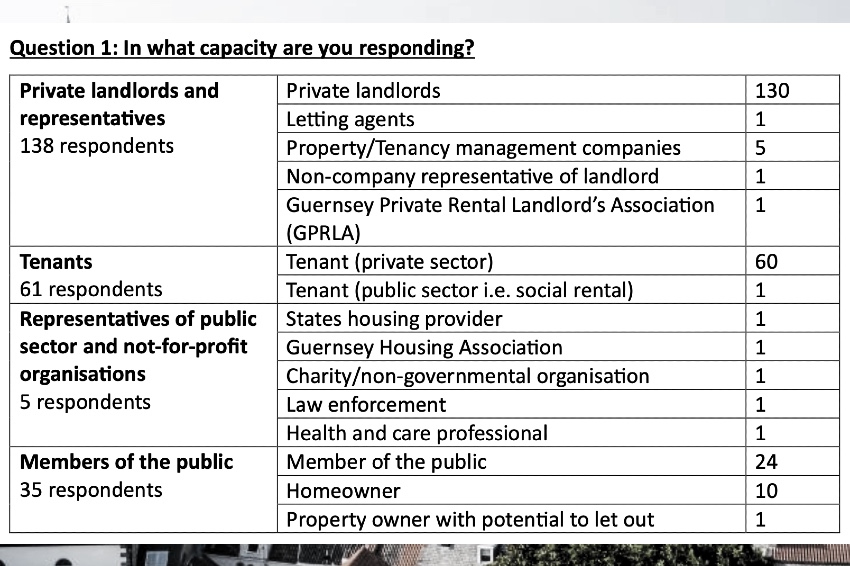
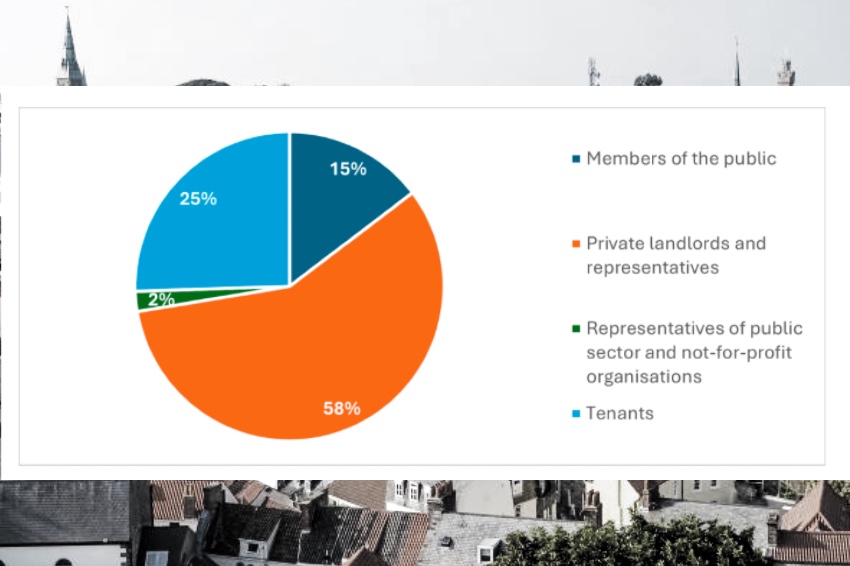
A grand total of 239 responses were received during the six-week consultation period, (December 2024 to February 2025), with more than double the amount of landlords taking part compared to tenants.
Landlords and their representatives gave 138 responses, making up 57.7% of the total responses, whilst 61 responses were from tenants, (25.5%). The remaining responses were from other interested parties, organisations, and members of the public.
The private rental sector accounts for over a quarter of the current housing stock in Guernsey, with a majority of those most invested, financially and personally, agreeing on a need for protective legislation.
Key findings
Overall, the consultation revealed a general consensus amongst respondents that clear, baseline protections are necessary for both landlords and tenants, with 90% of respondents agreeing that the private rental sector should be regulated.
80% of respondents agreed that the legislation should apply to both furnished and unfurnished properties, and 73% agreed that a minimum standard of accommodation should be included in the legislation.
What landlords are saying
Landlords and their representatives generally supported the proposals’ objectives.
E&I noted that many of these indicated their current practices “already meet or surpass the suggested standards”. The feedback highlighted the importance of any new regulations being practical and proportionate as well.
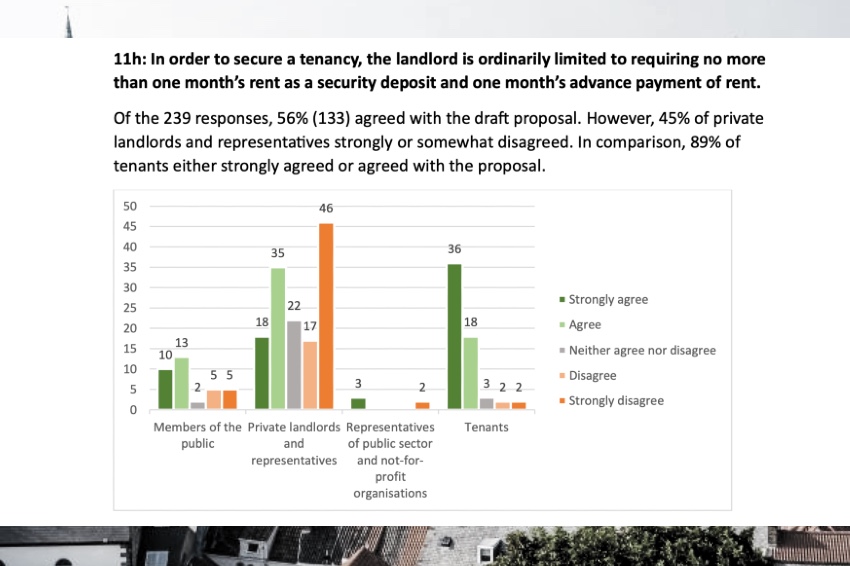
138 responses were received from landlords and their representatives, with 70% of landlords believing a deposit protection scheme ought to be introduced, and 72% already using a written tenancy agreement for every tenancy.

Thoughts from tenants
Tenants largely expressed their backing for the introduction of clear rights and responsibilities, believing this will provide greater clarity and security in their rental arrangements. Their input emphasised areas where new legislation could offer more robust safeguards.
Of the 61 responses that were received from tenants, 89% thought there should be a minimum content for tenancy agreements, and 92% of tenants agreed that tenants should have a statutory right to quiet enjoyment of their property.
Where the two meet
Both landlords and tenants largely agree on the need for new legislation to clarify and set minimum standards in Guernsey’s private rental sector.
There was 90% overall support for sector regulation, 80% agreement for legislation to cover all property types, and 73% consensus on including minimum accommodation standards.
Additionally, 70% of landlords support a deposit protection scheme, aligning with tenants’ desire for fair terms and clear tenancy agreements.
Both landlords and tenants also favour clear legal processes for evictions, with 73% of landlords and 85% of tenants agreeing on clear grounds for possession.
According to the report, Landlords prioritised efficiency, with 66% finding the current process too slow, and 70% supporting eviction for rent arrears. Tenants, on the other hand, focussed primarily on fairness and security, with 82% wanting the right to challenge evictions and 75% advocating for at least a two-month notice period from landlords.


The States of Guernsey perspective
The Committee for the Environment & Infrastructure considers this work an essential part of addressing Guernsey’s housing challenges and recommends it remains a high priority for the next political term.
They’ve stated their commitment to using the consultation feedback to shape practical and proportionate legislation, as well as exploring additional elements such as dispute resolution mechanisms and a statutory deposit protection scheme.
Deputy Lindsay de Sausmarez, President of the E&I Committee, said: “While we know many landlords already meet or exceed the standards suggested, the consultation process has shown strong support for ensuring that clear, baseline protections are in place for both landlords and tenants.
“This is simply about providing greater clarity, security, and accountability across a sector that plays a vital role in our housing system, and the feedback from the consultation is very useful in shaping how that can be done in a way that is practical, workable and proportionate.”
