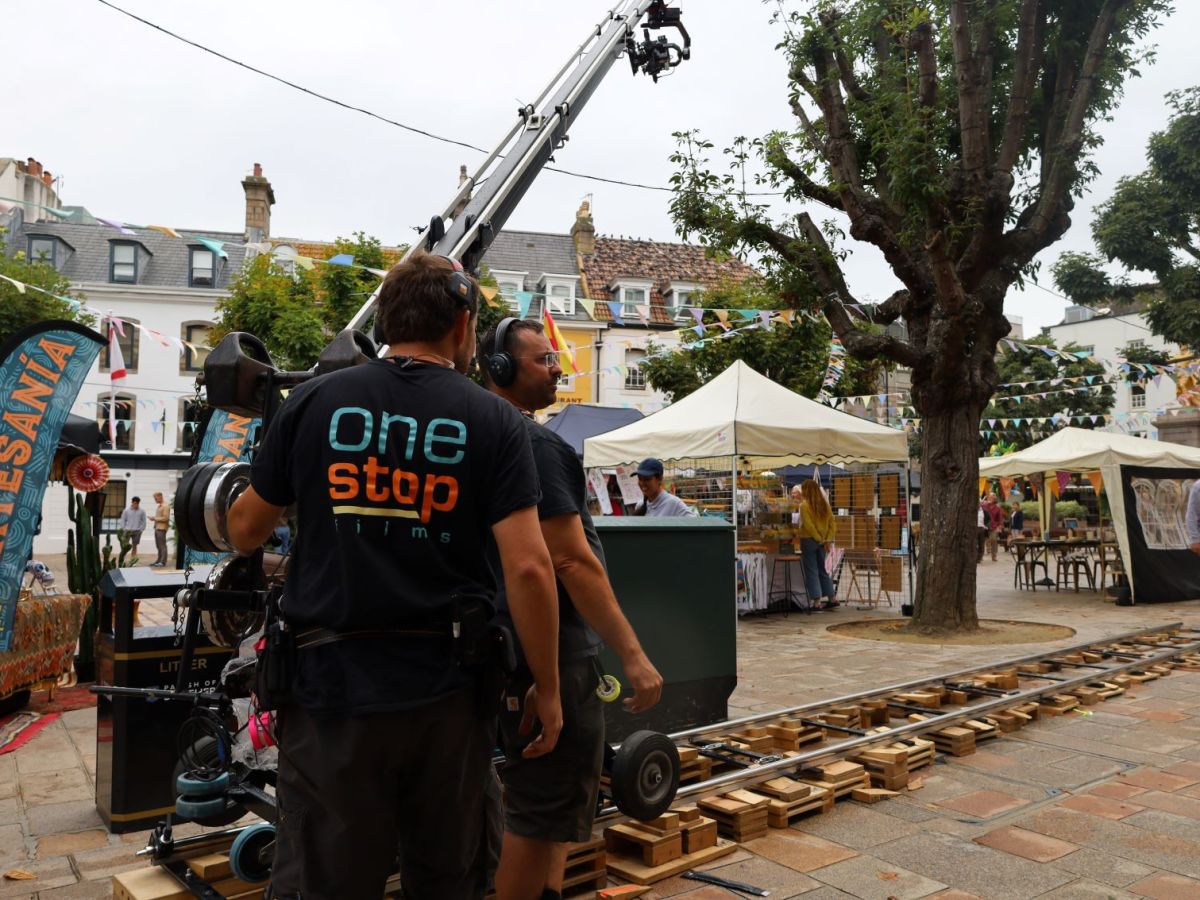
For more than a decade, islanders involved in the arts have suggested that a screen commission could be the key to fostering a film and TV industry in the island. With Bergerac heading into its second season, is now (finally) the time for Screen Jersey?
A panel of film industry professionals, brought together for the 13th Parish Festival yesterday, argued that this could be the right time.
A screen commission would not only help scouts for film, TV and video games find the island’s best locations, but also help them arrange the paperwork required, such as licences, permits, road closures, and coordination with parish constables.
Among those on the panel was filmmaker and panellist Rebecca Coley, who was commissioned to prepare a report on how a local screen commission could operate and the creation of a possible dedicated fund.
She told the audience that Economic Development Minister Kirsten Morel – who previously told the States Assembly he hoped Bergerac would be a “catalyst” for a Jersey screen commission – has suggested a £5 million fund could be matched with funding from private finance.
Bergerac executive producer Brian Constantine recalled that getting the show filmed in the island was “an unprecedented ask”.
Discussions “were not easy”, he said, adding that he felt “incredibly sorry” for his team who “just didn’t know where to look, didn’t know where to get advice”.

American filmmaker John Schultz, who lives in the island, said that despite having a script steeped in Jersey folklore and locations, he had found it impossible to make a film in Jersey.
But now, “momentum is there” for Jersey to build up its film industry, he said.
Ms Coley pointed to Ireland and Wales as examples of jurisdictions that had successfully built film industries, with tax incentives and dedicated screen commissions.
Ms Coley argued that having film productions in the island could help fill hotels, pubs and more during the shoulder seasons.
She said the first step would be to create a screen office, which could be as simple as a person employed and a website to signal that “we’re open for business”.
They could then assist filmmakers while advocating for the industry.
“It has to be serious, it has to show the benefits to the economy,” she said.