

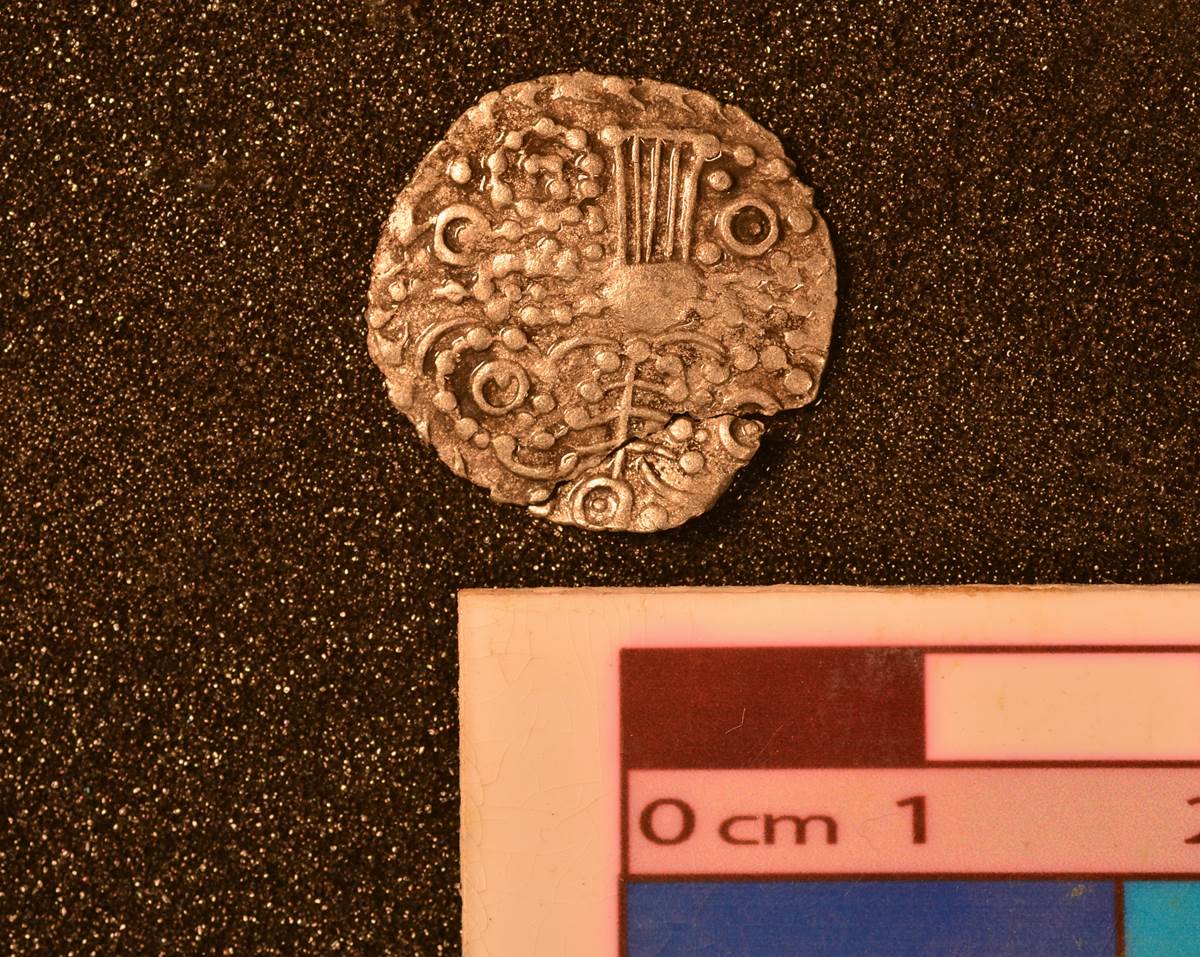
It was thought the hoard, which includes around 70,000 silver alloy coins, gold and silver jewellery and other precious personal items, had been buried in 52 BC when Julius Caesar was invading. It now looks like it was put there almost a decade later when the Romans were already occupying Britain and France.
Conservator Neil Mahrer spotted the coin on Tuesday in the Museum’s purpose built laboratory where he’s been painstakingly deconstructing and cleaning the hoard layer by layer. He said it looked very different from the rest and took advice from Guernsey Museum’s celtic coin expert Philip de Jersey.
Mr Mahrer said: “This changes the story. We now know that it was buried when the Romans were in control, so there may have been a revolt going on.”
The treasure, worth millions of pounds, made news around the world when it was uncovered two years ago by two amateur metal detector enthusiasts in a field in Grouville.
Historians first thought it was hidden to either avoid paying taxes, as an offering to the gods or as a war chest but the latter is now much more unlikely if the Romans were already in charge.
It could take up to three years to totally deconstruct the hoard.
You can watch Mr Mahrer working on the coins at Jersey Museum where they will be on display until the end of the year.
