


On Tuesday, the Ambulance Service reached capacity with all staff attending calls or waiting to handover at the Emergency Department.
But the two-hour surge caused “minimal disruption” and crews “did a fantastic job of managing the increased demand”, according to the emergency service.
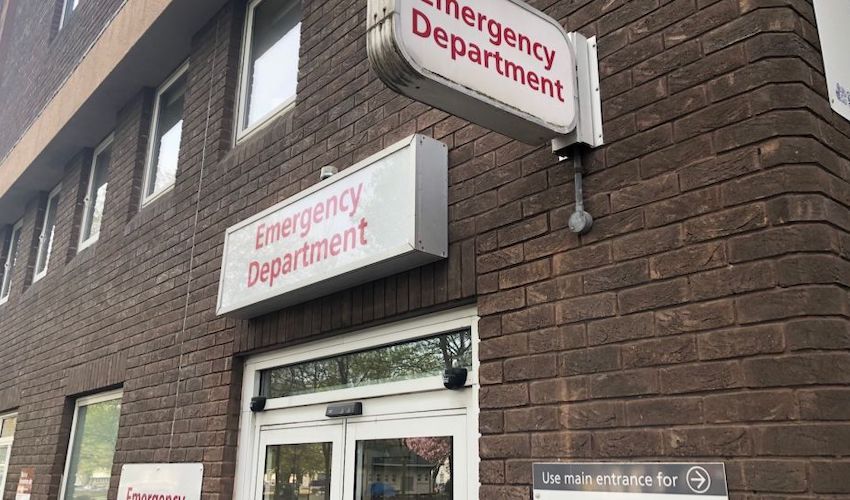
Pictured: The Ambulance Service reached capacity with all staff attending calls or waiting to handover at the Hospital’s Emergency Department.
Following inquiries from Express, the States of Jersey Ambulance Service explained: “During a two-hour period on the 28 May 2024, a surge in demand saw the ambulance service reach capacity, with all available resources attending calls or waiting to handover at the Emergency Department.
“We are working with partners in HCS to help improve ambulance turnaround times at the Emergency Department.
“The issue caused minimal disruption to operational services, with all 999 emergency calls received within this timeframe receiving a response within agreed targets under the Ambulance Response Programme.”
The Ambulance Response Programme – introduced in October 2022 – is a triage tool is used by call handlers and dispatchers to ensure that the sickest patients are prioritised and that patients receive the right response for their condition.

Pictured: Calls which are categorised as immediately life threatening have a target response time of eight minutes.
Each call is triaged and assigned to a category.
The categories have specific response time thresholds, with lower times for ambulance arrival required for the sickest patients.
Ambulance calls are categorised as follows:
- Category 1: Potentially immediately life threatening – eight minutes (60 seconds for call taking + seven minutes)
- Category 2: Potentially serious conditions but not immediately life threatening – 18 minutes
- Category 3: Urgent problem – 120 minutes
- Category 4: Less urgent problem – 180 minutes
The Ambulance Service added: “Our crews did a fantastic job of managing the increased demand and increased waiting times, by ensuring that they were ready to respond at the earliest opportunity.
“Moving forward, we will continue to work closely with Health and Community Services to find effective solutions.”
