

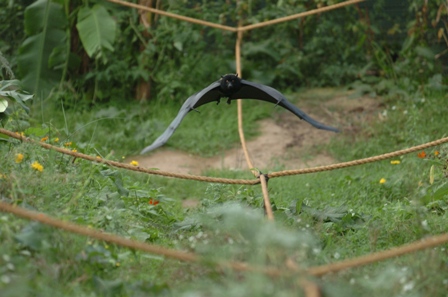
Old feed, shredded paper from the trust’s offices, and even dried animal droppings go into a bio-mass burner which turns it all into free fuel to heat the Island Bat Roost, home to the critically endangered Livingstone fruit bats. Even the ash from the bio-mass burner doesn’t go to waste – it’s used as fertiliser for the trust’s organic farm.
Durrell hope to raise enough money to invest in more of the energy efficient heating systems which cost around £50,000 each, but would cut down on the charity’s £250,000 per year electricity bill. The Island Bat Roost has become a model for Durrell when planning any new buildings, they say that green technology is key to the charity creating a sustainable environment.
Durrell’s Communications Officer Rick Jones said: “We’d change all our heating over to infra red. We’re constantly looking at more sustainable ways of heating the animals. We’d hope to be on the forefront of it.
“Heating the animals is one of our major costs in this sort of weather.”
Yesterday, Durrell revealed that one of their biggest problems during the sustained rainfall has been getting the animals out of their enclosures. Badongo, the 180 pound adult male western lowland gorilla has been engaged in a ‘battle of wills’ with keepers every time that they try to go in and clean up, and Durrell’s orangutans are refusing to step outside into the rain.
