

On 7 July 2005, commuters in London were subject to four coordinated suicide attacks on the city’s transport network.
Terrorists detonated bombs on three trains and one double-decker bus, killing 52 people and injuring hundreds more.
One of those injured was Martine Wright. She lost both her legs and 80% of her blood in the explosion at Aldgate.
Now, Martine is a decorated Paralympian, inspirational speaker and campaigner, and was awarded an MBE in the 2016 Birthday Honours.
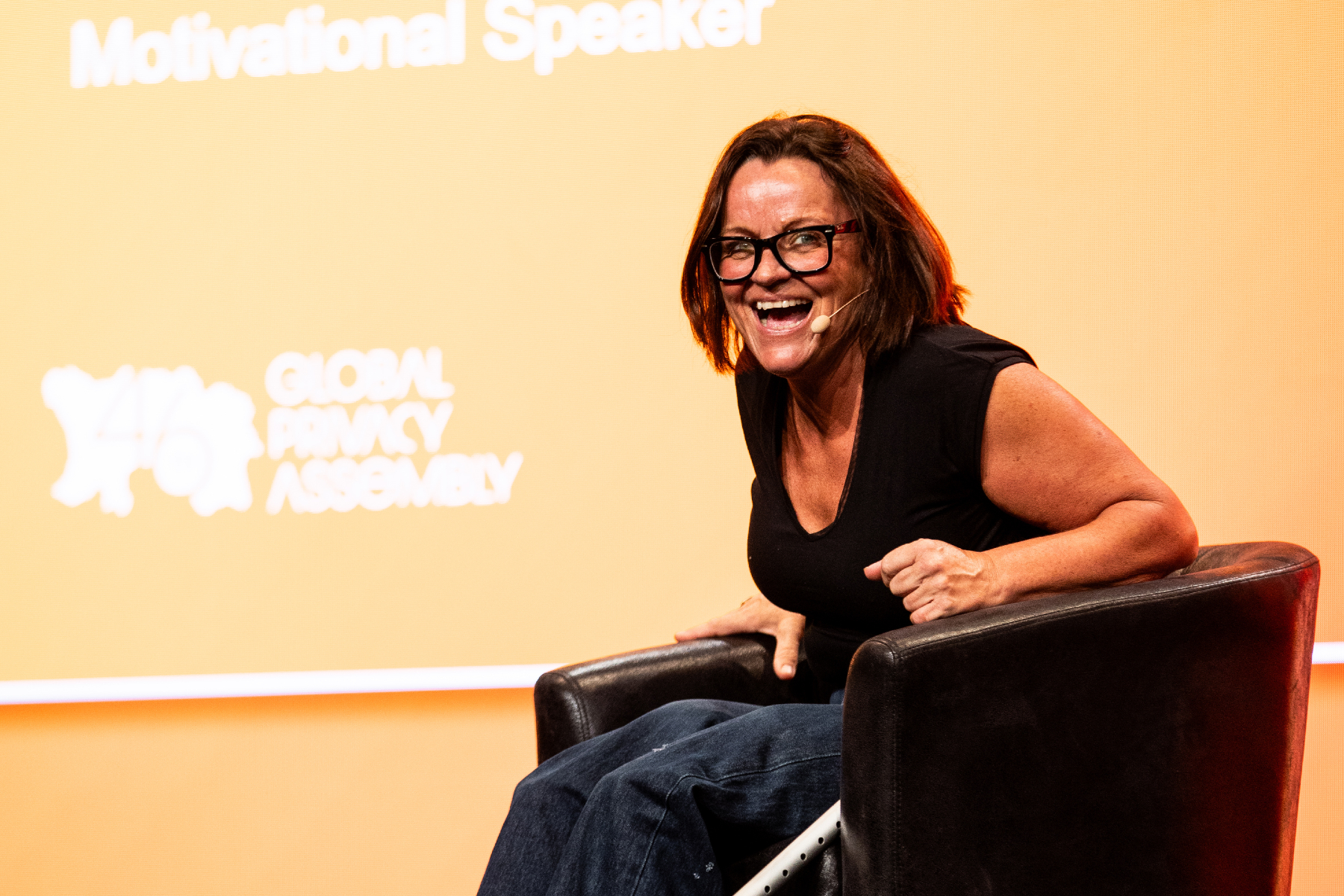
She made an appearance at the 46th Global Privacy Assembly, hosted in Jersey, where she spoke about her experience following the tragedy that changed her life.
The annual event brings together influential voices and key stakeholders in the industry to discuss challenges and successes and create roadmaps for how privacy and personal information is handled in the future.
Ten minutes that changed everything
During her talk, Martine candidly retold her story, taking us back to the day before the attacks: “We’d all been celebrating that London took on the Olympic bid, so saw it as a good excuse to go out and have a few drinks.
“The following morning, my alarm went off. I’m usually very good in the morning, but that day, I decided to have ten minutes more in bed.”
Martine caught the Circle line to work and ended up sitting just three feet away from one of the suicide bombers.
“I just saw a white flash in front of my eyes and felt like I was being thrown from side-to-side,” she described.
“I don’t remember the pain. All I could see was metal going down into me. I didn’t realise that my legs were caught up in it.”
After being trapped for over an hour and getting support from off duty police officer Liz Kenworthy – who Martine says “saved her life”, she was the last survivor to be pulled from the wreckage.
Thrown into the public eye
What followed was a ten-day coma, ten months of surgery to help her walk again, and a palpable level of intrusion into her life.
Martine said: “Suddenly I was in The Royal London Hospital and privacy went out the window.”
Considered one the worst terrorist attacks in UK history, the 7/7 bombings dominated headlines and public discourse. Because of this, Martine’s experience was public knowledge – without her knowledge or consent.
Martine spoke of the times she appeared on the front pages of newspapers, in magazines she never spoke to and received calls from people she hadn’t given her number to – all while she was recovering in hospital.
“I didn’t want to see people,” Martine explained. “I was in a private room in a cocoon, and I didn’t need to face up to reality. I was not reading the news. I was not ready.”
When out of hospital, paparazzi would take photos of her. She also required a police escort to the ceremony that marked the first anniversary of the bombings because she was being followed.
Martine said: “I didn’t know that a photo of me had come out – they were obviously hiding up the road from my dad’s house. I was off to a hospital appointment.
“Nick, my husband, saw it, and said to my friend Sarah, ‘we’ve just got to warn her that that she’s on the front’. People were hiding in the bushes. It was scary and quite an invasion of privacy.”
The danger of misconstrued information
Martine also shared insight into the differing level of information you’re obliged to reveal as a disabled person compared to an able-bodied person.
This was especially prevalent when the UK’s Disability Living Allowance, that she’d had for almost a decade, changed to Personal Independence Payments in 2016.
“I filled out this form, ticking the boxes,” said Martine. “It came back two weeks before I went to Rio as a Paralympics reporter for Channel 4 saying I didn’t qualify.”
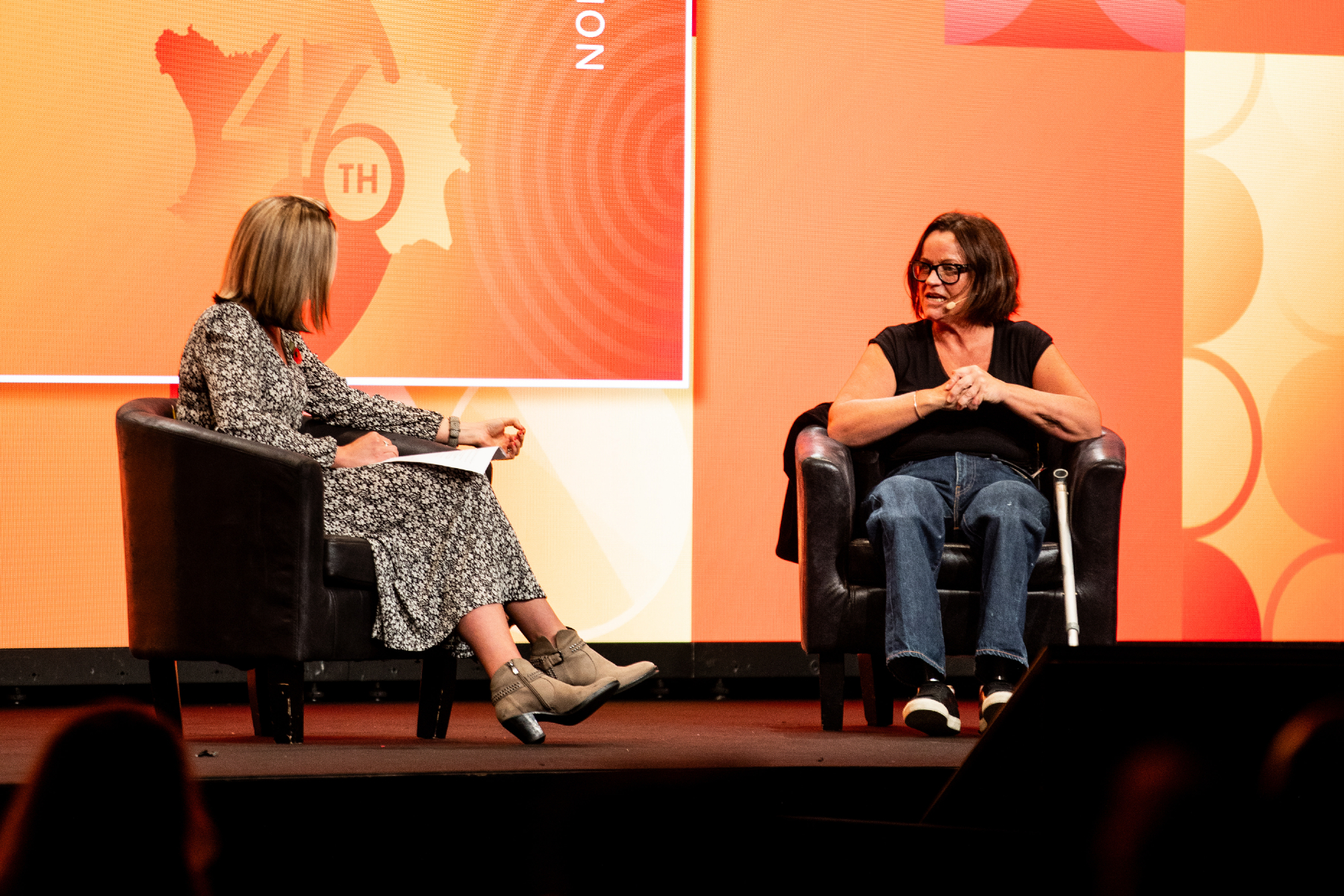
Pictured: Martine’s privacy was intruded on numerous times in the aftermath of the 7/7 bombings.
It turned out the attention that Martine did not consent to was preventing her from getting the care and support she needed.
“Someone in that office had taken information they’d seen about me and went ‘oh, Martine can walk, she doesn’t need a pivot board or a car’,” she explained.
Martine appealed the decision and was apologised to.
“It showed how information can be construed and used in a completely wrong way,” she said.
“As a disabled person, I spend my whole life saying I can do anything, I just do it slightly differently to someone else, but Government benefits and Paralympic classification are the only times that you want to prove that you’re more disabled than what you are.”
How do we strike the balance?
As our personal data and information becomes increasingly accessible, privacy will likely become more challenging to maintain.
The theme for this year’s GPA conference explored “balancing the power of information with the need for citizens across the world to have power, control, and dignity over their personal information”.
Martine’s story demonstrated the importance of these conversations because in her most vulnerable moments, after experiencing an unthinkable amount of trauma, Martine’s right to privacy was not considered.
She saw firsthand just how easy it is to have your personal information shared without your permission and your privacy intruded on.
A voice for the voiceless
Now, Martine reclaims her experience and chooses to share her story to inspire others.
She said her friends describe her as a “glass half full” type of person.
“About two months after it all happened, I said to myself, ‘Martine, you’ve got a choice – you sit there, feel sorry for yourself and keep asking “why me?” and decide to never walk again, or you decide that life carries on’. I had a choice to live my life.”
She continued: “Maybe I was always meant to get up late that morning. Maybe I was always meant to run up the escalator and jump on that carriage that I got on. Maybe I was always meant to have this journey.
“I can’t answer that, but all I can say is that I’m lucky to be living this dream now.”
Martine now spends her time sharing her journey from “despair to determination”, campaigning for better government compensation for victims of tragedies and speaking up for those who can’t.
“I feel like I have a voice, so I’ve got to use it. There are people out there that can’t fight, or do not have the strength to, so I feel like I need to fight for them. I’ve got a duty.”
Martine’s closed her talk with inspiring words that hung in the air, no doubt leaving a lasting impact on everyone in attendance.
“The purpose of life is to find your gift, and the meaning of life is to pass it on,” she said.
“And if we all do that in life, the world would be a lot better place to live.”
