

During the height of the harbour works in St Catherine’s Bay, the Pallot family lived at the house from at least 1841 through to 1900. The 1851 census reveals that a ‘Resident Engineer to the Harbour of Refuge in St Catherine’s Bay’ was lodging with them. This was Henry James Walton Neville, a civil engineer, born in Devon in 1822.
Neville was appointed as Resident Engineer in 1848 and was involved with the St Catherine’s harbour project for eight years before moving on to work as the Superintendent of the Plymouth Breakwater from the mid-1850s.
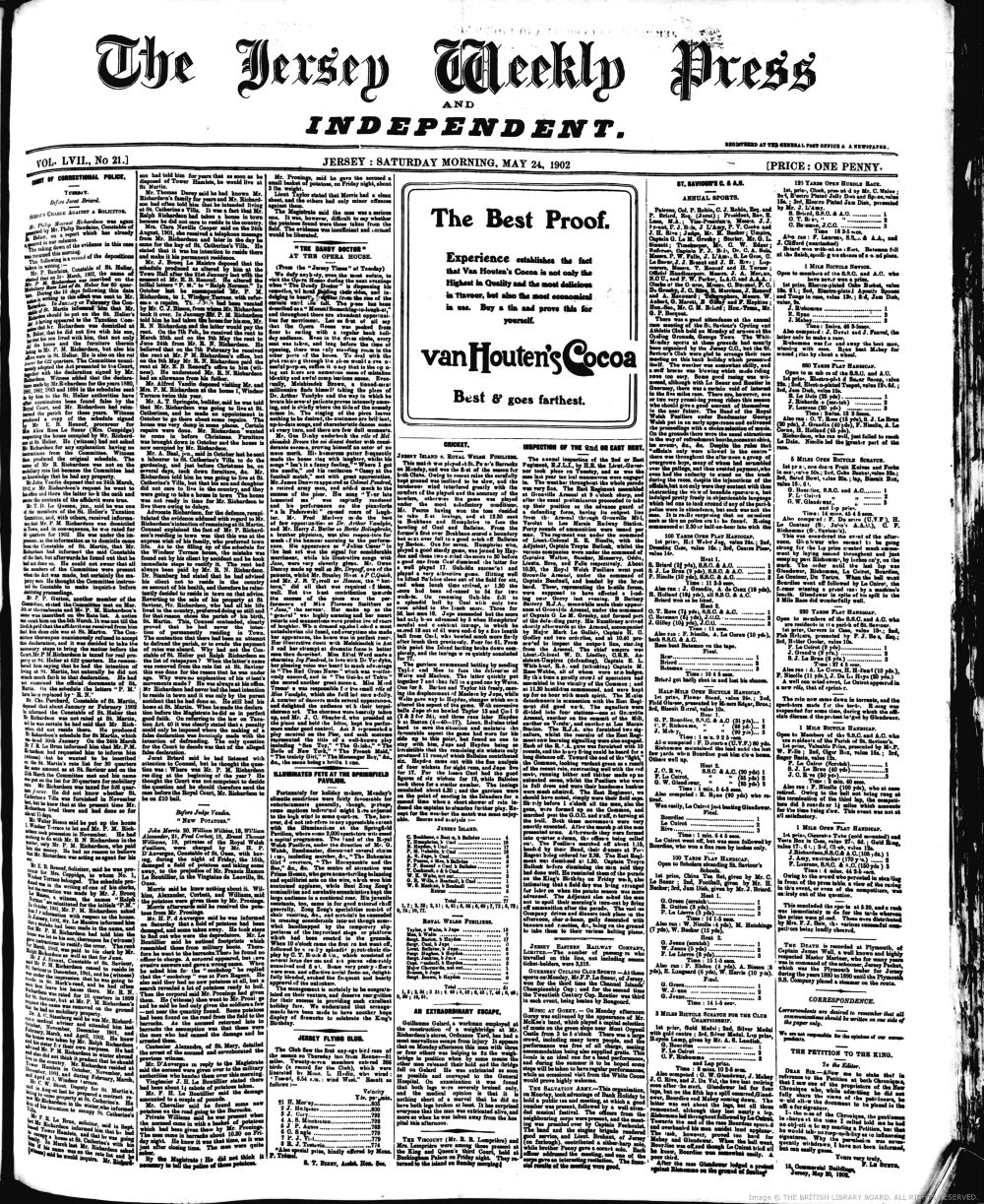
Pictured: The Richardson case on the front page of the Jersey Weekly News. (Jersey Heritage)
In 1843, five years before arriving in Jersey, Neville had fathered a son with an unmarried woman in London and the child was named Henry after him. In 1868, he had another son, also named Henry, this time in Plymouth with his wife of two years. However, records show that in between the birth of these two children, it is highly likely that Neville fathered a third child during his time working in the island.
In the 1861 census, a seven-year-old named Clara Cooper is recorded as ‘boarding’ with the Pallot family. On further investigation, it appears that Clara was the daughter of Jane Mary Pallot. Jane was aged 18 at the time of the 1851 census when we know Neville lodged with the family.

Pictured: Clara Neville Pallot’s baptism record. (Jersey Heritage)
A baptism record from 1853 shows that Jane, then aged 20, had a daughter called ‘Clara Neville Pallot’, born in St Helier and baptised in St Saviour – interestingly neither event took place in St Martin, the parish where the family was based. No father’s name was recorded but ‘Henry James Walton Neville’ was given as the child’s godparent by proxy.
Records show that throughout her life, Clara would use the alias surname ‘Cooper’, as well as the middle name ‘Neville’. She died in 1915 at the age of 62, and in her will she gives her name as ‘Clara Neville Cooper’.
Her mother, Jane, never married and the 1891 census shows that she was living alone at Le Rocher, aged 58, and was resident there until her death in 1900.
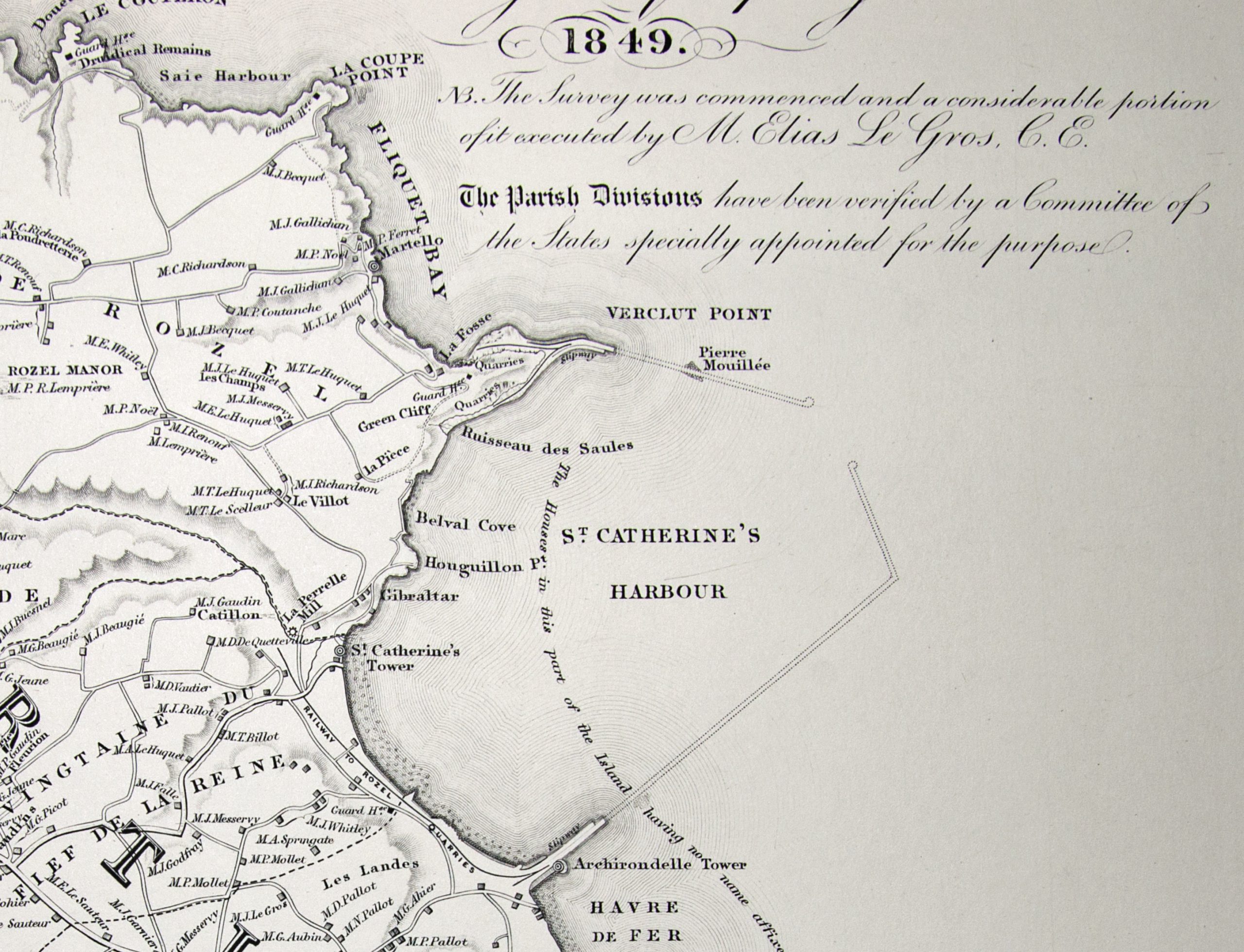
Pictured: Fliquet and St Catherine’s on the 1849 Godfray map. (Jersey Heritage)
A later owner of Le Rocher was Philip Mourant Richardson, a Solicitor of the Royal Court. In 1902, Richardson was involved in a court case that made the front page of the local newspaper. He was arrested by the Constable of St Helier and charged with having knowingly made a false declaration under oath with the intention of evading the payment of parish rates.
Richardson had declared that he was residing at Le Rocher in St Martin. The Constable disputed this, saying Richardson was actually resident in St Helier, and therefore must pay the St Helier rates. The Constable stated: “It appears unjust and inadmissible that such a rich man as Mr Richardson…should have recourse to such means and to such subterfuges, to evade the legitimate payment of a few pounds sterling to the poor of the parish.”
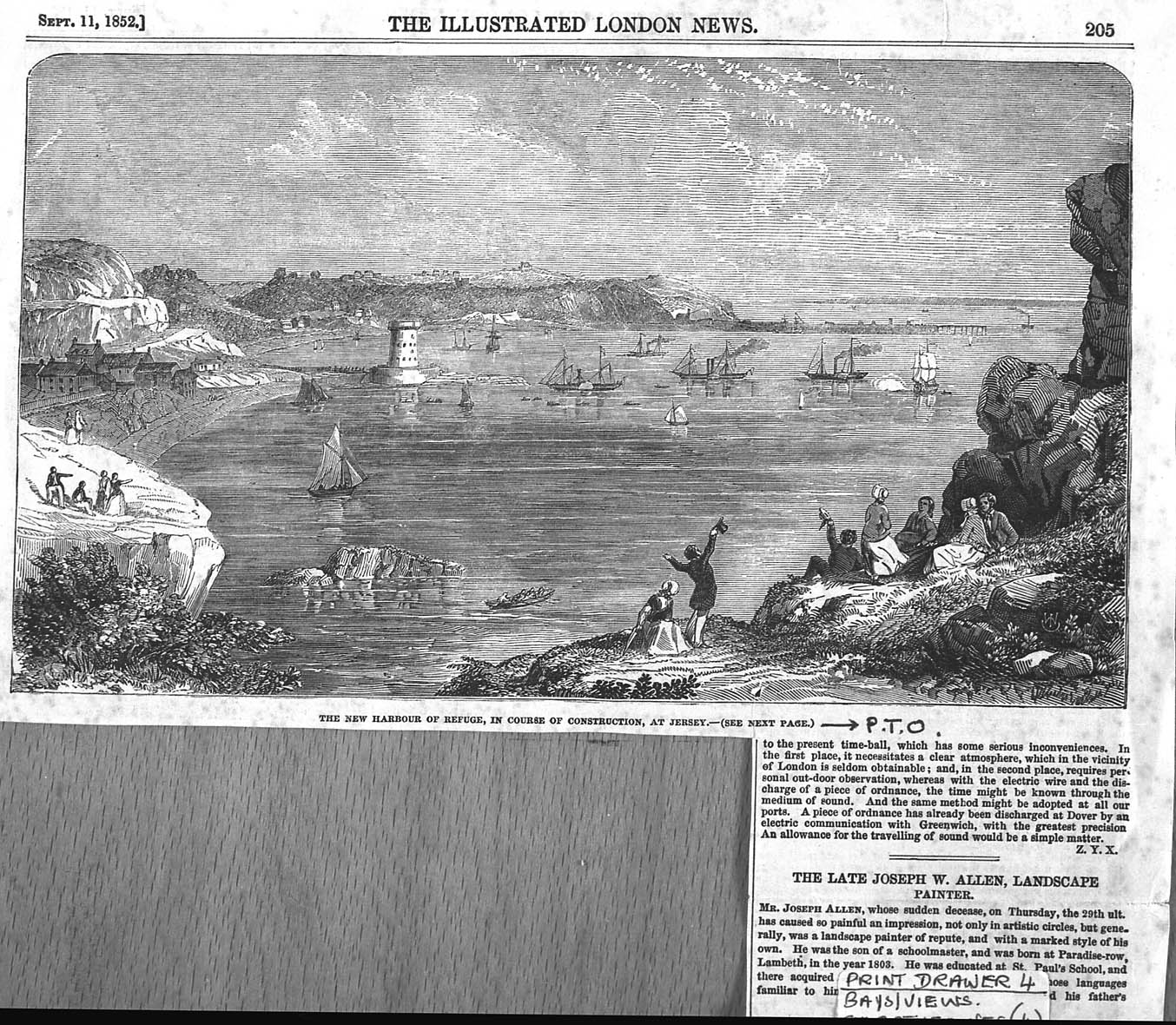
Pictured: The Illustrated London News shows St Catherine’s. (Société Jersiaise Photo Archive)
It was determined that Richardson only slept at Le Rocher on Saturdays during summertime, but had the intention of making the house his permanent address. Primarily he had been living with family at Windsor Terrace, St Helier.
A sufficient number of the jury found the accused “not guilty”, and Richardson was liberated from Court. Despite this, the 1911 census shows that Richardson remained living at Windsor Terrace, and it’s uncertain whether he ever did make the permanent move to Le Rocher.

Pictured: Occupation registration card of Isabel Adye. (Jersey Heritage)
Seven years after the court case, it was reported that the tenant of Le Rocher had noticed bees regularly entering the wall of the house. He found that they were drawn to a particular room. On further inspection, the room’s skirting was removed and bees were discovered. They had formed a honeycomb along the entire length of the room, which in some places was four inches thick and full of honey.
The bees were smoked out and the queen bee was found and placed in a hive, securing the swarm. The honeycomb was then removed and contained at least 40lbs of honey.

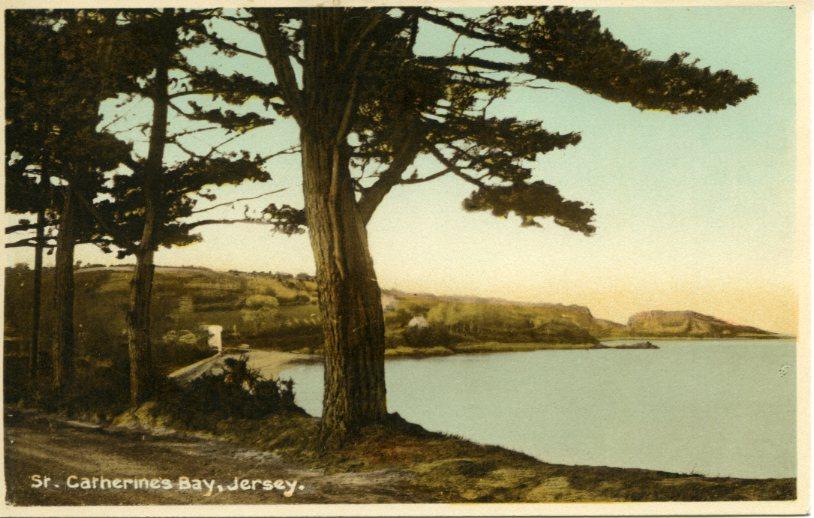
Pictured: A postcard of St Catherine’s Bay. (Jersey Heritage)
This wouldn’t be the only time that bees were found cohabiting with residents at Le Rocher. During the Occupation, the house was owned by Isabel Adye, a widow whose only child attended boarding school in England. Letters sent from Isabel to her daughter, Joan, provide an insight into life in St Catherine’s in 1945.
Isabel wrote that she put her two hives of bees in the top front bedroom of Le Rocher as she believed they would have been stolen if she left them outside. On a similar note, she told her daughter that she chose to sleep in the kitchen “so that she could hear burglars better if any came because many houses were robbed”. She said she was fortunate that she’d only had hens and ducks stolen so far.
LEARN MORE…
This article only touches on some of the research into the St Catherine and Fliquet area for the ‘Your Home, Your Story’ (YHYS) series, sponsored by Antony Gibb Historic Buildings Consultants.
If you would like to hear more stories, Jersey Archive is hosting a free talk this Saturday 21 October at 10am. To book a place for the talk, call 833300 or email archives@jerseyheritage.org. The Archive will also be open from 09:00-13:00 for general research.
Pictured top: A postcard of St Catherine’s Bay in 1916. (Jersey Heritage)
