


The driver of a van who avoided prosecution after hitting a 14-year-old cyclist five years ago has won a legal bid to access evidence from the abandoned criminal case and possibly use it to help fend off a damages claim expected to be “worth at least £100,000”.
Julia Strachan was accused of causing serious injury to Freddie Dentskevich while driving without due care or attention at a St Martin junction in March 2020.
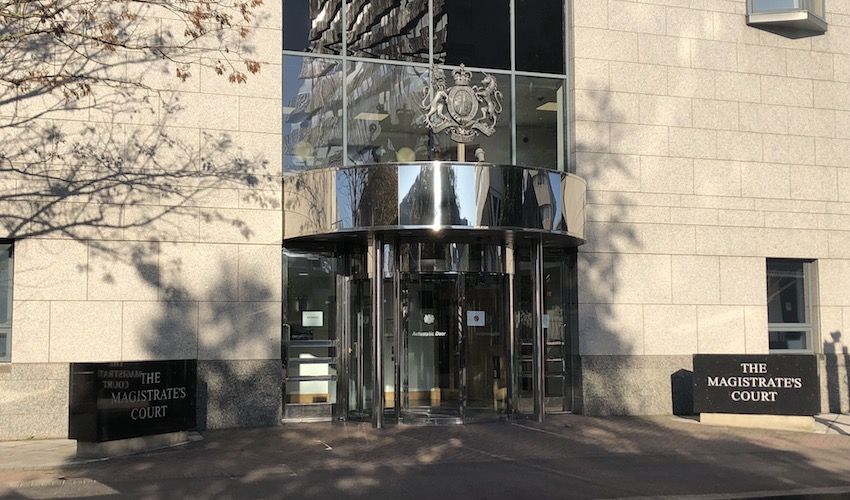
The case eventually reached the Magistrate’s Court in May 2023, but was dropped when the prosecution decided to offer no evidence and asked the court to dismiss the charge against her.
Negligence claim
However, Freddie Dentskevich’s family launched a civil claim alleging negligence by Ms Strachan the following April, according to court documents obtained by Express.
The family claim that she drove “too fast” while “avoidably distracted by her mobile telephone” and failed to “keep a proper lookout”, honk her horn and brake or swerve “in time or at all so as to avoid the collision”.
These alleged actions, which they claim were contrary to the Highway Code, caused Mr Dentskevich “severe pain and trauma” which is still impacting him today, the court documents say.
While the court papers said they were unable to value the exact damages as full medical evidence hadn’t been ascertained at that point, they said the claim was likely to be worth “at least £100,000”.
The claim said that the damages claim sought to take into account that Mr Dentskevich’s earnings prospects may suffer in future due to lost time at school, as well as the past and future care required from his parents.
Strongly denied
Ms Strachan denies the claims against her.
Her case, outlined in a response filed in May 2024, is that she was “driving at an appropriate speed” with “sufficient attention” at all times, and that “the minimal time between the Plaintiff pulling out from the junction and him then colliding with [her] car meant that the collision was inevitable”.
She admitted that she did not sound her horn, but that Mr Dentskevich would not have heard it anyway “given that he was listening to music” at the time.
She also said the young cyclist “failed to take an, or any adequate regard for his own safety, including by failing to wear a cycle helmet” and that, in the event she is found liable to pay damages, she will seek “an appropriate reduction… to account for his own contribution”.
The case is due to be heard by the Royal Court at a later date.
Evidence sought
However, before then, Ms Strachan has applied to the Royal Court to request to use materials disclosed in her criminal case – including police witness statements, expert reports, and interviews – in her civil defence.
A hearing before Deputy Bailiff Robert MacRae took place in December and the subsequent ruling was made public for the first time this week.
The judgment explained that, ordinarily, criminal case materials are bound by what is known as an “implied undertaking” that prevents them from being used for purposes beyond the original criminal proceedings.
Ms Strachan sought permission from the court to use these documents, arguing they were essential for a fair defence.
She did not “merely wish to be released from the implied undertaking in the criminal proceedings for the purpose of making discovery”, the Royal Court heard, “She may well wish to rely on that material herself as it may assist her case, and in any event much of it is likely to be contemporaneous with the accident and relevant.”
To help reach a conclusion, Deputy Bailiff Robert MacRae, presiding, considered previous cases which had raised the same question.
In one case, from 1988, the then-Attorney General “did not object to the release of the materials which were relevant to the issues in the civil proceedings”.
However, the Attorney General was clear that the Royal Court shouldn’t allow a “comprehensive release” of all documents, as it would enable what was described as a “fishing expedition through a mass of documents which may be irrelevant”.
Handing down judgment, presiding Commissioner of the time considered whether individuals who had made statements for the purposes of a criminal case should be entitled to privacy, and whether this privacy would be infringed if those statements were to be used in civil proceedings.
The second key principle identified at the time, the current Deputy Bailiff observed, was the public interest in the administration of justice, which “extends to civil proceedings as well as criminal proceedings”.
“There is a public interest in the proper resolution of those claims which means that all relevant documents in the hands of any party should be available for consideration by the Court,” Mr MacRae said.
Having considered the background of the case, the Deputy Bailiff ruled that, even though the case was dropped against Ms Strachan and there was no trial, all the material prepared for the criminal case, even if “unused”, was subject to an “implied undertaking”.
However, noting that the criminal and civil proceedings “arose out of the same traffic accident”, he ruled that it was “in the interests of justice for the Defendant to be released from her implied undertaking in the criminal proceedings not to disclose the material provided to her by the Attorney General for the purpose both of her making discovery in the civil proceedings and for making use of such material in these proceedings as is appropriate”.
But he imposed two strict conditions:
- The evidence must only be used in the civil case and not for any other purpose.
- Civilian witness statements must be redacted to remove personal details such as addresses and dates of birth.
Ms Strachan was represented in court by Advocate Debbie Corbel, and Advocate Gregory White appeared for the Attorney General. A representative for Mr Dentskevich did not attend.
